Sigur Rós. Photo by Lilja Birgisdóttir
SIGUR ROS’s SEVENTH STUDIO ALBUM, KVEIKUR, IS UNCONVENTIONAL, EVEN BY THE BAND’s STANDARDS. ENGINEERS AND LONG-STANDING BAND COLLABORATORS BIRGIR JON BIRGISSON AND ALEX SOMERS HAVE THE INSIDE STORY…
Although Iceland is Europe’s 2nd largest island, about half the size of Great Britain, just 321.000 people live there, marginally more than in, say, Perpignan in the south of France. Given the tiny size of its population, the impact Iceland has on the international music scene is stupendous, with acts like Björk, Sigur Rós, Of Monsters and Men, Emilíana Torrini, and Mezzorforte all enjoying overseas success and recognition. Compare this to the amount of internationally famous artists coming out of Perpignan, and, err, you get the picture. There’s been ample speculation about the reasons for Iceland’s musical riches, but few rise above the pub-talk notion of it having something to do with the climate. Whereas people from Perpignan might, perhaps, find hanging out on the beach the most attractive option once essential work has been done, the Icelandic climate forces people to stay indoors for most of the year and to play cards, stare at a screen (the 21C equivalent), or do something creative.
On the phone from Sundlaugin, just outside Iceland’s capital, Reykjavik, the studio’s engineer, Birgir Jón Birgisson, chirpily announces that the local weather is in fact “very good” with blue skies and bright sunshine. The catch comes when he’s asked for the temperature: 14C. Given that it’s early August and mid-afternoon it gives substance to his next remark, “I like wearing a coat!” A dozen kilometres away, in downtown Reykjavik, American engineer, mixer, producer, musician and visual artist Alex Somers muses from his private studio that the entire environment in Iceland prompts him to “be creative.” The weather certainly plays a part, he agrees, but apparently it’s also to do with the attitude of the people in general and of Sigur Rós in specific: “They like to experiment, and taught me a lot about not playing it safe and not being precious and just going for it.” One assumes that this also is the modus operandi of Björk, the world’s most successful exponent of avant-pop.

Birgir Jón Birgisson at Sundlaugin Studios in Reykjavik
Birgisson and Somers both have long-standing working relationships with Sigur Rós. The band broke through in 1999 with its second album, Ágætis Byrjun, to become one of the world’s leading post-rock acts, playing ethereal, ambient, impressionistic non-rock, with a lot of its identity coming from Jón “Jónsi” Þór Birgisson’s reverb-drenched falsetto vocals and bowed electric guitar. The music is characterised by a bone-chilling, melancholic, glacial grandeur that could only have been conceived by people living in the far north. Fourteen years later the band released its seventh studio album, Kveikur, which saw two major changes, one being the departure of keyboardist Kjartan Sveinsson, reducing the band to a power trio, the other the much more aggressive, in-your-face sound of the album. Atmospherics and cinematic soundscapes still abound, but the rhythm-section is more hard-hitting than ever before, and distortion has joined reverb as the music’s overriding, signature effect.

Alex Somers in his studio. Photo by Jónsi
Kveikur was recorded during 2011 and 2012 in several studios, for the most part in the band’s rehearsal space and in Sundlaugin, plus some work was done in two studios in Los Angeles. Eminent mixer and producer Rich Costey mixed the album at his Los Angeles studio, after which Somers was asked to go over the whole thing again and stamp more of Sigur Rós’s trademark Icelandic identity on the whole thing. Although Somers is originally from Boston, he and Sigur Rós’s frontman Jónsi are both musical collaborators and a romantic couple. The American moved to Iceland in 2005, and the two have since worked together on, amongst other things, a duo project called Riceboy Sleeps (2009 and Jonsi’s first solo album Go (2010), and Somers also engineered and co-produced Sigur Rós’s sixth studio album, Valtari (2012). With Somers running his own studio in Reykjavik, he’s assumedly by now able to out-Iceland the Icelanders, at least on the musical front.
Birgir Jón Birgisson (nicknamed Biggi, and despite the identical surname no family of the Sigur Rós singer) is an Icelandic native, who presumably hasn’t had to acclimatise to the weather or the music. He began his studio career attending a Sound Engineering course at the SAE Institute in London, then worked for Icelandic National Radio for five years, and started working at Sundlaugin in 2003, three years after it was constructed. Located in idyllic surroundings next to a waterfall, and built inside an old derelict swimming pool (indoors, this is Iceland!), Sundlaugin became widely known as Sigur Rós’ studio, but Birgisson explains that the band in fact sold the complex to him and Sveinsson in 2008. The latter regularly comes in to record his own material, but Birgisson is the only one involved full-time with the studio, as manager and chief engineer.
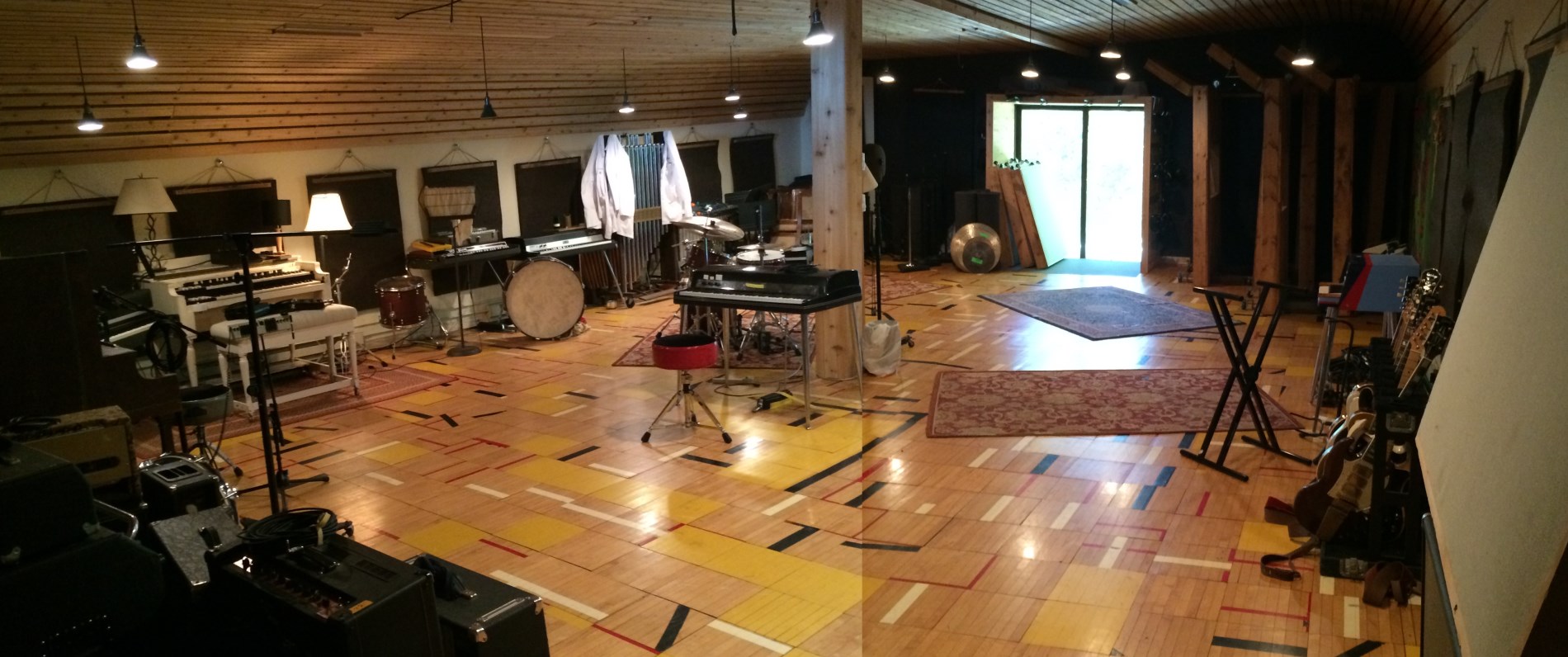
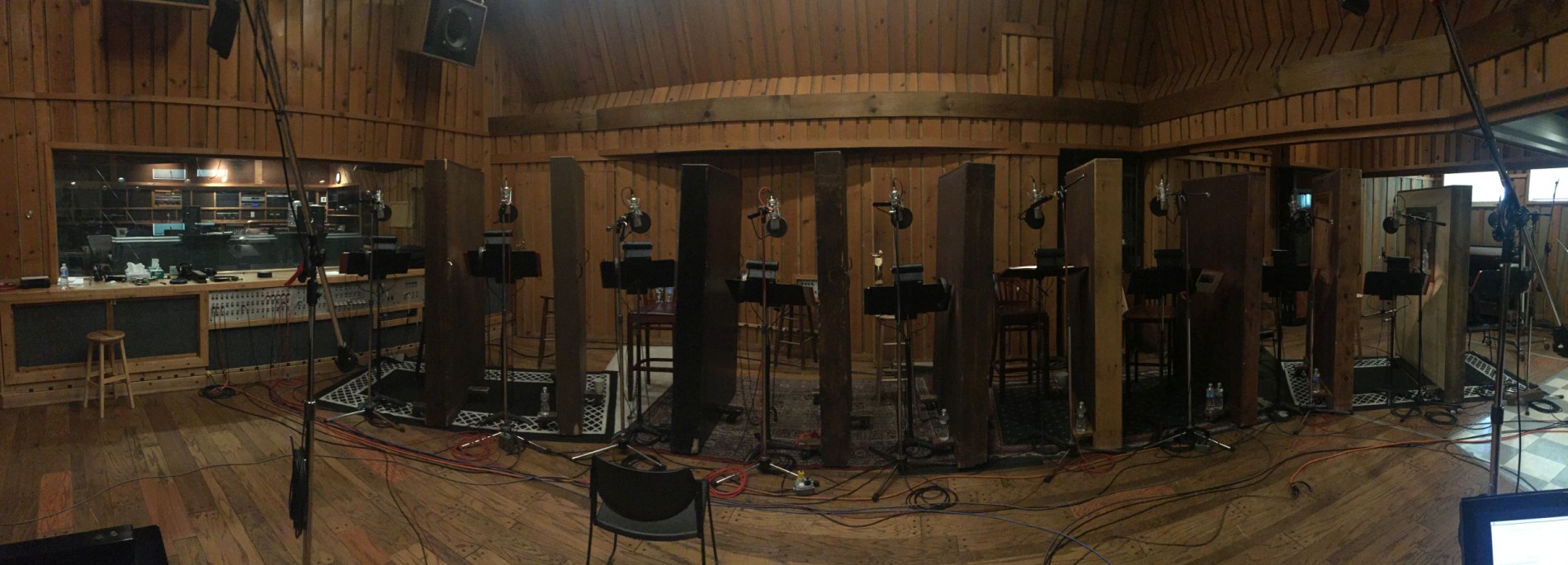
The gear and acoustics at Sundlaugin—Icelandic for ‘The Pool’—are a significant part of the Sigur Rós sound, and presumably because of this, the band has continued to work there after the sale. According to Birgisson, the swimmy swimming pool acoustics are one important aspect, but mostly the band’s and the studio’s identities are tied up with the studio’s analogue gear and consequent working methods. “We have a fairly big live room of 60 to 70m2 with 5.5m high ceiling,” explains Birgisson, “but the place is pretty square and we have treated it quite a lot, because we had to be able to control the acoustics. We recently had floods here and have since then put wood on the ceiling and added curtains that are on rails, so you can adjust the acoustics any way you like. But the acoustics are fairly distinctive, and you can hear them mostly in the band’s drums. The reverb on the other instruments and the vocals comes mainly from the gear that is used.”

Sundlaugin’s live room, once a swimming pool!
According to Birgisson, the recordings for Kveikur at Sundlaugin took place over two week-long sessions in the fall of 2011 and the spring of 2012. “The band worked pretty quickly,” he says, “because they had already written a lot of the material at their rehearsal space. Even though they came a bit more prepared than when they worked on previous albums, they still did a lot of writing at Sundlaugin. The main thing is that we recorded everything to 24-track tape on an Otari MTR90 Mk2. All the stuff they have recorded in the studio has been recorded to tape, apart from Valtari. Tape is fun to work with, and it also still sounds a bit better. The band really wants to record to tape. They like to work outside of the box and to manipulate sounds in the real world. For me tape is just a different way of working, and there’s still this sonic difference. The new album was recorded quite hot, because we wanted that saturated tape sound. It’s something that you can’t accomplish in digital. There are loads of plugins, like tape emulation plugins, and some of them sound really good, but it’s not quite the same thing.”
“We used Quantegy GP9 and everything went to tape, even the try-outs, and we then filled up all 24-tracks with drums, bass, guitars, and some synths and loops, before transferring the material to Pro Tools. The only problem is that tape is really expensive, and we only had a couple of reels of GP9, so after transferring things to Pro Tools, I’d delete what was on the tape and we’d re-use it. The expense of tape, and the fact that it wears out, means that you don’t record 15 takes and then spend days going through them trying to figure out which one is the best. That’s a really boring process. Working with tape is a destructive process, and if you fuck something up, it’s fucked up forever, so you have to have a certain amount of confidence to be able to work with tape. That makes it exciting. People are too comfortable with all the undos and redos and all that shit that you can do in digital.”

Some of Sundlaugin’s musical instruments
Going in more detail on how Sigur Rós and he operate in the “real world,” Birgisson explains that the band tracked most of the songs playing live as a trio. “The band members were in the same room, but we had the amplifiers in different isobooths. We’d usually go for a good drum and bass take, and then, if they need to fix something we’d do that. Jonsi’s guitars and vocals tend to be overdubbed. He’s very particular about his vocal overdubs, because he likes to try out different melodies and harmonies, so he takes a lot of time for this and needs to be in the fright frame of mind. They also overdubbed some synths, often using the Teenage Engineering QP1, plus they brought some loops that they had made in Logic. Most of these overdubs were to tape. They also added some more material once we’d loaded the material in Pro Tools, but not much.”
For the signal chains Birgisson made good use of the eclectic collection of microphones and outboard at Sundlaugin, which includes goodies like the RCA 44, 77Dx and 77D, and mics by Lomo, Neumann, Schoeps, Melodium, AEA, Altec, and so on. “The signal chains I used were an old AKG D25 and a Sennheiser e602 on the kick, a Sennheiser 441 and a Shure SM57 on the snare, AEA R84 or Coles 4038 as overheads, AKG D112 for the floor tom and the Sennheiser MD421 on the other two toms, plus AKG C12A and Sennheiser MKH80 as ambient mics. I used the Neve V0 desk as mic pre in some cases. The desk is actually a 5132, and it’s one of the last 51-series that was made. It’s the broadcast version, and it probably dates from 1980. I use it every day to listen to what I record, but some of the pre-amp circuits are getting corroded and the sound begins to break up. I can only use some of the channels as mic pres, and therefore use several external mic pres. For example, I used my Millenia mic pres for other drum mics and Jonsi’s AEA RPQ pre-amp for the ribbon mics.”
“The bass was recorded using a Neumann U47 on the cabinet and then going into a UA 610 or a 710 preamp. I also recorded a DI, but used that signal only if I wanted to re-amp the bass later. I recorded guitars with an SM57 and a PPA R-One mic. It’s a really old ribbon mic, called Pacific Pro Audio and it can handle a lot of SPL—Jonsi likes to play loud! I also had some room mics on his guitar, like the U47 and the Neumann CMV563, and Jonsi brought his Thermionic Culture Rooster pre-amp. We only recorded some basic ideas for Jonsi’s vocals here, for which I used our old U47. He likes that one so much that he bought a remake of the U47 called a Vox-O-Rama to record his vocals after the band sold us the studio. Monitoring for the band while playing together was via a 16-channel Avium foldback system.”
“Once they had filled the 24-track tape, I transferred the material to Pro Tools at 96K, though sometimes at a lower sample rate, because Jónsi wanted to be able to work with it in his system. The band uses Logic, and it’s what they used when they added more material at their rehearsal space. I like Logic as well, but most people use Pro Tools, so that’s what I tend to use in the studio. But I mixed the band’s Hvarf/Heim (2007) double album and the Inni (2011) live album in Logic. Actually, I recorded Heim in Soundscape, which was and old recording system that we had here in the studio, and I recorded Inni (2011) to Pro Tools, because I ran 60+ tracks, which is quite big, and I wanted to make sure everything worked live. Pro Tools was still relatively new for me at the time, and I was more comfortable in Logic, so I chose to transfer everything to Logic and mix in that.”

Alex Somers’ studio
Having laid down the basic tracks for Kveikur at Sundlaugin, Sigur Rós returned to their rehearsal space to overdub more material. They later returned for a string recording session at the studio, which was conducted by studio assistant Elisabeth Carlsson. During this overdubbing period, mostly the end of 2011 and the beginning of 2012, Alex Somers worked intensely with Jonsi, recording vocals and some guitars at his downtown Reykjavik studio. Somers’ studio is located in a former private theatre, built by an artistic couple in the 1970s. “It’s not huge by any means,” comments Somers, “but for me it’s a perfect size, and the room is acoustically treated, so it sounds really good. With my Barefoot MM27 monitors, which are amazing and a dream to work on, it translates really well. No, my studio has neither a name nor a web site. People find out about it by word of mouth, which is a very bad business move!” (laughs)
While Somers does not have a desk at his studio, and does a lot of work in the box, the “real world” working methods of Sigur Rós also inform his way of working. This is reflected in the extensive collections of often eccentric outboard and musical instruments that he has at his studio. “Our focus is on having loads of unusual acoustic instruments,” he explains, “like a dulcatone, a celeste, a harmonium, metallophones, and other quirky things, plus the typical stuff like guitars, amps and pedals. I work both in Logic and Pro Tools, though the former is my DAW of choice. I’ve heard stories of Pro Tools being better to use for working with audio, but I am very comfortable doing that in Logic. I think these are myths that date from 10 years ago, and they have stuck around. All these programs do the same thing, just with different skins and interfaces, so I don’t think it really matters.”

Some of the more esoteric instruments in Alex Somers’ studio
“I guess you’d call my approach hybrid, because I use a lot of outboard gear while mixing, like the Thermionic Culture Rooster and Curve Bender, the Sta-Level compressor, Roland RE201 Space Echo, Echoplex, the Kush Audio Clariphonic EQ and so on, plus a valve summing mixer, the 14-channel Thermionic Culture Fat Bustard. I really love outboard gear, and I love the way you can push it and transform sounds with it. You can achieve so much with outboard: distortion, brutal compression, tape delay, and so on. At the same time, I also love digital and plugins. I really am 50-50. The Decapitator is an amazing plugin that I use on most of the songs that I mix. I also love reverbs from the native Lexicon bundle, and Audio Damage’s Ratshack reverb. I like working on a computer, because it’s what I grew up with—I’m a bit too young for all the stuff with consoles. Again, people put all this weight on what gear they’re using, and I’m guilty of that myself, because I love studio equipment, but it’s much more about taste and your feeling for the music.”

Some of Somers’ outboard
“With regards to recording Jonsi, I used a Neumann U47, and the signal chain changed a bit depending on the song. We mostly used a really cool pre-amp made by Preservation Sound in New York, which is an RCA clone. It literally has just one knob, so it really is old school. After that I went into the Thermionic Culture Rooster, for some distortion and then the Phoenix or Sta Level compressor—we’d switch that around depending on what sound we were after. Finally the signal went through a Curve Bender EQ just for a hi-pass and maybe a bit of mid-range boost, if we wanted his vocals to sound a bit more nasal. The analogue went into Logic via an Apogee Symphony AD converter.”
“Jonsi is a really good singer, so we didn’t need to do a million takes to get a good one. For the lead vocal he usually sang the song through two or three times, and after that we make a comp. Doing backing vocals was way more in-depth and lengthy, because Jonsi is really into that and does loads of vocals all over the place. On Kveikur we did a lot of new stuff, like sending his vocals through a Swart guitar amp, and one cool trick was to set the volume of the amp to zero and turn the spring reverb all the way up, and this gave a really ghostly and very cool sound that we blended in together with the main vocal. This became a pretty big part of the album sound.”
The Sigur Rós singer would go to and fro between Somers’ studio and the band’s rehearsal space, sometimes recording his vocals himself. Although Somers wasn’t present at the recording sessions at the rehearsal space, he was privy to some of the things that were done there, and recounts, “They did a bunch of weird stuff on their own for this album, engineering themselves. They made their own instruments, they bowed a ukulele, and they bowed Jonsi’s guitar without any reverb, which is something that he had never done before. They whistled and bowed cymbals, and they would map these sounds out on a MIDI controller, so that they could play all these home-made instruments as samples. I know that ‘Isjaki’ started from the bowed ukulele sound, but you’d never recognise it. I think it’s always been Sigur Rós’s modus operandi not to use synthesisers very often, but instead to create their own instruments to use samplers and do their own thing, which is pretty cool. They are tweakers and experimenters, even though the main sound of their core instruments comes from the way they play.”

A reverse view of Somers’ studio
With sonic experimentation being a large part of Sigur Rós’ modus operandi and raison d’etre, it is to be expected that this also informed the mixing stage. Once they had completed tracking in Iceland they went to Los Angeles, for some additional overdubs and an extensive mix process with Rick Costey, who has worked with Muse, Nine Inch Nails, Franz Ferdinand, Arctic Monkeys, Audioslave, Fiona Apple and many others. Costey is known for his hard-hitting, volume-to-11 sound, and Sigur Rós most likely approached him because he would be capable of bringing the best out of the more aggressive sound of Kveikur. On returning from Los Angeles, the band gave Somers the unusual job of mixing the album again, building on what Costey had done. Somers says that he does not know why he was asked to do this, nor was he given any instructions. What is certain is that the band loved the elaborate sonic experimentation that he added to the already-mixed material.
“I guess because I know them so well, and have worked with them many times in the past, they wanted me to try something that’s more familiar. But I don’t really know why they asked me to rework the mixes. Rich mixed this album in Logic, and I was given his stems. I also had the original drive, so I could dig out the raw tracks if I wanted, though I didn’t do that very often. Rick’s stems amounted to 12-13 per song, and they sounded incredible. I then carried on from there. It’s the first time I did something like this, and it was really fun. I just put Rick’s stems up, and started doing things purely going by instinct. The band would come to my studio once a day, and Jonsi would hang out for more of the time. I’d do a first mix, and then the band would maybe have a few ideas, and I’d carry on. The mixes were so close to perfection when I got them that it was just a matter of me noodling around until the band was totally satisfied.”
“The first thing I did was make the drums sound more aggressive. On many songs I really wanted them to sound as dirty and distorted and compressed as possible, while still keeping the impact. At the same time I spent a lot of time getting the vocals to sound as spacey as possible. Jonsi was really outspoken about wanting his voice to sound messed up on the album, like really treated and lof-fi and overdriven, but because the music was really aggressive and raw and distorted, I thought it was kind of cool to balance that with a more dreamy and experimental vocal soundscape, and really go far with the delays and echo and reverse reverb that he always likes to have on his voice. That contrast is the new thing about the album. The voice being floaty and echo-y means that the distorted things don’t sound flat.”

Some of Somers’ guitar pedals
Talking specific instruments, tracks and effects, Somers explains, “I used several plugins, like the UAD Echoplex, which is really cool, and the Decapitator, which I had on the overall drum stem, because it just sounds really good. Parts of some songs I re-amped via the Thermionic Culture Rooster. When I mix songs from scratch, the first thing I tend to do is put the Rooster on the drum bus, to add distortion, because it sounds so cool. Everybody added distortion on this album, the band, Rich, and I. The instruments were tracked well, but the distorted bass sound in many tracks was what was laid down during tracking. Rich probably pumped that up, and I did the same. I spent a couple of days at Rich’s place in LA, and he has an insane amount of equipment. I know he had a Fairchild across some of these groups and buses, and he also used the Shadow Hills compressor. All this meant that I had to be careful not to overprocess, because the album was in effect mixed twice, and at times things started to sound overcooked, and I had to pull back. But we love distortion. It’s my favourite thing. I think it’s beautiful and I don’t really like listening to music that’s clean. I find that really boring. Distortion is the best thing!”
“Many of the distorted vocal effects on the album came from a box called the Kyma, which they found at Rich’s studio. As I understand it, it’s designed for people making movies, not for musicians. I believe it was used for the making of the movie Wall-E. Rich wasn’t really using it, and Jonsi found it and without really knowing what he was doing he started experimenting with it, and got this weird vocal stuff happening, like stuttering and the vocals breaking down and detuning. It just destroys sounds. Regarding the more floaty aspects of his voice, he loves reverse reverb on it, because it wraps his voice. It’s like a cocoon around it. For me the best thing for that is the Space Designer, the built-in Logic reverb. It’s kind of murky with a lot of mid-range, and it has its own sound, but for some reason it has the best reverse reverb that I know of. I also use other plugins, like the SoundToys Echoboy and reverbs from the native Lexicon bundle, like the UAD EMT 140. On most songs I’d also use the analogue RE201, which is way cooler than any plugin, it just sounds crazy. It has a really beautiful distortion, and I like to perform it when printing the mix, twiddling the knobs, which is fun. I probably also used the Decapitator on Jonsi’s vocals, and there’s another plugin Jonsi really likes on his voice, which is the Soundhack +Bubbler granular delay. We often put it on the bus and automated it.”

The cover of the final result, Kveikur
“Many of the weirder effects on the album were done by the band at their rehearsal space, like the effect in ‘Yferboro’ that sounds like a thunderstorm. As I said, the band loves to experiment, and one thing I picked up from them is to use the little Yamaha VSS30 sampler to create new parts and sounds. It’s a small 8-bit sampler that’s regarded as a toy, but it’s way cooler than any other sampler I’ve tried. What we do is play a part back via the monitors, say a string part, and record it in the VSS330 and then DI that sample back into a preamp, and write new parts. We used it on the strings, the brass, and the harmony vocals. I am also obsessed with one aspect of Logic, which is the varispeed. It’s good because it doesn’t time stretch anything. Instead it works like varispeed on a tape machine, playing things back at higher or lower pitches. I used it for example in the outro of the title track, where there’s this really fucked up piece of noise for several seconds, which is an upright bass that I slowed down with the varispeed. I also used it on the outro of ‘Hrafntinna,’ which has a really beautiful brass section that wasn’t originally in the song. The band took a snippet of brass to use it as an outro, and we put it through the varispeed, which created a really nice effect.”
“Restructuring songs is something I always do when I mix. In fact, every time I mix a song from scratch I play around with the structure, creating new intros, outros or bridges by soloing one instrument group and reversing it or slowing it down and so on. I did this with many songs on Kveikur, and very much so on the instrumental that closes the album, ‘Var.’ I mixed that from the beginning, Rich never touched it, and the song was a bit short. I think it was only one minute long or something, so I restructured the parts and made it longer and turned the strings into a final coda—the song is now 3:45. The Sigur Rós guys are very open to things like this. They are really creative and also a lot of fun to be around, and they don’t take things too serious.”
Clearly, no winter blues aka Seasonal Affected Syndrome for the likes of Sigur Rós and Somers. But then, with the success they enjoy around the planet they have a lot to smile about…
© 2015 Paul Tingen.
This article appeared in, amongst other places, the September 2013 issue of the Australian magazine Audio Technology.

The first two pages of the feature on Sigur Rós in Audio Technology issue 97
 In an exclusive interview in the January issue of Sound on Sound magazine, engineer Chris Messina (left in the picture above) and mixer Zach Hanson gave the inside story of the making of Bon Iver’s 22, A Million, thereby finally revealing what countless people have been wondering: how did they create the many wild and crazy sounds that feature on the album? And what is ‘The Messina’? And ‘The Janette’? And what do these weird credits mean?