Videos

HERE ARE SOME MUSIC VIDEOS FOR YOUR PLEASURE:

    1. WHITE HORSES.
    I created my first video as an accompaniment to the second track of my May The Rise To Meet You album.


    2. THE ELEMENTS – MY DREAM WAS.
    this is the debut single of my two sons, and thee video, made when they were still 15 and 11. I mixed and produced, and shot the video footage.


    3. THE ELEMENTS – FULL FLOW.
    The second single by my kids, again produced and mixed by yours truly, and this time I also created the video.


    3. THE ELEMENTS – ABANDON.
    And my kids’ third single, same credits as above!


    4. JOEY STEALS A MARCH ON JIMMY PAGE.
    The oldest one was fascinated by music from day one, and here he is, aged 2.


    5. NIC JONES – PETRONELLA.
    In 1981, when I was very young, I made a sound desk recording of the first set of a live performance of the great folk guitarist Nic Jones, in Amsterdam. Sadly, Jones suffered a serious car accident a year later, which terminated his career, and never had the opportunity to record some of the material he played live. One particular highlight of his set in Amsterdam was the virtuoso instrumental “Petronella.” Other then a bad-quality audience recording posted on YouTube there are to my knowledge no other recordings of this track. Jones’ family has expressed no interest in using the material from my recording, and after 36 years I reckon it’s time some of it sees the light of day. So click, sit back, and enjoy!

Miles Beyond

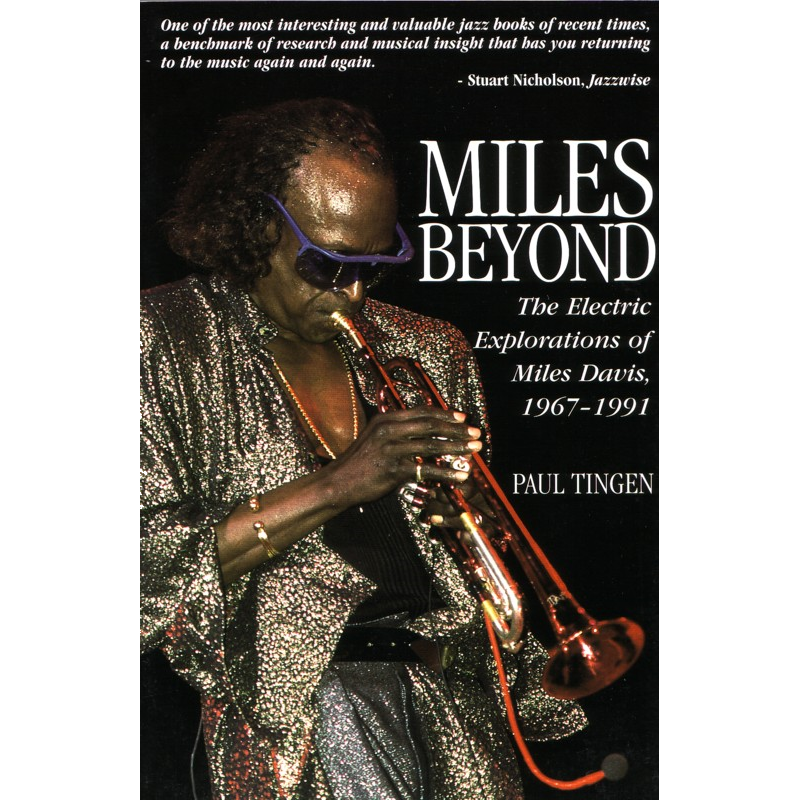
Miles BeyondIn December 1967, when he already was the biggest name in jazz, Miles Davis began experimenting with electric instruments and rock and folk influences. It quickly led to impressive results with ground-breaking jazz-rock albums like In A Silent Way (1969) and Bitches Brew (1970), which introduced the trumpeter’s music to the world of rock.

As a result, Davis’ target audience shifted so dramatically that, rather than perform in jazz clubs for a few dozen people as he had done a few years earlier, he played at the 1970 Isle of Wight festival in front of an audience of 600.000, his pioneering mixture of jazz improvisation, psychedelic  experimentation and high-energy rock leaving many in the audience in equal amounts ecstatic and bewildered. The event was described by Richard Williams in The Guardian here and documented in the excellent documentary Miles Electric: A Different Kind of Blue, which contains the entire concert as well as a talking heads section that takes its cue directly from Miles Beyond.

Davis carried on experimenting during the first half of the 1970s with wildly exploratory music, in the process laying the foundations for ambient music (Brian Eno has explicitly referred to Davis’ experiments), hip-hop (with the influential On The Corner in 1972) and jazz-funk. On one day, February 1, 1975, Davis and his band recorded two double albums with arguably the wildest, freakiest, most far-out psychedelic, funk-jazz-rock music ever heard, then and since: Agharta and Pangaea. Sadly, no-one was listening at the time.

Having reached the pinnacle of his career, and arguably of the entire jazz-rock movement, Davis retreated for five years from the public eye, and re-emerged in 1981 for a final 10-year long roll-call during which he produced more first-class music (and admittedly some dross as well) and finally received some of the attention and accolades that were his due. He died in 1991.

A pioneering work when it was first published in 2001, Miles Beyond, the Electric Explorations of Miles Davis, 1967-1991, paved the way for a critical re-assessment of this music–particularly of the 1970-75 era, which had been almost forgotten. It remains the only book that contains an in-depth exploration and analysis of Miles Davis’ entire electric period—covering almost half his recording career—based on the testimonies of the musicians who worked with him. Interviewed at length for the book were musicians like Herbie Hancock, Wayne Shorter, Chick Corea, Dave Holland, Jack DeJohnette, Lennie White, Billy Cobham, Pete Cosey, Reggie Lucas, Mtume, Michael Henderson, Sonny Fortune, Dave Liebman, Marcus Miller, John Scofield, Mike Stern, Bob Berg, Darryl Jones, Ricky Wellman, and many, many more. From these testimonies a vivid picture emerges of Davis’ visionary approach to musical composition, improvisation, and how he helped his sidemen to discover new depths in themselves and play better than they had ever played before.

Containing 352 densely-written pages, including a 50-page sessionography by Miles Davis scholar Enrico Merlin, Miles Beyond is a must-read for anyone interested in the electric music of Miles Davis, and for any musician who wants to learn how to play, in the words of Davis, “more than you know.”

The web site miles-beyond.com contains more details from the book plus many additional articles, photos and other paraphernalia.
Miles Beyond back cover

“An exhaustive, judicious and immensely helpful new study of Davis’ electric work. This fascinating, 400-page tome is not only readable, but a must-have for any serious student of Davis. It steers your attention directly to the radiant heart of the music it so passionately describes.”- Paul de Barros, NPR radio.

“The most important book on Miles Davis ever.”- Mark Prendergast, Bloomsbury Magazine.

“An extraordinary book, brilliant in its conception and delivery, about one of the great musical geniuses of our times. Highly recommended.”- Ken Wilber, philosopher and best-selling author.


Buy Now

Nick Cave & The Magical Fabrique

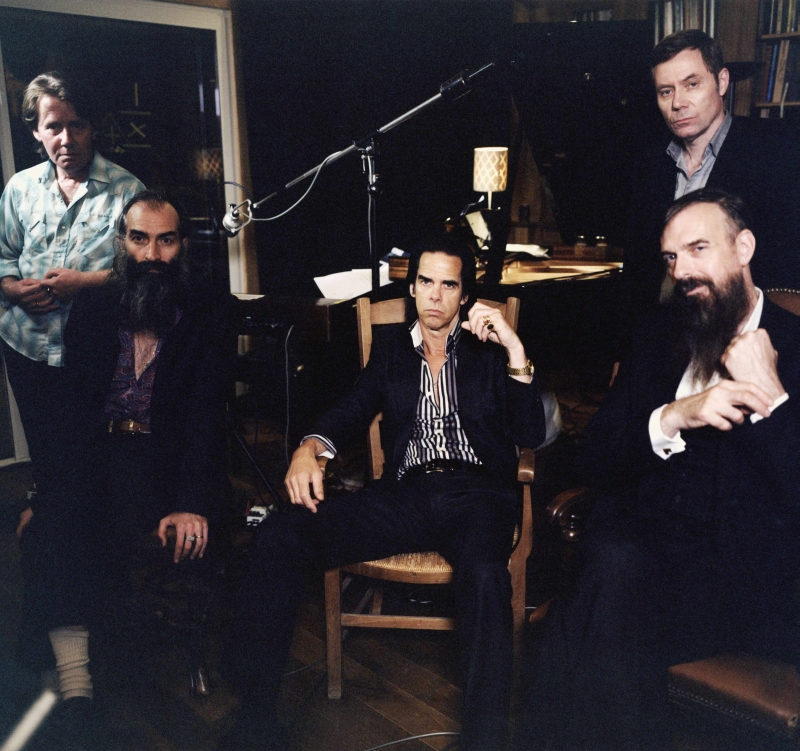
Nick Cave and the Bad Seeds at La Fabrique. Photo by Cat Stevens

Nick Cave and the Bad Seeds at La Fabrique. Photo by Cat Stevens

NICK CAVE & THE BAD SEEDS ENJOYED THEIR MOST SUCCESSFUL ALBUM TO DATE WITH PUSH THE SKY AWAY. PRODUCER, ENGINEER AND MIXER NICK LAUNAY LIFTS THE LID ON HOW IT WAS MADE

“It seems that this album is really touching people, more than any other album that I have ever worked on,” mused producer extraordinaire Nick Launay, talking from his home in Los Angeles. “People appear almost overwhelmed by it. I’m noticing that especially women love it, probably because it is quite laid back and full of mood and feeling. The whole idea was to make a very touching and a very beautiful album, and not only does it sound organic and warm, with many unusual sounds, like loops, squeaks, buzzes and hums that we deliberately kept in, it also contains many stories that are told in an unusual way and with an incredible sense of humour. Making this album was very entertaining. In fact, every album that I do with them is getting wilder and wilder and more unusual. It shines through on the record, and I think it’s one of the reasons why so many people really like it.”

Nick Launay at La Fabrique

Nick Launay at La Fabrique

Launay was talking about Nick Cave and the Bad Seeds’ recent album Push The Sky Away, and his statement is all the more remarkable for the fact that the producer, mixer and engineer has one of the most impressive credit lists in the industry, featuring the likes of Public Image Ltd, Yeah, Yeah Yeah’s, Killing Joke, Midnight Oil, Kate Bush, David Byrne, INXS, Eric Clapton, Lou Reed, Arcade Fire, Supergrass, Grinderman, and many more. For him to say that the response to Push The Sky Away has been stronger than that of any other album he’s been involved in may be interpreted as the usual being-enthusiastic-about-one’s-latest-project hyperbole, but a look at the critical and punter’s reactions to Push The Sky Away tells a different story. Nick Cave and the Bad Seed’s fifteenth studio album is by far the band’s highest charting album to date, going number one in close to a dozen countries, including in Cave’s native Australia, and reaching the top five in countless other territories, amongst them Germany and the UK. Even the US has stopped resisting Cave & Co’s charms with a 29 Billboard chart position, substantially higher than anything they have hitherto achieved.

The critics, meanwhile, have been almost universally ecstatic, leading to a Metacritic rating of 8.2 (out of 10). Push The Sky Away was called “a majestic and desolate masterpiece,” “subtle, sprawling, and often achingly beautiful,” “a striking, challenging and ultimately gorgeous album that should greatly appeal to fans appreciative of Cave’s more reflective mood,” and “a record of stunningly subtle beauty, a work that is both breathtakingly delicate and almost overwhelmingly powerful.” These are no mean words, and the fact that, for once, public and critics agree means that there’s something exceptional going on. Outstanding albums don’t always have outstanding making-of stories, nor does an exceptionally inspired production process necessarily lead to great results, but as Launay related the story of the writing, recording, and mixing of the album, there were enough hints, details and anecdotes to go some way to explaining Push The Sky Away’s greatness.

FANTASTIQUE FABRIQUE

The London-born Launay first worked with Nick Cave right at the beginning of his studio career, in 1981, on a single for the Australian’s post-punk band The Birthday party. The two re-united in 2002 when Launay recorded, mixed and produced Nick Cave and the Bad Seeds’ album Nocturama (2003). Since then the band lost a founder member with every album: Blixa Bargeld was no longer there for Abattoir Blues/The Lyre of Orpheus (2004) and Mick Harvey left before Dig, Lazarus, Dig!!! (2008), but each of these Launay-produced albums was well-received. Launay and Cave also worked together on two albums by Grinderman, Grinderman (2007) and Grinderman 2 (2010), featuring three other Bad Seeds members and music of a noisy, garage-rock variety. Push The Sky Away is by far the most introverted and atmospheric of the albums Cave and Launay have worked on together. It wasn’t exactly planned that way, but circumstances certainly appeared to conspire for Cave, Launay et al to come up with something far more filmic and expansive than they had previously done. These circumstances included recording the bulk of the album in idyllic French countryside, with the relaxing effects of gorgeous grounds, a pool, wine and good food apparently seeping through into the music.

La Fabrique main building

La Fabrique main building

“The environment definitely helped,” agreed Launay. “One thing that also played a part was that Nick and Warren [Ellis, multi-instrumentalist] have been doing quite a bit of film music in recent years, so they’ve been breaking down this whole rock approach of music needing to have a drumbeat with a snare on 2 and 4. I’ve been doing some film music as well, so we all recognised that the way music makes people feel is actually the most important thing. That really helped to expand the possibilities. My focus in making music has never been on what’s fashionable, or what’s being played on the radio. What matters is how it touches people and how it makes them feel, and for this project we all wanted to make a really special and beautiful record. Nick also had many fantastic words, poems and stories to tell and feelings to share, many of which were written before the music existed, so the process was a matter of everyone trying to find the right music for the lyrics. This contrasted with the way previous Bad Seeds albums were done, with the songs for the most part having been written by Nick before the recordings, and the band rehearsing them and then recording them very fast in the studio. The Grinderman records started with the band jamming, messing with sounds and loops, and Nick then writing lyrics to that, which is the exact opposite of the way Push The Sky Away came into being.”

“Nick has done many albums, and each one has a different feeling, and with this album there was a very deliberate idea in place before we made it. Other albums have been done very quickly, with Dig, Lazarus, Dig!!! recorded in four days in Terry Brittan’s State of the Ark Studios in London, which is incredibly fast by anyone’s standards. Abattoir Blues/The Lyre of Orpheus was recorded in Studio Ferber in Paris, which is a fantastic studio that absolutely affected the way that record sounds. Push The Sky Away is based on me being asked to look for a residential studio in the UK, so we could all stay there and really focus on the recordings and the feelings we were getting and not having to deal with staying in hotels and having to get cabs every morning. But I couldn’t find any residential studios in the UK that didn’t have an SSL. I prefer recording on a Neve or any other vintage desk, and it appears that every beautiful English desk made in the 1970s has been sold to the US, and that’s a real shame. I spent my first ten years recording on SSL’s, but once I encountered a Neve, I immediately thought: ‘my goodness, this sounds so much more natural, and the headroom is so much higher and the depth of sound so much better.’ And the bands that I work with benefit from the honest sound I get by using vintage desks.”

Nic Cave, the Bad Seeds and Launay listening at La Fabrique

Nic Cave, the Bad Seeds and Launay listening at La Fabrique

“I got really frustrated by not being able to find a suitable residential studio in the UK, and in the end I asked a friend, [producer] Nigel Godrich, if he know of any, and he suggested I check out this studio, La Fabrique, which is close to where he sometimes lives in the southeast of France. I visited the web site, and it looked great. It has a 72-channel Neve 88R desk in a huge control room, and is located in a large old house with an incredibly history—the dye for the uniforms of Napoleon’s army was made there, for example. Nick went to visit the place and immediately loved it. He called me while he was still there and said, “The studio has a great vibe, with no overhead lighting. I’ve booked it!” The studio, and the house as a whole, has lampshades, and contains thousands of classical vinyl records stored in wood-panelled shelving, giving it a very homely atmosphere. The Neve desk is quite new and doesn’t have a lot of character, but it’s clean and clear and has a lot of headroom, and it least doesn’t sound like shit!”

SING SING START

Although quite a lot has been made of Launay, Cave and The Bad Seeds recording Push The Sky Away at the picturesque La Fabrique studios—it’s strongly featured in the making-of-the-album video—the reality is that the record had its genesis elsewhere. Launay took the story from the beginning: “The album was done in three parts, and the first happened before Christmas 2011. Nick called me up and said that he wanted to try some recording ideas at Sing Sing Studios in Melbourne, which is one of my favourite studios in the world. I flew out to see a Grinderman gig at the Meredith Festival on December 11, and the day after we went to the Neve room at Sing Sing, where there’s a vintage Neve with 1073’s, with Nick, Warren, Thomas [Wydler, drums], and Marty [Casey, bass], and did four days of jamming. They were simply throwing ideas around to see what would happen, though the possibility that this could become an album was already in the back of our minds. We recorded absolutely everything, made notes of the good bits and also did rough mixes of them, and then we all went off to do other things. Later, in the spring of 2012, Nick and Warren got together twice in a small studio in Brighton [England; Cave lives in Brighton], just to play around with things and come up with some new ideas. They also did some recording with [bassist and Bad Seeds co-founder member] Barry Adamson, and at that point we all felt that we had the makings of an album. It was then that we looked at La Fabrique and booked it for three weeks, which is very extravagant amount of time for The Bad Seeds!” (laughs)

La Fabrique control room

La Fabrique control room

“We reviewed the stuff that was recorded at Sing Sing and in Brighton and found that parts of it were really good, with a great vibe, and some of it ended up on the album. The basic tracks for ‘Jubilee Street,’ ‘Finishing Jubilee Street’ and ‘Higgs Boson Blues’ were all recorded at Sing Sing. Although the Brighton recordings were intended to be demos, we also used the bass that was played by Barry on ‘Finishing Jubilee Street’ and ‘Push The Sky Away.’ Almost everything else was recorded at La Fabrique. All the music is based on loops that Warren would make up using various instruments and his sample pedals. He has two Boomerangs, which are very old and probably still 8-bit, a couple of Eventide pedals, a Digitech Jam Man Stereo Looper/Phraser pedal and a Boss RC30 Dual Track Looper pedal, plus many distortion and EQ and other pedals. He plays with them and his instruments [violin, viola, tenor guitar, mandolin, flute, synthesizer, electric piano] until he gets something that feels good, and the band then plays to these loops. The loops often have strange mistakes in them, are never consistent, aren’t necessarily in 4/4, and it can be debatable where they start and end. This always leads to interesting things! All our decisions about the music were about what felt good and not about whether something was correct or not, so we kept things like for example the tenor guitar in ‘Jubilee Street,’ which is out of tune, but we liked the vibe!”

Launay added that although he’s still a big fan of the sound of analogue tape, he recorded Push The Sky Away on Pro Tools at 96/24, because they wanted to be able to extensively edit the recordings. “Our aim was to capture all the performances and then distil and edit all the bits of magic that we had recorded. Especially Warren’s loops are a real mystery thing. He’s tinkering and tinkering, and suddenly it sounds great. They often are like some kind of magic fluke, and it would have been impossible to recreate or replace them. Sometimes we would record his loop and the band would play to that, but more often than not he’d trigger it live. We usually had three or four people playing to the loop at the same time, so the whole thing was very live, and we kept whole takes. Most songs were played for much longer than needed, and editing was part of the arrangement process. We’d chop things down to a length that would keep the listener’s attention and then edit further and swap things around, and do overdubs, and so on. The original jam at Sing Sing for ‘Jubilee Street,’ for example, was 20 minutes long, and we cut it down and then edited sections together, which meant that there are sudden changes in tempo. It were mainly Nick, Warren, the band and I taking these editing decisions. It was very much a collaboration.”

Push The Sky Away cover

Push The Sky Away cover

“In the past my job as a producer was to do preproduction with a band and help them arrange their songs as best as possible, and then go into the studio to record them performing these arrangements as best as they could. This is where analogue tape worked well, and I might do razor-blade edits between takes—in some cases up to 30 per song!—to get the best feeling. But this album wasn’t done that way. Instead it was a lot about cutting and editing things and moving them around in a track. We sometimes would move an entire vocal take slightly in time, again to get the best feeling. These are all things that Pro Tools is great for. We never abused Pro Tools to get technically perfect recordings, like fit the drums to a grid or tune things. Again, every decision was based on how things felt, and probably half of what’s on the album is technically wrong. But if it felt good, we would use it, or even exaggerate it. This is what my job as a producer is all about: capturing and recognising great bits of magic, and then editing and manipulating them, and Pro Tools is an incredible tool for that.”

FOLLOW THE MAGIC

In the case of Push the Sky Away, capturing the performances required every bit of the skill and know-how that Launey has amassed over his thirty years of working in studios, not least because he also was continuously editing and creating rough mixes. He explained, “I had to be really on the ball, with no space for distractions, no picking up of cell phones or anything. It was a matter of being on all the time. Warren may start playing one instrument, and then halfway decide to pick up another one, and the very first thing he plays on this second instrument may be the bit that we need. So I have to set things up in such a way that no matter what he plays and when he plays, it’s going to sound great. It was the same with everyone else. Also, the Bad Seeds are the band with the greatest dynamic range that I have ever worked with, going from a whisper to extremely loud, and this meant that I had compressors on all microphones, for most of the time just ticking over and not doing anything, but just to make sure that if they were playing really loud, things wouldn’t be overloading in an unusable.”

La Fabrique at night

La Fabrique at night

One aspect of Launay’s working methods that has remained the same over three decades is that he likes to get his sounds right at source. “Most of getting the character in the sound is done with real-world, analogue, equipment, and the problem-solving—ie editing, getting rid of annoying frequencies, noise gating, etc—I now do in Pro Tools. At La Fabrique most of what I did was about capturing things, and in Warren’s case, because I never know what he’s going to play, I took feeds from absolutely everything. I had DI’s from before and after the pedals, even though we rarely used the DI signals in the mix. They were more for backup, and if we did use them, I’d usually send them out through an amp again. I always had two mics on his amps, usually a BeyerDynamic M88 as a close mic, and a tube mic further away, like a Neumann CMV lollipop mic, both of which went through a Neve 1081 mic pre, two 1176’s, and then into Pro Tools. He plays violin and viola, and although these go through an amp, I also mic’ed these acoustically, with a Bock 507 going through a Urei 1176. The Bock microphones are handmade by David Bock from vintage microphones, and have the same capsules, and sound even better than the original. I recorded Warren’s flute with the same mic, or maybe a AKG C12.”

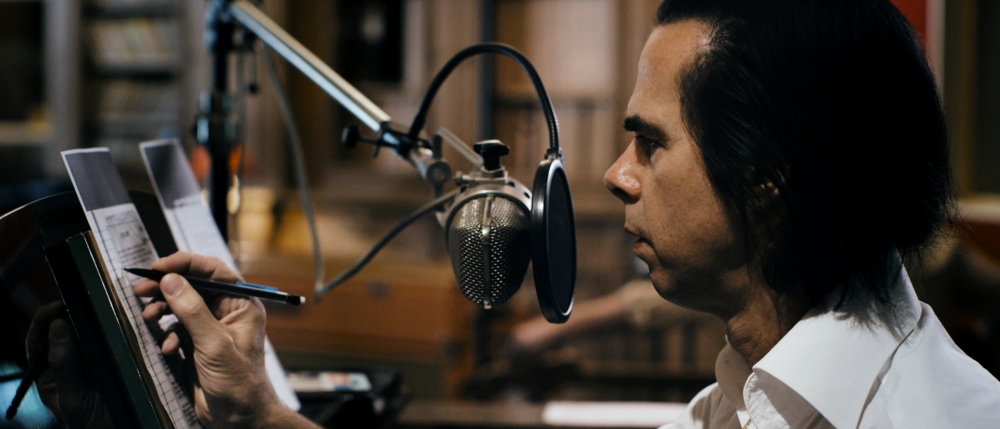
Nick Cave at la Fabrique

“I recorded Nick’s vocals with a Neumann M49, going into a Neve 1081 and then a Tube Tech CL1B, and then to Pro Tools. All the vocals on this album were original takes done with the band, and were not overdubs, apart from a couple of songs in which Nick overdubbed some parts of his vocal because he’d changed the lyrics. With the Bad Seeds many decisions about what take to use are based on the vocal performance. Because Nick usually plays piano while he sings, I had to find ways to isolate the two. For this I use a microphone that fits into the piano with the lid down, the AKG C12B, which looks a bit like a 414. I have two C12B’s and, with permission of the piano owner, I use two layers of gaffer tape to construct a suspension bridge over the metal piano frame, and tape the mics to that, so they are suspended over the strings. The lid stays down, and I very often seal the underside of the piano as well. The sound that I get in this way is very dead and close-sounding, but actually works surprisingly well. The piano mics go into the 1081’s, if I have enough of them, or API’s 550’s, and then to tape. With electric pianos, like the Wurlitzer or the Fender Rhodes, I’d have a DI and also a mic on the amp. Another keyboard that was often used during the sessions was the MicroKorg, which is almost like a toy keyboard, but it has some really cool sounds in it. We tended to put it through guitar pedals so the sounds aren’t so obvious. Wherever you hear a synthesizer on the album, it was a bastardized MicroKorg.”

drummer Thomas Wydler

drummer Thomas Wydler

“The bass went into an old 8×10 Ampeg SVT cabinet and then a DI going into a Drawmer 1960 compressor, and it was mic’ed up with a Sennheiser 412 as a close mic and a Shure SM57 as a more distant mic, which went through an 1176. The latter gives me a lot of grit for songs that need it. For the drums I usually had a BeyerDynamic M88 on the kick, and I EQ lots of low end into that. The snare had a Shure SM57 or a Unidyne 57, toms I recorded with AKG 414’s, overheads were Neumann KM84’s, hi-hats the Schoeps 402 pencil mic, all of them going into 1081’s, if I have enough. If not, I’ll always use 1081’s on the kick, snare and hi-hats, and will use whatever desk is available for the other mics, so in this case the Neve. I always had room mics at La Fabrique because everything is happening so quickly and they often started recording before I had even managed to set levels, so I had two Neumann U87’s as room mics, going into two API 550’s and then two 1176’s with minimal compression and a tube mic like a Bock or a C12 with lots of compression. With everything I recorded I always tried to catch things with two different mics, so I can later choose one or the other, or have a combination of the two, and then use the differences between the mics to play them off against each other, using phase reversal or in Pro Tools time shift. You can create many different sounds like that.”

The La Fabrique sessions began on June 24, 2012. While Cave & Co had booked three weeks, Launay related that the company essentially had finished their work after two weeks, and spent another week trying different things, only to realise that this deep down was for the most part an excuse to spend a few more days in the studio’s paradisiacal surroundings! On July 15th they packed up the gear that they had rented in the UK, loaded it in the truck and drove back north. According to Launay, everyone took a break for one and a half months, after which the Briton began to mix the record at Seedy Underbelly Studios in Los Angeles, a place that he rents from a friend for up to eight months a year. Seedy Underbelly is a tiny studio filled to the brim with Launay’s favourite gear, including a late 80s 32-channel API Legacy desk and Adam P22 monitors.

“I’ve mixed almost every album I’ve done in the last 12 years at Seedy Underbelly,” explained Launay. “The desk is pretty much identical to the 70s API desks, though the latter may sound a little rounder and warmer, but not by much. API’s are relatively simple desks and the electronics are very similar. They sound great. I like them because they don’t give me a mushy low end. When I record an album on a Neve and also mix it on a Neve, it ends up so fat-sounding that it gets too big and flabby and you end up EQ-ing things during mastering. So I prefer to mix on an API. The one at Seedy Underbelly has Uptown automation that runs on a Windows 98 computer. It’s very basic mix automation, but I like it. It does what it needs to do: move the faders and up and down and cuts, and you can store your mix. What more do you need? I love my P22 monitors, and have a pair in Seedy Underbelly and in the UK, and I took the latter to France for the recordings at La Fabrique. I used to work on NS10’s, but I found that they sound just too harsh when working with Pro Tools, and this prompted me to look for speakers that you can listen to at high volume all day long without getting fatigue. The P22’s have ribbon tweeters, and this helps a lot.”

“Warren and Nick came over to LA and we spent a hilarious time mixing the album at Seedy. The way we worked was that I’d go in one or two hours before them, and I’d set up a basic mix, and they’d then come in with fresh ears and gave their comments. I then took it from there. Most of the mixes at Seedy Underbelly were very quick, usually taking between 5-6 hours for each song, after which I’d spent time laying down the various mix takes, and also the stems. My mix process is that I first get a basic balance of the entire song, and I then EQ and compress things to make them work together, while doing minimal fader movements and only very rarely solo-ing. I find that when you mixes flow better and sound more natural that way. It’s different from the days when I mixed on SSL’s, when I would solo certain sounds, like the kick or snare, and then would put the whole thing together, hoping everything would fit together. But sometimes it didn’t!”

“What I do very often, and with this album in particular, is that once I get the mix to a place where I feel that it is pretty good, I will listen to the rough mix again. Many of the rough mixes that I did in France were really vibey. They were very simple, but really worked, so I didn’t want to stray too far from them. Instead I’d just try to improve on the rough mixes a little bit. In fact, there are two songs on this album that are the rough mixes I did at La Fabrique: ‘We No Who U R’ and ‘Push The Sky Away.’ These rough mixes had a magic that I can only describe as: they were distorted in a really good way!’ At Seedy Underbelly I added new backing vocals to the rough mix of ‘We No Who U R,’ and also mixed in a bit of a loop by Warren that sounds a bit like a space ship. I obviously couldn’t recall the La Fabrique mixes, because they had been done on a completely different desk, but I will very often take photos of the desk for reference of a rough mix and refer to these.”

“My main gear at Seedy Underbelly consists of eight Neve 1081’s and eight Neve 1073’s and compressors like the Distressor, and Drawmer noise gates, an EMT 140 plate, a Furman spring reverb, which is pretty cheap, $300, and mono, and sounds like a guitar amp reverb, and a Roland RE301, the latter is a major part of the sound of this album. I have all the outboard that I use for mixing more or less permanently wired into the board, and lay the mix out so that the kick is always on the same channel, and the snare, and so on. I didn’t actually use many effects for the mixes on Push The Sky Away. It’s quite a natural-sounding album. There are a couple of tricks that I always use, like a gated Sansamp PSA-1 on the kick drum and I like to compress the snare a lot with a Distressor. I usually have the snare uncompressed on one channel and I’ll compress it on another channel that I will dull down so the hi-hat spill doesn’t pump unnaturally, and I’ll mix that in with the uncompressed snare. So I use the compressed snare sound for low midrange and low end and the non-compressed snare for the top end.”

“Regarding Warren’s sounds, most of the effects are already in the sounds, because he used loads of pedals, so all I did was add a little Furman spring reverb or EMT vintage plate or a slap back echo from the Roland RE301. I used the same effects on the vocals, as well as the dual Tube Tech LCA 2B compressor. I’ll also compress the room mics a lot, and the Urei 1176 is really good for that, because it adds quite a lot around 2-3KHz and they also distort in that area, which makes the effect very exciting. But because you can lose a bit of low end and get these exaggerated high-mids they’re not as good for vocals, because they tend to bring out the esses. Instead I’ll often use the Tube Tech CL1A on vocals, which is modelled on the 1176 but it doesn’t have the mid-range boost. It sounds very warm and works great on Nick’s vocals.”

API Legacy desk at Launay’s Seedy Underbelly Studio

Launay quite proudly declared that the way he works is a hybrid of analogue and digital, and so plugins also play a role in his mix approach. “I use analogue and digital absolutely 50-50, and I am very happy with that. There are things I can do in Pro Tools that I could never do in the analogue domain, particularly very detailed things and problem-solving. I basically do all the broad strokes in analogue, on the desk using the faders and with outboard, and detailed adjustments in Pro Tools before it goes out to the desk. But on this album I also used several plugins for controlled digital distortion, like the SoundToys Decapitator on bass, and sometimes on the vocal, as well as on Warren’s stuff. In the past I’d use compressors like the Gates on the kick drum, but I found that the Decapitator pretty much captures all these things. It has five buttons that allow you to change the tone and to find the best harmonic distortion for the sound.”

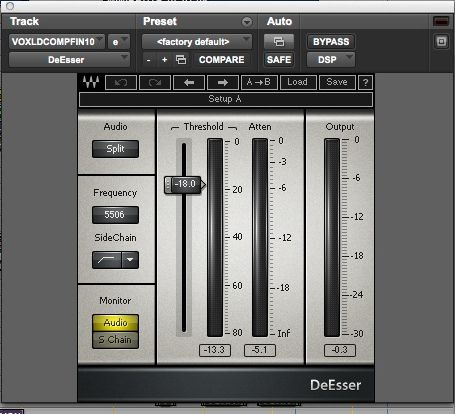
“In addition I also used EchoFarm plugin a lot, which emulates the vintage echo machines. I’m a bit worried that Pro Tools 10 doesn’t support TDM anymore, and EchoFarm is TDM only. I also use the Waves DeEsser, which is amazing. De-essers compress a certain frequency in a very narrow bandwidth, so you can also use them to get rid of low booms and other sounds, and I therefore use de-essers to get rid of all kinds of sounds that I don’t like. I also often use the Pro Tools EQ3, as a notch filter. It doesn’t do much sonically, ie it doesn’t make the sound warmer or colder, but it’s a great tool to boost or cut very specific frequencies. The SoundToys Chrystallizer is another favourite plugin, as well as the Devil-Loc, which is great. I do a lot of controlled distortion! And I use the Waves Expander/Gate a lot.”

“The stereo mixes went through two EAR compressors, and then two 1081’s, with which I added a bit of top and bottom and sometimes a bit of 2K, just brightening up the mix and making it thicker. The mixes went back into Pro Tools via Lavrey AD 122-96 converters. I also use a Lavry digital clock, because the main problem with Pro Tools is that the clocking is bad. So all the above is how I make up for not using analogue tape! The other reason for no longer mixing to ½-inch tape is that mixing stems back into Pro Tools allows me to adjust my mixes afterwards. For example, we’ve chosen mix 4, but I may then decide that there’s one section where I want the snare a bit louder. So I just get the snare stem and feed that in, or if I want the snare less loud, I’ll put the snare stem slightly out of phase so it substracts. You could never do that before. Using Pro Tools allows me to have my cake and eat it!”

“I’m still not 100% happy with the sound of Pro Tools, even though 24/96 is a big improvement over 44.1 or 48. I recorded Push The Sky Away on 24/96, but the reality is that 80% of people will end up listening to the album on MP3. That may be sad and frustrating, but it’s the truth. So as long as I am happy with the warmth and the feeling of my mixes, in part because I use a lot of analogue gear while recording and mixing, then I am OK with recording to Pro Tools and mixing back into Pro Tools. I could have mixed to 1/2–inch and then back into Pro Tools, but it’s arguably whether that would have made any noticeable difference to the sound. More often than not, all it ends up doing is cutting off the transients, and you end up trying to get them back during mastering, using EQ. You can easily go round in circles, and in the end it’s better to simply accept that people listen on MP3 or, at best, at 16/44.1. So I use Pro Tools, and every trick in the book that I have learnt over many years to make my recordings and mixes sound as good as possible. I think I managed to make Push The Sky Away sound pretty analogue, despite the fact that no analogue tape was used. I am really satisfied with the way it came out. It’s interesting that the album has struck a chord with so many people. It’s nicely surprising, and it also gives us hope!”

© 2013 Paul Tingen. Posted August 13, 2013.

Previously published in Audio Technology magazine, issue 95.

More images, including several screen shots, will be posted soon…

Andrew Scheps mixes Black Sabbath’s 13

My Inside Track article in the August issue of Sound On Sound magazine features engineer, mixer and producer Andrew Scheps discussing his mix of Black Sabbath’s new album 13, in great detail. As is often the case, the magazine doesn’t have the space to publish all the screen shots and photos I was supplied with, so below are the ones that weren’t published in the magazine. I’ve also collated ALL screen shots in one handy zip file for those that like to study these things in detail. Several of the photos of Scheps show him at work during a Mix With The Masters seminar at La Fabrique Studios in the south-west of France

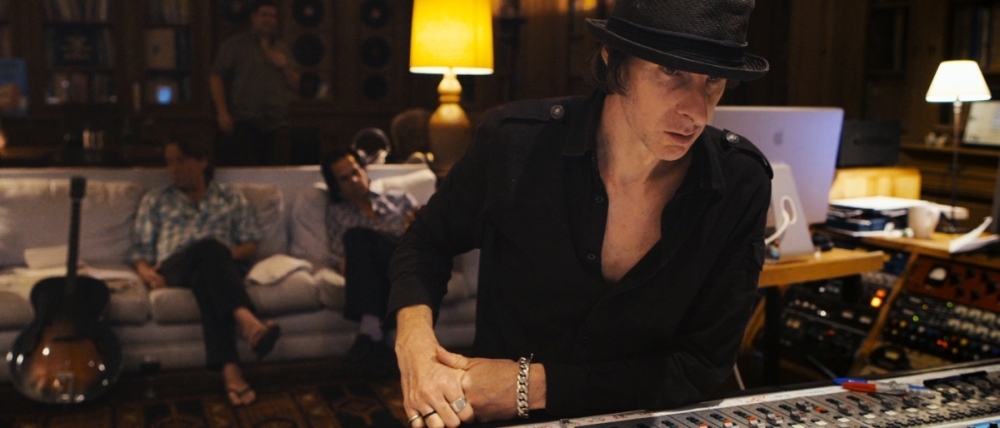
Andrew Scheps at La Fabrique

God is Dead? Single image

God is Dead? single cover image

Download all screen shots in one zip file

Download all screen shots in one zip file

God is Dead? Edit window part 2

God is Dead? Edit window part 2

God is Dead? Edit Window part 3

God is Dead? Edit Window part 3

God is Dead? Edit Window part 4

God is Dead? Edit Window part 4

God is Dead Mix Window part 1

God is Dead Mix Window part 1

God is Dead? Mix Window part 2

God is Dead? Mix Window part 2

Foals, Flood, and Holy Fire

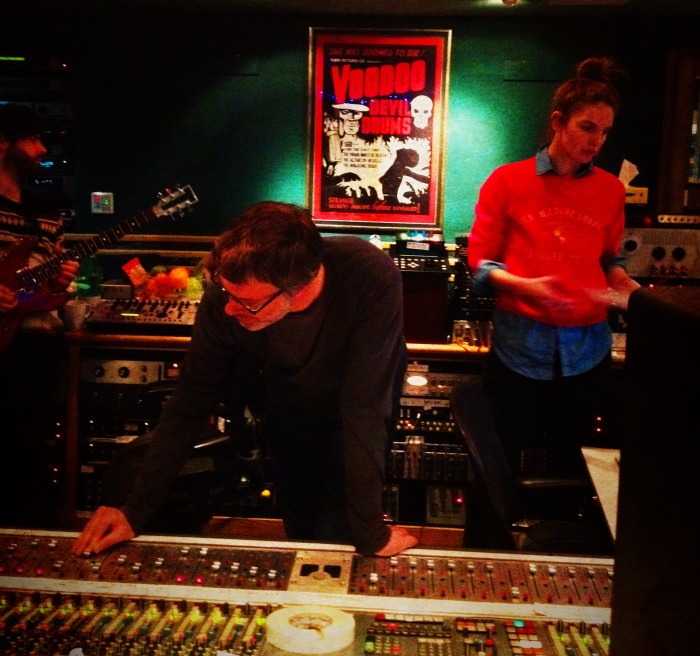
Foals guitarist/singer  Yannis Philippakis, Flood and CJ Marks in Assault & Battery Studio 2

Foals’ third album, Holy Fire, has been widely praised for its exceptional sound and production. Legendary producer Flood and Aussie newcomer CJ Marks explain how it was done.

Exactly how British rock band Foals managed to go from almost complete unknowns in Australia to topping the ARIA chart earlier this year with their third album, Holy Fire, is a bit of a mystery. The many enthusiastic local reviews provide a clue, with accolades like “triumphant return,” and “best album yet.” Particularly notable is the credit many reviewers give to the production, writing things like, “the album sounds a million bucks,” “Despite the wide-ranging sounds, tones and influences on this album, Holy Fire hangs together perfectly, thanks in large part to great production,” and, “if this album doesn’t sound amazing at full volume, tearing down the street at night…”

It’s rare for mainstream reviewers to comment so extensively on the production, but one listen to Holy Fire immediately reveals that the band’s wild cocktail of funky rock songs, angst-ridden vocals, and ultra-tightly played arrangements is stirringly augmented with all manner of loops, synth sounds, and other sonic landscaping, making it an immensely impressive-sounding record.

Moulder (l) and Flood

Moulder (l) and Flood

Responsible for the production aspect of Holy Fire were legendary British mixers and producers Flood and Alan Moulder. The former has worked with Depeche Mode, U2, PJ Harvey, Nick Cave, The Killers, and Goldfrapp while the latter is known for his achievements with Nine Inch Nails, Foo Fighters, Arctic Monkeys, The Killers and Led Zeppelin (he mixed the recent Celebration Day DVD/CD). A crucial role in the way Holy Fire sounds was also played by Australian Catherine J Marks, who engineered the entire album, and who has in her relatively short career already built up a respectable set of credits, including Futureheads, Goldfrapp, PJ Harvey, and Placebo. Marks gained many of her earlier credits in working with Moulder and/or Flood, as the two mentored her , so it’s easy to see how she ended up working on the Foals project.

Holy Fire’s Australian connection is further strengthened by the fact that the band spent the beginning of 2011 working in Sydney with Jono Ma, guitarist and keyboardist of Sydney band Lost Valentinos and his own project Jagwa Ma.  The band reportedly went back to the UK with stacks of loops, samples and grooves that supplied a “foundation to the new record,” according to Foals keyboardist Edwin Congreave. Foals must have felt that they needed the help of some world-renowned, dyed-in-the-wool professionals to be able to take things further, because they once again turned to Alan Moulder, who had mixed their second album, Total Life Forever (2010), with assistance from Marks. From here, Flood and Marks take up the rest of the story of the making of Holy Fire. On the phone from Los Angeles, the former recalls…

“I’ve long had Foals on my radar, so when Alan asked me to whether I fancied doing the production together, it seemed like a really good idea. The two of us do projects together once every five or six years, and it’s great because it pushes both of us. The band had been sending us song ideas over the summer, and during the last months of 2011 and early 2012, Alan and I repeatedly went over to their rehearsal studio in Oxford to work on these. The idea of this pre-production period was to put all ideas on the table, no matter whether it was just a riff or a fully-formed song, and give them the right feel and groove and arrangements, structures, key, tempo and so on. Some songs fell by the wayside and others came to the fore during this process, and we ended up with about 15 strong song ideas. There was a laptop with Logic and Ableton in the room, and three microphones that were pointed roughly in the direction of the band, just to document what they were doing. For Alan and I it was important to get a sense of how they played together as a band, find out how everyone felt about the songs, and establish a chemistry between everyone. Before walking into a studio that costs a lot of money, it’s important to make sure that the chemistry works!”
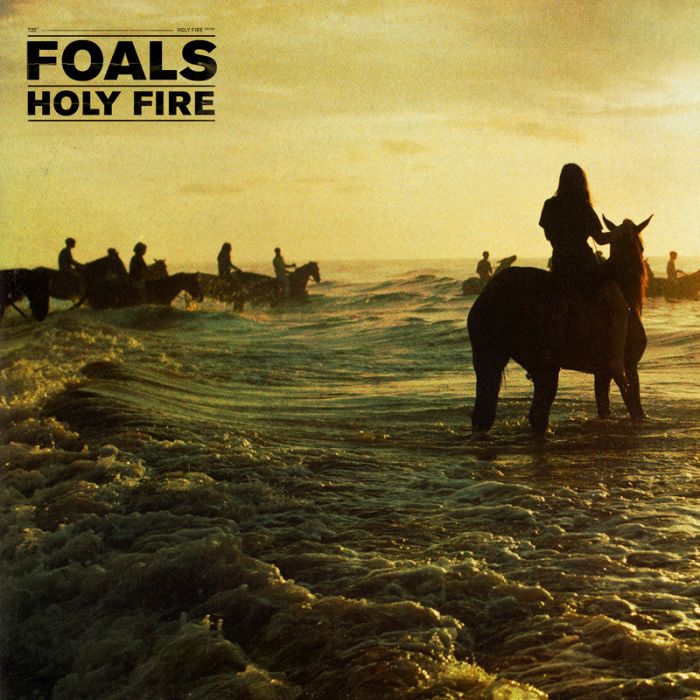
Holy Fire

The actual recordings for Holy Fire took place in Flood and Moulder’s studio, beginning March 2012. Since 2008 the producers have been running a studio complex in north-west London, Assault & Battery, with Moulder predominantly residing in the downstairs mix room, studio 1, and Flood taking care of upstairs Studio 2. Recordings for Holy Fire took place in the latter studio, which is one of the UK’s prime tracking facilities and sports a 77m2 live room with two sizeable booths of an additional 30m2 each, and a 36m2 control room with a Neve VR60 60-channel console with Flying Faders. The live rooms are full of all manner of musical instruments, including synths, keyboards, and amplifiers, aimed at making it a very creative place for musicians. With the downstairs studio an ideal place for programming, mixing and additional recording, Moulder and Flood had everything in place to successfully conduct the Foals album sessions, but they still felt they could so with some help.

“Although Alan and I both engineer, we wanted to have someone who could do all the engineering for us, so we didn’t have to think about that, and could focus fully on the production side,” explains Flood. “We decided on Catherine, because she’s an amazing engineer with great ideas, and the other thing is that she’s a woman and could balance the nine-man strong male energy in a room with five band members, two producers, and two assistants. She listens to things and approaches things from a female point of view, and the way she will balance a song, or just her take on the way a certain version of a track feels compared to another one, is just different. To have the opinions of a woman coming in all the time was invaluable. I mean, we’re making music for men and women, so you want to take all viewpoints into account. Catherine also recorded most of Yannis’ [Philippakis] vocals. Because he will interact differently with a woman than with a man, this of course affected his performance, as it would do for every singer.”

Marks:  “We began recording on March 12th, and took a break for ten days in April, and then came back, and worked until proper mixing began in August. Prior to recording we spent time thinking about how to arrange the layout of the live room and where to position each member of the band. This was crucial as we wanted to be able to not only have the ability to record the band in the same room, but also to have the potential for separation should we need it. Each band member had their own area with their own workstation and pedals and amps, and we also had a small PA in the room through which we played back a kick drum, or a bass, or a loop, or whatever. It took about three days to set up the room, and we decorated it with tropical plants and rugs and there was lots of light lighting. It looked amazing, like a jungle. During the first two weeks of recording we told the boys that we were only demoing the tracks, and were not really focussing on getting actual takes, and this meant that they were a lot more relaxed while they played together. There was no red-light fear, so the energy was more natural. The band have mentioned that they felt they had been “hoodwinked” by Flood and Moulder, but said this with humour and affection. They knew what was going on.”

Flood: “It wasn’t a deliberate decision to effectively dupe the band, but Alan and I were very conscious that they had had difficult experiences during recording in the past, and so we thought it’d be really good if they didn’t feel the pressure of the red light being on. Setting up took quite a long time, two to three days, so once everything is in place and mic’ed up, you pretty much record everything anyway. But we suggested to them to do some demos of songs that were already pretty well-formed, and this meant that there was none of this freaking out and getting overly tense that often happens when the red light goes on, and that can really affect performances. After a couple of weeks they had laid down most of three or four tracks, and after that they were so comfortable with the process that it didn’t matter that we were now formally going for so-called ‘proper masters’—it was just an extension of what we had already done.”
Assault & Battery Studio 2 Foals recording set-up

Foals recording set-up

Duping the band into thinking that only demos are recorded will only work so many times, but it does reflect a principle that every good engineer is aware of, which is to be ready to record before the artist or band expects it. In this case, getting the feel factor right was especially important, because, despite the fact that Holy Fire sounds awash with loops and post-production textures, both Flood and Marks stress that the band played a large proportion of the album live in the studio.

Flood elaborates, “I’d say that the backing tracks for the majority of the songs on the album were played live, and whenever they played together we aimed to keep all the backing tracks, not just the drums, or the drums and bass. For most of the time we also tried to keep the guitars and the keyboards. One thing that bands always ask in the studio is why they never sound the way they do live, and this tends to be because the process is so different. In this case we really wanted to get the energy of the band playing live and start layering and crafting after that, looking at parts that maybe don’t quite work, adding overdubs, and adding vocals. This meant that there often were many different rooms with people working, Alan might be off downstairs working on a mix or on guitars, I might be in another room doing sonic treatments, vocals were going on all the time, Edwin would be doing stuff to tracks and was at times almost remixing them and we’d then bring what he’d done back into the main session, other people might be working on other songs.”

Further chronicling the recording process for Holy Fire one step at a time, Marks first described the exact set-up she had for the live recordings, before providing more details of the “layering and crafting” process. “I had the Neve VR60 desk set up with the mic channels on the left, and on the right for monitoring, so Flood or Alan could be over on the right if they needed to do things while recording. I set up everything knowing that when working with Flood and Alan thing can change at any moment. I had to be prepared for 100 different scenarios. We had two different drum kits set up, one with his own little drum house, surrounded by baffles and we hung a leopard print rug over the top and put some flashing lights in there. We also had a drum kit set up in a separate booth, which we called the dull kit, or the close kit. Jack [Bevan], the drummer, had headphones on, through which we usually played a click, and the others also had headphones on if they wanted them. There were amplifiers in the main live room, as well as in the booths, so we had the option of separation if we wanted it. But the idea was that spill would be part of the live takes. I don’t think we ever had problems with it. It just added energy to the songs.”

Marks provided two track sheets (see below) with all microphone and mic-preamps she used for the second single of “My Number,” the catchy second single of Holy Fire, which combines influences from Rick James-like eighties disco, Talking Heads, electro, and 21st century alternative rock, if such a thing is possible. She highlighted a few of the pieces of kit she used during the sessions, “I used a lot of outboard to record the drums, including Alan’s new Helios mic pres on the kick, snare and overheads, as well as Trident mic pres for the floor and rack toms, a Summit, and the Neve 1073, amongst other things. But everything could change very quickly. Assault & Battery contains so much amazing gear that Flood and Alan have amassed over years and years, it’s hard not to want to try everything! I felt like Indiana Jones going into the archives sometimes when looking for gear, because there are so many foreign pieces of kit from so long ago. That was really exciting. On the kick I often used the Opus 65 mic, which is another one of Alan’s, and a Neumann 47 at the hole and an NS10 outside, and I also often used a C-Ducer contact mic on the rim. The snare often had SM57s top and bottom and the hi-hats KM184, the overheads Neumann M7 and the Coles 4038, and perhaps a couple of SM57’s, the toms had MD421’s, and so on.”

“One of the most important ingredients for the sound of the album became a Shure SM58 hanging from the ceiling, which was usually initially used for foldback. We squashed it to pieces so we could hear what the guys were saying, and in the end we used it constantly in the mix. It sounded great, pumping and glueing everything together. We also had another four room microphones scattered around that were used most of the time, and a Neumann KU 100 Binaural Dummy Head. On the bass I had a DI and the Neumann 47FET on the cabinet, both going through the Chandler TG1 mic pre and the former through a Distressor and the latter through an Inward Connections Vac-Rac TSL compressor. The guitars also had a DI, and I had an SM57 and the Sontronics Delta ribbon mic on the cabinets. I had all the microphones, apart from the drums ones, coming up on the Neve desk, whether they first went through a mic pre or not, and used the desk as a gain control for the levels that went into Pro Tools. In addition there were Yannis’ vocals, which were recorded with a Shure SM7B, going through a Neve 1073 mic pre, and then a Distressor. We split the vocals so they were also going through an FX pedal which he could control. The effects were monitored via a Maestro amplifier that we had placed in front of him. It is something that looks from the fifties or sixties, and Flood says he once bought it at K-Mart. We put a mic on the Maestro, the AEA R84, to get that a crunchy, dirty vocal sound. I mostly used a Shure SM7B on his vocals. On the song “Late Night” we used the R84 going through an Avalon. The SM7B has a pop shield that he could play around with for a slightly duller sound. I think we used an U47, the AEA R84 or a 58 on backing vocals. To be honest, it was whatever was there and ready to go!”

Foals drum recording set-up

Foals drum recording set-up

Marks’s recording set-up for Holy Fire is one factor in the album’s gorgeous, multi-layered, and full-on sound, but both she and Flood emphasised that the mainstay of Holy Fire’s imposing sound came from getting the sounds right at source level, and using a plethora of out-of-the-box, eh, boxes. Flood: “The ideas for adding textures came during the time at Assault & Battery. Foals are not a straight rock band, and they were really into experimenting with sound. These explorations were for the most part exclusively done out of the box. I hate using the word ‘organic,’ but it was a fluid process, involving the musicians at every stage. They would play together, and then they’d build loops upon loops, mostly using sequencers and pedals, often from Line 6, and they’d use synthesisers to create all sorts of textures. I have a System 700 in A&B2, which I use mainly as a giant effects unit, and there were times when we decided to shove everything through the System 700. Jimmy [Smith, guitarist] also really loved the Sequential Circuits Pro 1, and we used quite a bit of the old Roland Vocoder, and Edwin did quite a lot of stuff with soft synths in Ableton, which we then processed outside of the box, or tried to mimic with the MiniMoog or pedals, things like that. Then somebody might go off and do a lot of looping and editing in another room, and we might then reconvene and play it as a complete band, taking the information from a loop, but not using that loop in the track. For Alan and I this process was a huge bonus because it meant that we could explore new options, and not do what everybody else does.”

Marks, “This aspect was really exciting for me. We’d record the band and then have a break and Alan I would be in the control room and say ‘OK, let’s process something, what should we try?’ We’d spot something in the room and say ‘ok, let’s try this!’ Whether it was processing a kit through the Korg MS20 or Time Mod, or running a guitar part through the Eventide H910. It meant that we were responding to what had just been recorded. I think the boys had saved some loops from the Jono Ma sessions, but a lot of the stuff was created and manipulated in A&B. I’d never thought about the record containing many loops, because I just considered them other instruments. It was an element that the band responded to. Everybody was constantly working on and coming up with things for the band to respond to and many of the songs had two or three versions before we settled on a final shape. I recorded the loops DI into Pro Tools, but we also put them through amplifiers and the PA, and processed them on the way into Pro Tools. I’d go into the archives and get boxes out, like Alan’s new Marshall Time Modulator or the Voodoo-Vibe by Roger Mayer, which sounds the way it looks: chunky and dirty. We also used the Eventide H910 Harmoniser a lot. Flood would often go off to another room and work on loops and textures, we called it ‘ wormholing,’  where he’d spend hours programming his System 700 or the ARP 2600 and would come up with something that made the track infinitely better. Alan tends to be more on the board, and would spent a lot of time tweaking sounds and balances that improved things and provided new inspiration. The band was incredibly motivated and each one of them was always doing something. This was probably the first session I have worked on where there was no sitting around!”

Flood:  “Alan’s strength lies in his ability to refine and craft the raw energy of the backing tracks, where we often joke that I am quite happy to leave all the microphones open and use monitors and have the PA to 11 and everything bleeding into everything else. But he hates that kind of thing! He likes to be really precise about how it sounds. So we often have a labour division where I can set up the live room the way I want it, while he looking after how it is recorded, in this case together with Catherine, so he can get the level of precision he wants. So generally speaking I was in the live room guiding the band with performances while Alan was in the control room, and once we had enough backing tracks, he’d go and do some trial mixing downstairs to try to get inside of the sounds and work out what parts were and weren’t working. Sometimes we’d swap, with him going upstairs and recording overdubs and me doing some mixing and refining. Meanwhile Catherine was holding the ship steady.”
Foals string recording set-up

Foals string recording set-up

In addition to all these extraordinarily industrious-sounding goings-on, there was also a last-minute decision to add some real strings to some of the tracks. Marks has the low-down, “They were also recorded at A&B2. The band was still around, so they had to clear the room. We have about twelve players in the room, two double basses, two celli, four violas and four violins, and used so many microphones to record them, it was ridiculous. I felt that we were using too many, and I knew which ones we’d actually eventually use, but it was an exercise in ‘let’s make sure nothing goes wrong and that we capture everything,’ because a string session is typically quite expensive and you have a relatively short time to record the players. All close mics were Neumanns, with 47’s on the basses, M93’s on the cellos, and M7’s on the violas and violins, and for room microphones I used Coles 4038, Neumann M55k, AEA R84 ribbon, pretty much every mic that we had. The string players were incredible, and they played great parts, but once they were in the studio, everyone got very excited about making them do things that didn’t necessarily sound like a traditional string section like making the strings sound like bumbling bees or seagulls. Hugh Brunt had done the strings arrangements, and Yannis was also quite vocal with his direction] as well as about trying these different sounds.”

“We did rough mixes throughout the entire recording process, usually at the end of the week, whoever was at the desk would get all the tracks up, and Alan and I would balance them partly in Pro Tools and partly on the Neve desk, so everybody could make decisions on what they were happy with. But we were trying not to be too precious about it. As the sessions progressed, balancing took more and more place inside of the box. Once we had done the bulk of the recordings, Alan moved downstairs to do rough mixes, for the band to respond to focused on recording most of the vocals. I actually recorded the vocals in three rooms; I started upstairs in A&B2, and then moved to a side room in studio 1, and then during the very final weeks both studios were booked, so we moved to Flood’s house for vocal recordings. We spent a good month just recording vocals. Yannis likes to craft his lyrics, and for him it’s more about how they sound than how look on paper, so he had to sing them to be sure that they worked. It was quite fascinating.”

Flood: “Some songs took a long time to come together. ‘Inhaler,’ for example, was one of the songs that they had worked in in Australia. It had been around forever, and just wasn’t happening. Then one afternoon we were trying out some different ideas, and I everything suddenly slotted into place and it worked. We tracked it straightaway and Alan went downstairs and mixed it. He didn’t do a final mix, it was just a matter of making sure it had the right feel. In this process, mixing was almost like another instrument. There are very few overdubs on ‘Inhaler,’ in contrast to ‘My Number,’ which was one of the songs that was the most-fully formed. They played it to us in their rehearsal space during pre-production, and it was immediately obvious to Alan and I that it’s an amazing song. But a song like that can run a fine line between being a bit lightweight and having real integrity and depth about it. Alan and I knew that it would be the hardest song to get right, and we tried loads of different ways of doing it. We spent a lot of attention to detail and really pushed that song to its maximum, so now that every time that song is played, everybody goes: ‘this is great!’

“Proper mixing for Holy Fire began in the last two weeks of August,” explained Marks, “and then we took a month off and finished mixing in October.” The final mixes took place at Assault & Battery Studio 1, on an SSL SL4072 G Series 72 Channel with G+ computer  (the desk in fact has 24 E-series channels, 44 G-series channels), with Moulder manning it for most of the time. Says Flood, “Yeah, the album was predominantly mixed by Alan, but there were a couple of songs where he said, ‘I can’t get inside of this, can you have a go.’ Things were very fluid, as they had also been during the entire recording process. We were all the time trying things, and sometimes it felt as if we were going round in circles, but as long as everyone was on top of things, we always ended up in a better place.” Marks: “We had to be prepared that with all this experimentation not everything was going to work. But ultimately we were all on board with whatever needed to be done, because we all had the same goal: To make one hell of a record!”

End of main article

ABOUT  CATHERINE J MARKS


Catherine J Marks

Catherine J Marks

Say you have a well-paying creative job at a respectable architecture firm in sunny Australia, with a team of people working for you, and a bright future ahead of you. Surely, the last thing on your mind would be leave that job, move to grey and grim London and start a job that involves sitting in the back of the room for most of the time, not speak unless spoken to, and being paid a pittance? For most people this is question a no-brainer, answered with a loud and clear ‘no way!,’ and yet it is exactly what Catherine J Marks did. Growing up in the Camberwell area of Melbourne, she learned to play classical piano and had dreams of being a pop singer, but chose to study architecture at Melbourne University. As part of her degree course Marks was required to do work experience, and decided to do this in in Dublin, Ireland, because her mother is Irish. One night, at a Nick Cave concert in Dublin, she met a certain Mark Ellis, completely unaware that the man was a famous producer, better known as Flood.

“We started chatting and became friends. I knew he was a producer, but still didn’t quite understand how significant his role in the music industry is, and at my going away dinner I jokingly suggested that he should produce me. He said, ‘No, but if you want to work in the music industry, I suggest you go back and finish your degree, and we’ll see what we can do.” Flood recalls, “She didn’t really want to finish her degree, but she did and after that came over to London, in 2005, where I employed her at the studio I had the time, in Kilburn (north-west London). When Alan and I took over Assault & Battery in 2008, she moved there with us.”

Marks must have had some second thoughts about stomping off abroad to an uncertain future, because after completing a Masters degree in Architecture she did work for a year at architecture firm H2o in Melbourne. But eventually she followed what she regards as her true calling. “I didn’t have any aspirations anymore to be on stage, but I really wanted to become an engineer and a producer, and the more people said I couldn’t do it, the more I wanted to prove that I could. But when I came over to London, I really had to change my personality, learning to be invisible and being a support. I was quite a bubbly person, and learned to rein that in, and I also started to dress very conservatively, almost like a boy, and also cut my hear very short, all because I thought it’d be easier for me to fit in.”

Flood and CJ Marks

Flood and CJ Marks

With the last few lines Marks was referring to the other aspect of her story that’s unusual, namely her being a woman in the still almost completely male-dominated studio world. Flood comments, “It’s a really sad situation, because I think that when albums are made with a balance of male female energies, you make better records. I really think that music in general could take a massive leap forwards if women were more involved in the process of recording and producing it. I don’t know why there are so few women working in studios. Sometimes I wonder whether it is because the process of getting there is so male. It’s quite difficult for women to break into the studio world, and then to be part of the process and be comfortable being a woman at the same time. Catherine has managed that.”

Marks concurs, “Studio life is definitely all-encompassing and can mean that other aspects of your life have to fall by the wayside. You have to be prepared to make sacrifices. Days can be very long and weekends non-existent, especially when you are first starting out. It also requires a certain amount of maturity and tolerance. I didn’t start until I was 25 and I now know I would not have coped at 18. I think it’s not really about whether you are a male or female in the studio, everyone has something different to contribute, but more about whether you are prepared for the commitment. Flood and Alan have always told me that it’s an asset to be a female engineer, and I learned to embrace that. Initially I felt that I had to work harder than my peers, but these days I get asked to do sessions where people feel that the artist needs more time and attention, and I guess I’m more tolerant of that. So it’s totally not a problem now.”

Since 2010 Marks has been working as a free-lancer, and she has also been expanding her work into mixing and producing. Her credits over the last few years include Editors, Ian Brown, Placebo, Shakira, PJ Harvey, Depeche Mode, Death Cab For Cutie, Killers, and many more. To accommodate low-budget projects, she’s even gone as far as to mix some projects on her laptop, with headphones. She explains, “The projects I mixed on my laptop were Duke Spirit, We The People, and Matthew Mayfield. I did this on my MacBook pro and Pro Tools 9 and just the standard laptop soundcard, and listened back via my Sony MDR7506 headphones and M-Audio AV40 or Genelec desktop speakers. It’s not something I particularly enjoy doing, although I am really proud of what can be achieved with these limitations, it’s really out of necessity when there’s no budget or time to in a studio. I much prefer working on a desk, and with proper monitors, my favourites being the Unity Audio The Rock, M-Audio DSM2, and I also have some baby Genelecs, and I love Alan’s ATC SCM20’s in Assault & Battery studio 1.”

In recent years, Marks has also finally managed to make another dream come through, which is that she now regularly comes back to home to her native country to work with Australian acts. She remarks, “That actually took ages to happen. Initially I thought that I’d go to the UK and learn everything there is to know, and then I’d go back home and work with Australian artists. And I did keep coming back and having meetings, but something wasn’t connecting. But the moment my career in the UK took off, I got interest from Australia, and I now regularly go back. It means I have the best of both worlds, and there are many great bands in Australia, plus I get to see my parents and my friends. The studio world is much smaller in Australia, so I’ve worked in many small, privately owned studios, like Luna Studios on the Gold Coast, with Fairchild, and with Buchanan at Gigantically Small and Tender Trap studios in Melbourne. I do regard London as my home now, though. And yes, I have long hair again. I’m fully back to being me!”

Flood Workstation

Flood Workstation

SOME OF THE EFFECT PEDALS AND GEAR USED DURING THE MAKING OF HOLY FIRE

North Electrics Russian Big Muff
Big Move
Electro Harmonix POG
Line 6 delay
Boss DD-3 delay
Boss RV-5 reverb
Roger Mayer Voodoo Vibe pedal
Space Echo pedal
Mxr Micro Amp
Strymon Blue Sky reverb pedal
Boss DD3 delay,
Boss RV3 reverb
Electro-Harmonix Nano Holy Grail,
Klon Centaur
Voodoo Lab Pedal Power 2,
Empress Super Delay,
Vintage Echoplex
Providence Sonic Drive
Providence Stampede Overdrive
Providence Velvet Comp
Juno 106
Rhodes
Pro 1
Moog Little Phatty
Solina
Mini Moog
Roland System 700
Oberheim Xpander
Arp 2600
Arp Sequencer
EMS VCS3 (The Putney)
Roland Super Jupiter

My Number track sheet 1        My Number track sheet 2

© 2013 Paul Tingen. Previously published in Australia’s main music technology magazine, Audio Technology
Audio Technology 94 cover
Audio Technology 94 cover

A Dip in The Muse Kitchen Sink

Muse at East West

Tomasso Colliva, Adrian Bushby and Muse at East West Studios in LA. Photo by Tom Kirk

Muse is arguably the ultimate 21st century kitchen-sink act. Adjectives like “overblown,” “over the top,” “ridiculous,” and “pompous” are regularly used in describing the band’s music, and the British trio’s master stroke is that they have turned these normally damning qualifications into badges of honour. Muse’s many fans adore the band’s bombastic intensity, the classical influences, the juxtaposition of heavily-distorted-in-your-face-over-compressed-monolithic rock with orchestras, choirs, diminished chords, key changes, and many other divergent ingredients, taking things to the limit and, well, far beyond. It makes the band’s music a love-it-or-hate it affair, but with their six studio albums selling 15 million copies to date the trio doesn’t have to worry about the nay-sayers.

Late last year saw the release of The 2nd Law, Muse’s sixth studio album and the follow-up to the commercially very successful The Resistance (2009). While the download era has seen Muse’s album sales are gradually declining, in line with those of any other act with any kind of longevity, in terms of chart figures the new album did almost as well as The Resistance, reaching to #1 in the UK and NZ, and #2 in the US and Oz. The band has gone on record saying that they were “drawing a line under a certain period” would do “something radically different” on the new album, and quoted influences of dubstep and electronic music as inspirations for a new direction. The 2nd Law does have some different touches in that it sounds more electronic than previous Muse albums and there are indeed some dub-step elements thrown in on a couple of songs, plus in other places the rather un-Muse sound of an R&B brass section. But overall it’s very recognisably Muse, as ever alternating moments of spine-tingling beauty with the more mundane, and overall admirably succeeding in obliterating the divide between the sublime and the ridiculous.

Unsurprisingly, perhaps, the kitchen-sink approach isn’t only a central pillar of Muse’s music, it’s also at the heart of their approach to recording it. Almost all their albums have been big budget productions recorded in ways that are reminiscent of the good/bad old days of the 80s and 90s, when spending months if not years and hundreds of thousands of dollars on recording an album was the norm rather than the exception. Apart from the band’s low-budget debut album Showbiz (1999) and The Resistance, which was recorded over a period of a year at guitarist/pianist/singer and main song writer Matt Bellamy’s own studio near Lake Como in Italy, their other albums were made over a prolonged period of time in a range of top quality studios located in different countries. The 2nd Law is a return to this way of working, as it was recorded from November 2011 to May 2011, mostly at Air Studios in London, with a couple of months in Los Angeles to record at East West, Capitol, and Shangri-La, and two string sessions in Milan at Officine Meccaniche (for the tracks “Explorers” and “Prelude”).

2nd Law

At the controls for The 2nd Law were Adrian Bushby and Tommaso Colliva, hailing from the UK and Italy respectively. Bushby also engineered The Resistance, with help from Colliva, and their accounts of the goings-on during the making of The 2nd Law are surprising in several respects, not least the fact that Muse turned Air studio 1 for a whopping six weeks into what surely must have been the world’s most expensive rehearsal space from mid-September to November 2011, and they then continued the recording process as described above. And that was before three of the world’s top mixers, Chris Lord-Alge, ‘Spike’ Stent, and Rich Costey, were brought into action. If the Muse guys are worried about declining album sales and how they’ll continue to generate revenue, their working methods don’t show it. There were other elements of excess, for example recording the drums with a PA system, the hundreds of tracks that were recorded for each session, the wealth of additional musicians and singers that were recorded, and so on. This was, undoubtedly, a Muse project…

On the phone from Milan, Colliva took the story from the top. After Muse, he’s probably the person with the deepest insights into the band’s working methods, because he’s worked with them since 2005, when he helped out with the recordings of Black Holes and Revelations (2006). In addition to working on every Muse album since, he also played a central role in building Bellamy’s Lake Como studio, did the pre-production for the The Resistance tour and also is the band’s live Pro Tools engineer. “I used to be chief engineer at Officine Meccaniche,” added Colliva, “which is Milan’s largest recording studio and one of Italy’s top facilities. Muse came to record there at the end of 2005, and because I was the only person who spoke English I was asked to assist them. I ended up recording a bunch of things. Because Matthew had an Italian girlfriend at the time, he bought a house in Italy, near Lake Como, and I helped him turn the rehearsal space in his villa into a fully-fledged studio, with an SSL 4048 G+ series desk and tons of outboard, where we recorded The Resistance.”

Bellamy and his Italian girlfriend split up towards the end of 2009 and the Briton moved back to the UK. “For the new album the band wanted to record in London,” elaborated Colliva. “Like with The Resistance, they wanted to do pre-production using Pro Tools. They had done this at Matthew’s Lake Como studio for that album, but for the new album they asked me to set up everything they needed at Air. This took me three or four days. They wanted a big set-up, with quite a few microphones, and all signal paths and Pro Tools sessions ready to go. They like to be left alone during this phase, which meant that I set Pro Tools up so that all they had to do was open up a template that gave them access to every instrument at the touch of a button. They didn’t have to think about the technical side of things, and this allowed them to sketch out ideas and arrangements very quickly, and if they stumbled on new ideas these were also captured. There was an assistant if they needed some support, and other than that I was always on call via telephone. Every two weeks I’d go to London to check that everything worked and that the recordings were OK. In November Adrian and I then joined them in the studio to record everything properly.”

Tommaso Colliva in Brooklyn Recordins Studios NYPhoto by Francesco Balatti

Tommaso Colliva in Brooklyn Recordings Studios NYC. Phot by Francesco Balatti

The working method described by Colliva sounds sensible enough… until that last sentence. Two things jar: first of all, why spend two months recording what essentially are demos in one of the most expensive studios in the world? Air wouldn’t say, but comparing it with the world’s other top facilities, Air Studio 1, with its 72 Channel custom Neve/Focusrite desk (it has 56 Neve 31106 and 16 Focusrite ISA110 channels) is likely to cost north of A$1000 per day. Spending A$40.000 (or whatever deal the studio offered) on six weeks rehearsal space, however deluxe, really is a throwback to the excess-all-areas eighties and nineties and not very 21st century at all. Moreover, aren’t demos a thing of the past? Isn’t the whole point of the DAW that anyone can record master-quality material anywhere, and going into a commercial studio is purely a matter of using these studios’ specific qualities (acoustics, monitoring, outboard)?

Colliva was almost able to hear the rising eyebrows on the other end of the telephone, and explained, “The band wanted to be able to do things in a very modern way, including the abilities to edit things and try different arrangement in Pro Tools. But they wanted to be able to do this without anyone around. If Adrian and I had been there, it would have been more expensive, and also, the days would have been standard production days during which they’d have felt obliged to go to the studio for at least eight hours a day. Instead they could go to the studio whenever they wanted, whether just for two hours or longer. It gave them a lot of freedom. It’s true that with the mics and signal paths that I had set up it would be possible to track any band and get top quality results, but when we switched to the actual recording process in November, with Adrian and I there, we did really step up things. We changed the miking of the drum kit, we put up many more room mics, we used different guitar and bass amplifiers, and we used a PA kit to enhance the drum sound. In September and October the band was busy writing sketching out arrangements, and in November it was a matter of: ‘OK we now know what the songs are, now let’s get the exact sounds we’re after.”

“Yes, we did replace almost everything they had recorded during the rehearsal phase, apart from some of the soft synth sounds, because Matthew had lived with them for months, and it would have been hard to abandon them. The main three soft synths they used were Pro Tools’ Vacuum, Native Instruments’ Massive, Rob Papen’s Predator, and we also had a separate computer dedicated to samples from VSL and East West. Many of the drum samples came from Battery, and East West’s Stormdrums and RockDrums, with the last one only for demoing. With regards to using the PA system to augment the drum sound, it’s something that I had done when working with Afterhours, one of Italy’s leading alternative rock bands, and when Matthew asked me for ideas, I suggested it to him. The set-up consisted of Roland triggers on the drum kit connected to a Roland TMC 6 trigger to midi converter, that fed a MacBook running Native Instruments’ Battery, with our own sounds in it. We ran these through the PA, and recorded them via the drum kit microphones together with the live kit.”

During the seven months of tracking, Bushby and Colliva had a fairly well-defined role division, with Bushby mainly responsible for the actual recording, ie mic choices and placements and signal paths, and the Italian manning the Pro Tools rig. “I was in fact doing two things,” adds Colliva, “one was handling everything that was digital, meaning Pro Tools, samples, synths and so on, and the other thing was coordinating everything else that related to the logistics side of production, meaning moving instruments around, making sure everything that the band needed was there, and so on. That was a lot of work when we were in LA, because we didn’t have the same degree of support from Muse’s management and the bands touring crew was faraway.”

Colliva’s logistic contributions were one reason for his additional production credit, which was also given the Bushby. The Briton added, “I think we received the additional production credits because recording The 2nd Law was more a group effort than The Resistance had been. We were five in a room, and when decisions had to be made, everybody put in their opinions.” Bushby is a London-based engineer, mixer and producer, who has worked with My Bloody Valentine, New Order, U2, Placebo, Smashing Pumpkins, Dashboard Confessional, Depeche Mode, and the Foo Fighters, and who has won two Grammy Awards, one for his engineering work on The Resistance and one for recording the Foo Fighters’ Echoes, Silence, Patience, Grace. He has a formidable reputation for his awareness of sound, and he reckons that Muse involved him “for the sonic point of view.”

From his state of the art studio in North London (see sidebar), Adrian Bushby gives his side of the story of the goings-on during the making of The 2nd Law, first of all clarifying that, for him at least, the seven-month production period for the album, November 2011 – late May 2012, wasn’t a nose-to-the-grindstone, 16-hours a day, 7/7 affair. “It was always a matter of work for two or three weeks and then I had a few weeks off. Having breaks like that meant that we didn’t get too tired. The approach was a bit different than with The Resistance, because when I arrived in Italy for work on recording that album they had three songs ready to go and the rest was very sketchy. But when I turned up at Air, there was a whole wall with write-ups and details of tracks that were ready to be recorded. In either case Matt always knows what’s going on, which is incredible, considering the complexity of their music. He always knows what has been done and what still has to be done, and where he is going.”

“When they were rehearsing and doing preproduction, they pretty much record the songs as a band, with everything miked up as if they were tracking for real. When we were recording them they regularly played as a three-piece but they also did many individual overdubs. We used the recordings they’d done during preproduction as a template. Sometimes we used the guitars and pianos that Matt had recorded for the demos as backdrops for Chris [Wolstenholme, bass] and Dom [Dominic Howard, drums] to play to. We made sure that everything was well separated, so we could overdub without spill. Chris’s and Matt’s amps were in different booths and rooms, so everything was very isolated. Also, the band works with in-ear monitors, which meant that we didn’t have any problems with things blaring from monitors. They control their own headphone mix with a 16-channel mix system by Aviom. They also use that live, and they’re really happy with it, which made my job a lot easier!”

According to Bushby, on his and Colliva’s arrival in November 2011, one of the first things they did was adjust the recording space, “The live room has a glass dividing wall, and during preproduction they had closed it and placed the drums behind it so the drums didn’t sound too loud in the room. But for some reason the drums sounded really uncontrolled with that partition closed, I think because there’s so much glass. It sounded really big and trashy with no focus on the cymbals. So we opened the doors and turned it into one big room, which sounded much better. It gave the extra close microphones on the kit a lot more focus. In general we carried on from where they had left off during preproduction, trying out new set-ups with different amps, and putting up additional microphones for a more in-depth sound. We first concentrated on getting the drums and bass tracks up and running, experimenting with many different sounds in the process.”

RECORDING DRUMS

Adrian Bushby: “Whilst the band had been demo-ing, Dom had treated many of the drum tracks with plugin EQs, going for very bright and attacky sounds. I decided to go along with that vibe for the drums. But instead of trying to record the drums very flat and natural and then EQ everything afterwards to get the sound they were after, I tried to get the sounds they wanted as they went down. I recorded the drums with a whole range of microphones, generally the same as most people use, but I did try various different ones. I always tried to have something interesting and different and set up lots of different mics in different places and gave them different treatments. Sometimes I used them all, sometimes only a few. I had some AKG D90’s floating around that worked really well, a Russian Lomo mic, which is one of mine, as well as an SM57 and an AKG414 on the floor behind the kit. There also was a Sennheiser, I can’t remember the model number, but it looks like a bullet mic, and it sounded great when put through an amp, just pulling it back from distorting. The drums for the track ‘Unsustainable’ in particular were recorded with many unusual microphones.”

“For more regular sounds I generally had a couple of mics on the kick, one of them the Shure SM91, as well as a 47 slightly outside the kick and an NS10 sub. The snare mics were an SM57 on top and an AKG414 underneath, and I also had a contact mic on the floor. I recorded the toms with 421’s on top and Neumann FET47’s underneath and I had AKG 451’s for the overheads, which I hadn’t used for a long time, but they gave the cymbals in that big room at Air some more focus. There also were a couple of Sennheiser MKH40 mics for closer room sounds and Schoeps from the orchestral set-up at Air for ambience, stuck as far and high back in the room as possible. Like on the previous record we had a piano in the room, and I used the piano mics for additional drum ambience. It’s something that I discovered by accident and it works really well. Because of the resonance of the piano you get some unusual ambience that you don’t get from normal drum ambience mics.”

“Regarding the signal paths, generally speaking everything went through the Neve 31106 mic pres in the Air desk, with some Neve EQ and Pultec EQ on the bass drum and the snare drum groups. I don’t like to compress the bass drum too much when recording, and the snare drum had some compression from a Distressor, but again nothing drastic. Most of the compression was on the room mics. I love compression on room mics, and we initially went for quite a compressed drum sound, but when we switched the PA on it obviously squashed everything down, so we tried to keep the room mics more open this time round. There were just a few close drum mics that were treated with some extra compression, while the room mics generally remained quite open.”

“The PA system was in the room behind Dom and pumped out quite synthetic, dancey sounds, really loud, while he was playing. I’d never done that before. The PA shifted a lot more air than just the acoustic kit, so we got this huge pumping sound in the room, which was very effective. The point of using the PA was to create a more dancey sound for the live kit, because they wanted to incorporate this dubstep thing. I miked up the kit as usual and obviously the room mics were going to pick up most of the PA. The close mics also picked something up, and altogether this added up to a bigger, very interesting sound. We occasionally put live bass and snare drum sounds through the PA, but mostly they were the synthesized sounds from Battery. We also recorded these Battery sounds dry, but generally speaking only used the sounds that had gone through the PA and that were picked up by the drum and room mics.”

RECORDING BASS

Colliva: “Both Matt and Chris are very fond of their live sound, but I always feel that their live setups include pieces that are not really needed in the studio, so the challenge was for them to have the same functionality in the studio, but with shorter signal chains and better sound quality. I had a Radial JD7 Injector splitter, and we would have three chains for the bass, one clean channel via his Markbass amplifiers [MoMark and SD1200], and two distorted channels, one with distortion coming from some kind of Big Muff or Animato pedal sound and the other channel would have a more fuzz-like sound coming from fuzz pedals by ZVex, like the Mastotron or Woolly Mammoth. There would also have been a fourth chain with a hot DI if we wanted an aggressive sound. Chris may also have used pedals, which we automated if they were midi controllable. We’d do a take with Chris playing via a wah-wah pedal and getting it roughly the way he wanted it to sound, and we then sent the DI through a pedal that we automated to make the wah-wah sharper and faster than a human could play it. We did similar things with Matt’s guitar.”

Bushby: “Chris’s sound is incredible. He knows how to get his sounds, and that makes it much easier when you are recording him. The Markbass set-up covered the clean sounds, I think we had two different heads and cabs on which I had an AKG D19 and an RE20 plus an NS10 sub, and they all came into the Neve desk with an 1176 on the clean bass group. The more distorted bass sound was played via two vintage eighties Marshall DBS heads going into two different cabs, placed in the back of the room, and on them I had a Shure SM7 and another RE20, panned left and right, and a couple of Neve compressors just touching things. When you have that much distortion on the track, you don’t really need compression. I didn’t want to squash the life out of the sound. Depending on the track we would sometimes changes pedals and triggered different effects from the computer. We generally speaking didn’t use the DI.”

RECORDING GUITARS

Bushby: “Matt used Diesel V4, AC30, Marshall 1959HW and HiWatt 100 amplifiers and Mills 4×12 cabinets and a Roland JC120 and a couple of Fender combos as well, like a Fender Twin. I’d normally have two mics on the speakers, like a Shure SM57, a 421, a Neumann FET, a Royer 121 (Matt really likes the sound of that), an AKG 414, or an AEA ribbon. The latter works really well because it can handle quite a lot of level. Generally every amp would have a Shure 57 and whatever went with it to taste. We also had a couple of Neumann 87 room mics, which usually picked up the 4×12’s, because they were in the big room, while other amps were screened away or in other rooms. I tended to use the desk Neve mic pres, and then a Pultec or AER EQ across the group, adding a bit more treble and bass overall. I EQ-ed the individual mics as well as the overall summed sound.”

KEYBOARDS

Bushby: “There were many keyboards in this album, with most of them soft synths. They went sort of Native Instrument crazy during the recordings. These generally speaking remained in the box, so for me the keyboards were mainly a question of miking up the piano and the Fender Rhodes. We went for the same set-up as with the previous record, with a couple of DPA mics for the nice classical sound on the piano, and also a couple of Telefunken Elam 251’s, and then I’ll generally add a couple of dynamic mics to do something unusual. These would be an SM58 in the sound hole on the sound board and this time round I also used AKG D19’s. Obviously the sound of the dynamic mics would be different than the lush, open classical sound, and I’d EQ and compress the dynamic mic sound for it to be more interesting, and pan the mics wide. When you balance them with the posh sound you can add some nice extra character. The EQ was mostly done on the desk, and any compression would have been whatever was lying around. I can’t tell you exactly how I did everything, because I just experiment until it sounds right. There is no formula. The Fender Rhodes was recorded with a couple of Neumann 67 microphones.”

STRINGS, BRASS, AND CHOIR

Bushby: “I don’t know why we went to LA, but it probably had to do with the fact that David Campbell, who did the string arrangements with Matt, is based there. I’d never done any classical recording work in LA and it was an interesting experience. The Americans were incredibly efficient, quick and focused. They’d look at a score, play it through once, and you couldn’t fault what they had done. Sometimes you did a second take, just to make sure there were no errors, and that was it. The first sessions in LA took place at Shangri-La, where Matt did guitar and Fender Rhodes overdubs, while the strings and brass were recorded in February at EastWest Studio One, which has an 80-channel Neve 8078 Console. We recorded the choir in a separate session at Capitol Studios.”

“I used Neumann 67’s above each section of the choir, and we also had this sort of Decca tree thing, with a 3-microphone set-up, and a stereo pair as well. The brass was recorded with Neumann 87’s as close mics and Telefunken Elam 251’s a bit further away for a more classical sound. I left the recording of the strings to the assistants at EastWest, because they do strings in that room day in and out and in my experience it’s generally best to go with their know-how. They used valve Neumann 47’s on the cellos and basses and Elam 251’s on the violas and violins. There was also a Decca tree and a couple of room ambience mics, but I can’t recall what they were. There was a Neve desk at EastWest, but I don’t recall the desk number anymore either. I’m too old to keep up with all the numbers. If it works, it works!”

VOCALS

“Chris recorded all his vocals at his house with the help of Paul Reeve, and Matt recorded his own vocals. You just set Matt up with some gear in another studio, and he gets on with it. It’s amazing what he does. Generally I set up a Neumann 67, a FET47, and a BeyerDynamic M88 and they went into a Neve-1176-Distressor chain and there also was an RCA ribbon mic, which went into a Mercury M72 Telefunken clone. Matt owns it, and it has a nice, warm valve sound, just like the original Telefunken. We set up these four mics with four stands and four different input chains, and he tried them out and chose which he wanted to use. He knows exactly what he wants. He’d say, ‘I’m going to do some vocals now,’ and you wouldn’t see him for the entire day, and then he’d come out with his vocals done, comped and everything.”

PUTTING IT ALL TOGETHER

Muse’s predilection for excess had a predictable effect on the size of the sessions. “Most of the sessions for this album were immense, off the scale,” remarked Bushby. “This meant that we regularly had to bounce things because we were running out of tracks and outputs. We did all the bouncing in the computer, so that the faders on the monitor side of the desk always remained at zero. We were always mixing what we had during the sessions, and this was a matter of whoever was closest to Pro Tools bouncing and balancing what was necessary. If I had just recorded four tracks of a guitar part recorded with four mics, I’d just grab them and balance them. Maybe they got tweaked later on, but the main thing for us was that we were always working to a mix, so we know whether what we have is working, and whether what we’re adding fits. I wasn’t involved in the process of selecting the guys who mixed the album, CLA, Spike and Rich. They obviously each have a different slant on things and the band wanted to use that. It’s a taste thing, and I don’t get involved. The band knows what they’re doing, and nobody needs to babysit them to make sure they’re not doing something crazy.”

There are skeptics who would dispute that. But millions will gladly second Bushby’s statement.


End of main article


BUSHBY BOX

Adrian Bushby is one of the leading engineers, mixers and producers in the UK at the moment. The Grammy-Award winner started out training at Trident and Eden Studios in London and went free-lance in “1993 or 94.” As so many free-lancers these days, Bushby has his own facility, which is based in North London. He explains, “Having one’s own studio has become a necessity because of the way the industry is going. Plus I have young children, so it seemed a good idea to have a place that’s close to where I live. I came up in the days of big mixing desks and when digital was in its infancy, but at the moment I am leaning towards mixing entirely in the box, in Pro Tools. I have a Digidesign C24 control surface in my studio and am running a Pro Tools system with lots of plugins. This is my main mix system, but I also have a DAV 32-in 32-out passive summing mixer. I don’t think the sound gets flat when you’re mixing in the box. I’ve done a few tests, and mixed the same things in and out of the box, and in nine out of ten times what I had done in the box sounded punchier and more focused. The practical advantages of staying in the box also outweigh other considerations. Most of all this is to do with instant recall, with everything coming up exactly the same way you left it when you open the session. I also recently discovered the Waves NLS (non-linear summing) plugin, which really makes a difference when you’re staying in the box. It creates a kind of harmonic colouration that I can’t quite put my finger on, but it sounds great. It definitely adds some width and extra scope.”

Posted July 2013. © Paul Tingen

Ken Andrews: mixing Paramore

Ken Andrews working at Red Swan Studios tb2My Inside Track article in the July 2013 issue Sound On Sound magazine featured engineer, mixer and producer Ken Andrews discussing his mix of Paramore’s self-titled third album, and in particular of the album’s first single, “Still Into You.” As is often the case, the magazine didn’t have the space to publish all the screen shots and photos, so below all the screen shots that Ken supplied me with. I’ve also collated ALL screen shots in one handy zip file for those that like to study them in detail. Please refer back to the SOS article for information on how and where and why he used them.

Still Into You mix session edit window 1

Still Into You mix session edit window 1

Still Into You mix session edit window 2

Still Into You mix session edit window 2

Still Into You part of mix window

Still Into You part of mix window

Still Into You drums CLA compressor

Still Into You drums CLA compressor

Still Into You drums CLA compressor2

Still Into You drums CLA compressor2

Still Into You drums C4 compressor

Still Into You drums C4 compressor

Still Into You drums devil-loc

Still Into You drums devil-loc

Still Into You drums Iridescent

Still Into You drums Iridescent

Still Into You snare altiverb AMS RMX16 reverb

Still Into You snare altiverb AMS RMX16 reverb

Still Into You lead vocal EQ

Still Into You lead vocal EQ

Still Into You lead vocal compression

Still Into You lead vocal compression

Still Into You lead vocal compression 2

Still Into You lead vocal compression 2

Still Into You lead vocal de-esser

Still Into You lead vocal de-esser

Still Into You lead vocal Iridescent

Still Into You lead vocal Iridescent

Still Into You Valhalla reverb

Still Into You Valhalla reverb

Still Into You altiverb room reverb

Still Into You altiverb room reverb

Still Into You altiverb plate reverb

Still Into You altiverb plate reverb

Still Into You mix master bus plugins

Still Into You mix master bus plugins


Download all screen shots in one zip file

Download all screen shots in one zip file

May the Road Rise to Meet You

May The Road Rise To Meet You is, amongst other things, inspired by the teachings and meditation practice of the Vietnamese Zen master, writer, poet, and peace activist, Thich Nhat Hanh. Reflecting the simplicity and clarity of Zen, most of the music is played on one steel-string Gibson J45 prototype acoustic guitar, occasionally embellished by a violin, an electronic treatment, nature noises and two Vietnamese songs written by Thich Nhat Hanh.

The album was in part recorded at Plum Village, Nhat Hanh’s home monastery in the south-west of France, and was arranged and produced and by Tingen, and recorded on gear kindly lent by Metropolis studios in London. “Watching The Breath” was electronically treated by renowned producer Michael Brook.

Guitarist John McLaughlin wrote about this album: “Tingen has discovered a new approach to music in general, and the guitar in particular. I am very impressed with the lucidity with which Tingen is able to communicate his concepts. Through a seemingly simple manner, and with only an acoustic guitar, Tingen is able to reveal new dimensions in music.”

TRACK LISTING

  1. First Step (Kinh Hành)
  2. White Horses
  3. Buddhist Meditation Bell
  4. Watching The Breath
  5. River Flowing Home
  6. Love Waltz
  7. Water Dancer
  8. Adrift
  9. Tíêng Chuông Chuà Cô?
  10. SUITE: THE HEART OF UNDERSTANDING

  11. The Darkening Of The Light
  12. The Breaking Of The Shell
  13. Emergence
  14. Thiêng Sinh Ru Nôi Kêt
  15. In The Palm Of God’s Hand
  16. Next Step (Reprise)

“Very powerful and deeply soulful guitar playing. Tingen had the good sense
to let the sound of the acoustic guitar speak for itself.”
– Mitchell Froom, producer of Crowded House, Los Lobos, Suzanne Vega and Tom Waits.

May The Road Rise To Meet You uplifts with its qualities of stillness, acceptance, peace and celebration.” – David Sylvian.

“A good composition should be like beautiful architecture: you walk through it and keep discovering new things. May The Road Rise To Meet You is like that. As the album goes on, new doors keep opening.” – Hector Zazou, French composer who worked with Björk, David Sylvian, John Cale, Ryuichi Sakamoto, Harold Budd.

“Paul Tingen really makes his guitar speak” – Michael Church, The Scotsman.

Metamorphosis

Metamorphosis centers around the themes of transformation and natural beauty. Natural forms are often irregular and unexpected, and this is exemplified in the experimental nature of the music. Although lyricism and melody are as present as on May The Road Rise To Meet You, the music is more rhythmic and more harmonically developed, incorporating flavours of rock, latin, flamenco, jazz, classical, and avant-garde. The epic title track is a good example. Like The Road, Metamorphosis is again dominated by one steel-string guitar (a 1947 prototype Gibson J45), but also features solo piano, and string arrangements by Paul Buckmaster, known for his work with Elton John, David Bowie, The Rolling Stones and Miles Davis.

Writer Malcolm WacWatt described this music perfectly in a review in the Northern Scot of a concert during which much material from Metamorphosis was played: “Shades of flamenco, jazz, blues and classical styles lend colour to an almost avant-garde approach to the guitar: loud, lightning-fast passages contrasting with delicate melodies, the whole performance in a state of constant motion.”

TRACK LISTING

    1. Nova 5′
    2. Nordic Sunrise 9′
    3. Luctor et Emergo  7′
    4. The Skip 3′
    5. Serenade  4′
    6. Grace  4′
    7. Lowlander 5′
  • Metamorphosis 12′
    • a) Knife’s Edge
    • b) Soft Landing
    • c) Rumi’s Field
  1. Lullaby 3′

All music composed and arranged by Tingen

“I’ve had the good fortune to hear Tingen perform some pieces from his forthcoming album, Metamorphosis. I found them strikingly original and deeply enjoyable. Through the use of unusual harmonies, melodies and musical structures, Tingen is able to move the acoustic guitar into uncharted territory.”
Al Schmitt, famous engineer and producer, winner of 19 (!) Grammy Awards, who worked with Steely Dan, Ray Charles, Toto, Miles Davis, Frank Sinatra, and countless other music legends.

Buy

Guitar Concerts and Tuition

I am available for solo acoustic guitar concerts at festivals, concert halls, commercial establishments, and for your private occasions, performing a mixture of his own music, which mixes folk, rock, jazz, and classical music, and finger-picking and classical guitar repertoire.

Please also feel free to contact me and discuss guitar lessons, for acoustic and electric guitar in all styles, for all ages and all levels. I have a B Mus from London University and have studied at the Royal Conservatory in The Hague and have extensive teaching experience. I live near Ste Foy la Grande in the Dordogne in France, but am happy to conduct guitar lessons via Zoom, Google Meet or Skype.

linenarrowJe suis disponible pour des concerts de guitare solo dans des festivals, salles de concerts, et pour des occasions privées, jouant une grande variété de musique comprise de mes propres compositions, qui s’inspirent du folk, rock, jazz et la musique classique, et d’un répertoire de musique classique pour la guitare.

Je donne des cours de guitare acoustique et électrique, dans tous les styles, pour tous les âges et tous les niveaux. J’ai un licencié de musique de l’université de Londres et j’ai étudié au conservatoire de La Haye en Hollande. J’habite près Ste Foy la Grande dans l’Aquitaine.