Dave O’Donnell mixes and produces
James Taylor’s Before This World

James Taylor and Dave O'Donnell at work

James Taylor and Dave O’Donnell at work

The September instalment of Inside Track, aka Secrets Of the Mix Engineers, in Sound on Sound magazine, featured Dave O’Donnell talking about engineering, mixing and producing James Taylor’s first-ever #1 album, Before This World. Below additional session photos and screen shots supplied by O’Donnell, but not included in the SOS article.


Dave O'Donnell at work in an unidentified studio

Dave O’Donnell at work in an unidentified studio

James Taylor and Dave O'Donnell

James Taylor and Dave O’Donnell

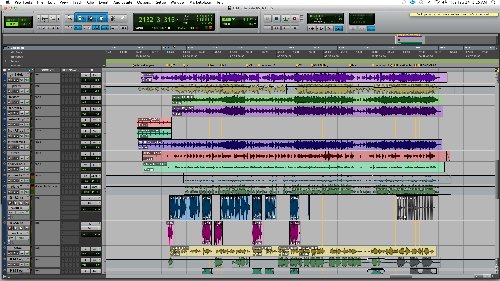
Stretch of the Highway edit window 1

Stretch of the Highway edit window 1

Stretch of the Highway

Stretch of the Highway edit window 2

Acoustic guitar Aphex Vintage Exciter500

Acoustic Guitar Aphex Vintage Exciter

Acoustic guitar Massenburg EQ

Acoustic guitar Massenburg EQ

Acoustic guitar Renaissance compressor

Acoustic guitar Waves Renaissance compressor

Bass Massenburg MDW EQ

Bass Massenburg MDW EQ

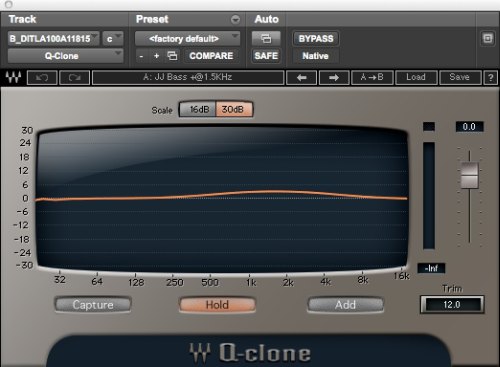
Bass Waves Q-Clone

Bass Waves Q-Clone

Vocal EQ

Vocal EQ


Using mindfulness to rewire the brain

For a long time neuroscience assumed the brain was static. More recent discoveries show that the brain changes according to our experiences and the way we use it. Mindfulness, a particular way of using the brain, can be used to rewire our brains and transform our negative feelings and habits into positive and enjoyable ones.

Around 25 years ago neuroscience went through a dramatic change in perspective that had profound implications for mindfulness practitioners and that can greatly deepen our understanding of our practice and Thây’s teachings. To be able to describe neuroscience’s big discovery, first some basic facts: the brain is astoundingly complex, typically containing some 100 billion nerve cells called neurons. Each neuron is capable of making thousands, sometimes hundreds of thousands, connections with other neurons using chemicals called neurotransmitters that transmit electrical signals along complex cellular pathways. “Thoughts, memories, emotions—all emerge from the electrochemical interactions of neurons,” states writer Nicholas Carr. (1)

Until the 1980s, received wisdom in neuroscience was that the brain developed during childhood until it reached a fixed form that remained the same during adulthood. This belief in the brain’s static cellular circuitry gave rise to a very limited view of human consciousness, a “neurological nihilism,” in which consciousness was seen as no more than the byproduct of these fixed pathways. With the emergence of the computer, the analogy was drawn between the hardware of the brain determining and limiting the software (our feelings and our thoughts).

However, due to pioneering research in the 1980s, most famously by Professor Michael Merzenich, this orthodoxy was turned on its head. Since then it has become widely accepted that the brain constantly rewires itself in response to changes in our feelings, thoughts, experiences, and the way we use our body. This phenomenon is referred to as the plasticity of the brain. In computer language, the software and the hardware inter-are: the software can shape the hardware, just as much as the other way round. Neuroscience today is governed by what’s known as Hebb’s rule: “cells that fire together wire together.” The brain gets less plastic as we grow older, but the capacity for rewiring remains.

The idea of neuroplasticity has given new hope to people with physical, emotional and mental impairments that had hitherto been regarded as unchangeable. Conversely, just as it is possible for the software to change the hardware for the better, it can also change the hardware for the worse. Moreover, in Carr’s words, “plastic does not mean elastic.” Neural pathways become entrenched, and the more entrenched they become, the harder it becomes to rewire them. These older entrenched pathways are paths of least resistance amongst which neurons like to communicate with each other, propelling us to keep repeating similar feelings, thought and actions. Every time we fire off a particular pathway, it increases the likelihood of us doing it again.

Says Carr, “The more a sufferer concentrates on his symptoms, the deeper those symptoms are etched into his neural circuits. In the worst cases, the mind essentially trains itself to be sick.” In short, whenever we’re stuck in habitual suffering we’re not just wasting our life energy and time, we’re actively entrenching this suffering in our neurological pathways, making it more likely that we’ll suffer in the same way again. Suffering is not a free ride.

My son Raphael, with lotus flower leaf, with Thich Nhat Hanh in Plum Village, 2012

My son Raphael, with lotus flower leaf, with Thich Nhat Hanh in Plum Village, 2012

There are many parallels with the practice as mindfulness, in particular as taught by the famous Vietnamese Zen monk, Thich Nhat Hanh (also known simply as Thây), who has been instrumental in modernizing Buddhist thought and practice and making it relevant for everyone. The essence of mindfulness practice is to develop singularity of thought, ie concentration, which can help us get us out of out of habitual thinking and feeling and to stop triggering our habitual neural pathways of suffering. Mindfulness, in effect, allows us to consciously rewire our brain for more well-being. Mindfulness is intentional, it is based on our free will, and we need to be “awake” to practice it. Free will can be applied in many ways. An athlete or musician will construct neural pathways in his or her brain through endless deliberate practice. However, the practice of an athlete or musician will rarely be self-aware, and while it may push pathways of suffering out of sight, it won’t transform them. Mindfulness may be the only state of mind that is wholly deliberate and wholly self-aware and that is able to embrace other states of mind, transform them, and foster well-being in doing so, thereby allowing us to consciously rewire our brain.

Using a mantra proposed by Thich Nhat Hanh, “this is a happy moment,” is a good example: it trains the brain to create and deepen a neural pathway of well-being that might otherwise not be there. Conversely, if we focus on the negative, we keep firing and strengthen the neural pathways associated with our suffering. We also all know that certain ways of expressing our suffering can make us feel lighter and freer, while others appear to deepen it. One main reason for the difference between “rehearsing” suffering and transforming it lies in whether we embrace our suffering with mindfulness or not, another factor is the way we look at it—wrong views trigger the very thoughts that cause and entrench our suffering. If we don’t embrace suffering with mindfulness, compassion and deep understanding, we will almost inevitably be caught in habitual suffering. But if we embrace our suffering in this way, and with mindfulness and stop the thoughts that trigger it, we can transform the energy of our suffering so that it becomes available for our well-being. The light of mindfulness cooks the raw potatoes, so they become a joy to eat.

In addition, Thich Nhat Hanh has always disagreed with a widespread view in Western society that we can get rid of unpleasant feelings, particularly anger, simply through expressing them. He often warns against the danger of rehearsing these feelings, and neuroplasticity shows us that repeatedly firing off our neurological pathway indeed risks strengthening those very pathways. And so, again contrary to a lot of Western thinking, Thây has long recommended that we don’t overdo the digging into their suffering, but that healing instead begins with watering our seeds of well-being. Once we are stable and our sense of well-being is strong enough we can look at our suffering again and have a chance to transform it, rather than risk being overwhelmed by it.

Statue of the Buddha in Plum Village, France

Statue of the Buddha in Plum Village, France

In trying to describe these processes more clearly, I hit upon an analogy that’s an extension of Thich Nhat Hanh’s description of mindfulness practice as that of a gardener. A gardener transforms compost (the mud) into flowers (the lotus). A skillful gardener knows how to create a pleasant garden with lots of flowers and just enough compost to feed them. Being a skillful gardener of our own inner garden is our spiritual work of self-love. And so, looking at our neural pathways, a helpful way of describing the hardware is as gulleys, brooks, canals, and canyons, and the software—ie our feelings and thoughts—as the water in them. Mindfulness has often been described as a light, and in this case we could extend the analogy with describing mindfulness as the sun.

And so, it rains and a rivulet forms: the first arrow has hit and we suffer. This is unavoidable: life will fire us arrows. Suffering is inevitable. But if we don’t handle this arrow correctly, if we add other arrows to it with ‘wrong’ thinking, the rivulet turns into a stream, a canal, and eventually a grand canyon of suffering. The one neural connection has turned into a pathway and is likely to join with other similar pathways and all of them may be deepened. As these neural pathways are strengthened, so are the corresponding mental formations, and they will be more difficult to transform. And once this stream or canal or canyon has formed, new rain will be drawn to it, deepening these pathways still further.

There is a belief in Western culture that we have to go through our suffering (ie the dark night of the soul), but from the perspective of neuroplasticity and our practice we cannot transform our suffering from inside our suffering. We cannot affect the course of a canal while being caught in the stream. We cannot dissolve neural pathways while firing them simultaneously. There is no way to happiness, happiness is the way. We have to step out of the stream, and shine our sun of mindfulness on it. Only with the healthy parts of us can we heal our afflictions. We shine our sun of mindfulness on the gulley or canal, and take the energy out of the stream of water.

When we’re suffering streams (or storms) of thoughts and feelings run through us; and when we manage to breathe and become mindful these streams calm down to a gentle trickle. As the water slows down, as the storm abates to a gentle breeze, the neurons stop firing together, and we no longer strengthen our neural pathway of suffering. The suffering, the neural pathway, may still be there, but it is no longer a danger to us. It is like the mother embracing her angry child: she holds it firmly, so he can do no damage, and also lovingly, so he can come back to his true self. At that point the water can mingle with the earth and turn into mud, or it will evaporate in the light of the sun and fall down as rain (our tears), somewhere else in our garden. In both cases, the water will help grow flowers, rather than deepen the groove.

In this analogy it’s easy to see why Thich Nhat Hanh stresses that we should not judge or suppress our suffering. In seeing our suffering as water flowing through a canal, we realize that we need that water to tend our garden. If handled unskillfully, water can deepen the groove of our suffering; if we know how to practice we use it to grow flowers in our garden. The analogy can be extended yet further. Sometimes our suffering has become frozen, hidden, inaccessible: we may be bitter and/or have repressed our feelings. One can’t grow flowers with ice, so we have to first melt our frozen feelings. Sometimes, if our sun of mindfulness isn’t strong enough to this, we need the compassionate and mindful presence of another person, and as the water starts to flow we cry, and we can begin to disarm and transform our suffering with our collective mindfulness. There are no magic formulas or strategies: the crucial point is that we need to be very mindful at any point of whether we’re transforming our suffering, or rehearsing it.

Thich Nhat Hanh in 2012, talking about mindfulness and neuroscience, elaborating on some of the concepts in this article

Thich Nhat Hanh in 2012, talking about mindfulness and neuroscience.

A lot of our mindfulness practice can be understood with the above. Mindfulness practice in general and sitting meditation in particular are ways of strengthening the power of the sun of our mindfulness, ie the power of our concentration. Neuroscience is also still researching a particular class of neurons called mirror-neurons, which are triggered by observing the actions and/or feelings of others, and then fire in a corresponding way. Neuroscientists have argued that mirror-neurons make empathy possible, and they certainly also offer an explanation as to why our practice is so much deeper when we are part of a group of people who also practice mindfulness.

Also, what Thich Nhat Hanh calls our Store Consciousness (which can be seen as analogous with the sub-conscience) can be seen as the network of neural pathways in our brain, much of it inherited from our ancestors, with each seed a neural pathway. Intense feelings, addictions, and many of the things we consume in our society strengthen addictive neural pathways, in particular what comes to us through the many screens that now dominate our lives. By contrast, the general calming nature of mindfulness practice will make it easier to rewire our brain. Living lightly offers more freedom to a mindfulness practitioner, and also makes it possible to turn neutral feelings into pleasant ones, in other words to turn neutral and often forgotten neural pathways into pathways that trigger well-being.

© 2012, Paul Tingen.


1) All above quotations, unless otherwise indicated, are from the book The Shallows: What the Internet is Doing to Our Brains by Nicholas Carr (New York: Norton, 2010), which has been credited with giving one of the best descriptions of the concept of neuroplasticity available. The thesis of Carr’s book is that extensive use of the Internet rewires our brains to make it more difficult for us to handle deep thoughts and extended narratives. Some of Carr’s sources on neuroplasticity are:

* A. Pascual-Leone, A. Amedi, F. Fregni, and L.B. Merabet, “The Plastic Human Brain Cortex,” Annual Review of Neuroscience, 28 (2005).

* Michael Greenberg, “Just Remember This,” New York Review of Books, December 4, 2008.

* Norman Doidge, The Brain That Changes Itself: Stories of Personal Triumph from the Frontiers of Science (New York: Penguin, 2007).

* Jeffrey Schwartz and Sharon Begley, The Mind and the Brain: Neuroplasticity and the Power of Mental Force. (Harper – Perrenial, 2002).


Russell Elevado and D’Angelo:
analogue messiahs or martyrs?

D'Angelo and Russell Elevado /

A 13-YEAR-ALBUM WAS RECORDED AND MIXED ENTIRELY WITHOUT PLUGINS, AUTOMATION OR INSTANT RECALL. D’ANGELO MIGHT BE CALLING FOR A BLACK MESSIAH, BUT IS ENGINEER RUSSELL ELEVADO THE SAVIOUR OF ANALOGUE OR A MARTYR PAYING THE PRICE FOR HIS BELIEFS? WAS THE MAKING OF THE ALBUM 13 YEARS OF MASTERY OR MADNESS? IN THIS UNIQUE AND EXCLUSIVE INTERVIEW, ELEVADO LIFTS SOME OF THE VEIL…

The liner notes of D’Angelo’s third album, Black Messiah, contain the following striking pronouncement: “No digital ‘plug-ins’ of any kind were used in this recording. All of the recording, processing, effects and mixing was done in the analogue domain using tape and mostly vintage equipment.”

It’s the kind of statement that’s rarely seen these days yet that was not uncommon in the nineties, when many people were resisting the digital revolution, convinced that analogue sounded superior. The recording medium war that was raging at the time had started rather belatedly, as most people had initially bought into the digital-is-superior ethos that accompanied the new medium’s introduction in the late seventies. Those who listened with their ears rather than their minds eventually noticed that the new digital emperor was rather lacking in clothes.

As we all know, digital did, eventually and very gradually, get its act together, to the point that fifteen years into the new millennium the analogue versus digital discussion has become virtually non-existent. Almost everyone agrees that today’s pro audio digital gear sounds as good as analogue, and with the obvious and overwhelming practical advantages of DAWs over analogue gear and it’s a small wonder that the latter looks like a sure addition to the ever-lengthening roll call of extinct species.

Russell Elevado at Henson studios in Los Angeles

Russell Elevado at Henson studios in Los Angeles

“ANALOGUE GYPSY”

However, in arguably one of the ultimate cases of plus ça change, plus c’est la même chose, a few analogue diehards are holding out, still arguing that analogue remains the superior audio recording medium. Their arguments mostly center on sound quality, but also often include the view that analogue’s very limitations are actually good for the creative process, while conversely digital’s millions of options and mix recalls, instantly accessible at the touch of a button, are said to encourage lack of decisiveness, imagination and soul-sapping, sterile perfectionism. And while the pro audio analogue proponents are in a small minority, there is general consensus that consumer-level digital has introduced game-changing woes such as precipitous album sales, lossy formats and loudness wars. The digital emperor still is rather skimpily dressed.

On the phone from MSR Studios in New York, Russell Elevado, the main engineer and mixer on Black Messiah, explained why D’Angelo and he continue to belong to the dwindling camp of analogue diehards, and why Black Messiah wears its all-analogue declaration as a badge of honour. Very notable is the fact that it has the word “plug-ins” in quotation marks, as if describing something unknown, suspicious, and smelly, held aloft between the fingertips of one hand, while holding one’s nose with the other. The extremity of the statement is puzzling in itself: why would anyone not want to use any plugins on a mainstream album released in 2014?

“Primarily it is about the sound,” began Elevado. “Analogue just sounds better. I feel even more strongly about that now than I did a few years ago. Digital sounds OK, but I still don’t like the workflow. I hate mixing in the box, for example. All the great albums I have done were mixed on an SSL, using SSL automation. In recent years I’ve had to get used to doing automation in Pro Tools when I’m working on a smaller console with no automation. But I would and will not compromise on using a desk”

“With regards to plugins, I get the arguments all the time that the new generation sounds as good as the analogue gear they often emulate, and that what you record goes to CD or a lossy format in the end anyway, and so why not use these new plugins, especially as it’ll make a recording project easier and cheaper. My reply is that I have over the years invested a lot of money in analogue gear, with some of the best vintage mics and outboard, so why would I buy a plugin package that might or might not be obsolete in a few years? My gear will never be obsolete, and for me it’s funny when people tell me how great their plugins sound because they emulate this or that tape machine or tube compressor, because I have all that stuff! I don’t need to get a plugin of it. I have the originals!”

“My gear is the reason I call myself an ‘analogue gypsy,’ because a lot of my time goes into carrying it around. Every time I go to another studio, I pack my gear into my car. It may take two or three trips, and a few hours to set up, because I don’t trust anyone to transport my gear. That’s how committed I am to the sound. When I get requests from people who want me to do something for them on a more limited budget, I tell them that I’m happy to think with them for solutions, but I can’t give them what they want unless I can use my gear and mix on a desk.”

“I encourage people who want to work with me to make decisions based on a “final mix” mentality. So once we leave the studio, there is no need to go back and change anything. It’s about commitment. Up until 2000, that was the mentality. For me to revise the mix requires paying for the studio again and ‘recalling’ the settings manually on the outboard gear and console. It costs time and money. The only concession I make is that I’ll print instrumental and a cappella versions of the mix, to give people some options. I’ll print stems only on rare occasions. No-one else has the right to do recalls of my mixes. Trying to change a mix after the event is like trying to paint over someone else’s painting. For me a mix is a performance, or a sculpture. Once a sculpture is done, it’s unheard of for someone else to take a chip off it. My approach is very old school. Luckily there are enough people willing to accept my way of working, and they’re usually very happy in the end.”

“HOW DO YOU KEEP PERSPECTIVE WHEN YOU MIX A SONG MORE THAN 10 TIMES AND HOW DO YOU STAY IN TOUCH WITH THE ORIGINAL VIBE 13 YEARS LATER?”

So far so principled, and to add serious weight to his pro-analogue arguments and old school methods Elevado can point at a glittering career, recognized with a whopping nine Grammy Award nominations (for his work with The Roots, Al Green, Roy Hargrove, and others) and five Grammy Awards (Alicia Keys (2x), Erykah Badu, Angelique Kidjo and D’Angelo).

Born in the Philippines in 1966, Elevado and his family moved to New York when he was five. He started playing guitar aged 11, and was very serious about this, but eventually envisioned that a studio career would be more stable than life as a professional musician, and he attended the Institute of Audio Research in New York. Elevado went on to intern at Arthur Baker’s Shakedown Studios and later started assisting at Soundtrack and Skyline, and eventually became staff engineer at Quad Studios. Elevado went free-lance in 1993, and worked his way up from there, in addition to the above-mentioned names, also working with the likes of Roberta Flack, Common, Norah Jones, Mark Ronson, Jay Z, Nikki Costa, Rick Rubin and many others.

Elevado first worked with D’Angelo as a mixer on the latter’s debut album, Brown Sugar (1995), and he was, as engineer and mixer, the sonic mastermind behind D’Angelo’s now-classic second album Voodoo (2000), which was also recorded and mixed entirely in the analogue domain, and which became the most influential and critically-acclaimed album of the neo-soul genre. Expectations were sky high for the follow-up, but no-one, least of all Elevado, could have foreseen that the making of Black Messiah would take a whopping thirteen years.

The length of Black Messiah’s making is matched only by Guns N’ Roses’ Chinese Democracy, which famously, or notoriously, depending on your point of view, took about the same amount of time to make. And that’s not even mentioning the $13m that reportedly was spent by Axl Rose & Co. No details are available on Black Messiah’s final recording tab, but given that work on it was intermittent for part of its 13-year gestation and involved far fewer people than were employed in the making of Chinese Democracy, the final budget is likely to be significantly lower than that of the latter album. But multiple studio lockouts ranging from a couple of weeks to several months in duration each time, at a daily rate that was often as high as $1500, will have pushed the final outlay to well over a million dollars. An article in the New York Times quoted D’Angelo’s tour manager, Alan Leeds, as saying that even those close the fire weren’t quite sure: “25 accountants were still trying to figure it out, and none of them agree.”

Elevado, SSL, and some undefined psychedelic effects

Elevado and an SSL in nightmare mode

TECHNICAL NIGHTMARES

The sprawling excesses that went into the making of Chinese Democracy are well-documented, but the making of Black Messiah for a long time involved only D’Angelo and Elevado, who remained impressively tight-lipped about what they were up to. Reports did circulate that work was impeded for a number of years by drug and alcohol problems on the part of D’Angelo, and The Roots drummer Questlove leaked a track in 2007 (as a result of which the two fell out), but that was more or less all that was known, until the album’s unexpected release last December.

During the two long phone conversations on which this article is based, Elevado sounded relieved to finally be able to spill the beans on the project, even if it meant that he had to relive some of the serious challenges the inordinately long-gestation period had posed him, which included, for example, the vexing question of how to remain objective when laying out the mix of a certain song on the board for the umpteenth time, with different mix versions sometimes spread out over several years.

“D’Angelo would come in and ask me for a mix version dated April 3rd,” recalled Elevado, “which we might have completed a couple of days or a couple of years before, and he’d notice if it didn’t sound exactly like he remembered it! He could focus on the most minuscule detail and would insist on perfecting it until all possibilities were exhausted. Sometimes I had to tell him that it was impossible to get any closer and he’d have to work with what we had. Because of my work on Voodoo I knew D’s ways of working, and I knew that it was crucially important to keep as extensive and detailed notes as possible. In the case of Messiah there were mixes that we had last put on the board 10 years before, and that I had to lay out over the desk again after all that time! We switched between songs all the time, and I always had to be top of my game.”

“To be able to keep our options open I would often have all 80 tracks of a mix session up on the desk, including some of the small faders, because there might be like a blend of a 24-track vocal comp that could change at any time. I did not dare to print a comp and use those faders for something else, sometimes for years! There were times when I printed something and I would just hope that I would not have to go back and find the individual tracks again, but Murphy’s Law dictated that D would come in and want to change! An example is a song for which I had four takes of Questlove’s drums, and D had compiled a drum track from them. We kept that comp for probably a year. And then D suddenly said, ‘you know what, I want to find a new take of Ahmir for the first minute of the song.’ So I had to find a way to match those sounds, and I think we had lost one of the recall sheets, and in the end I could not pull it off and he had to live with it. Things like this did not happen all the time, but it got crazy on a couple of songs.”

“D could suddenly, without any warning, add another overdub that would change the entire outlook of the song again. D is such a perfectionist, and he hears things differently than other people. I can’t guess what is in his mind, and he doesn’t always say, and you might have been working on a song for years, and not have a clue or hint about a last-minute change he’s been planning all along, like a guitar riff or melody that transforms the song. Meanwhile he’s had it in his head for years! That could be frustrating. Some songs were technical nightmares. We had done loads of different sessions in several different places, and most songs went through a number of different permutations, and there could be 1000 technical details  swimming in my head.  So when it finally came down to me finishing, it was like, “ok, now where do I start?”

“On an emotional level mixing a song like ‘Really Love,’ which he began in 2002, became increasingly difficult. How do you keep a perspective when you mix a song more than 10 times, and how do you stay in touch with the original vibe 13 years later? There definitely were moments during this project when I felt that things were getting out of control, certainly on a technical level. Everything was always virtual, but in the analogue domain! There was so much to remember and document, and we had such an unstructured way of working that I at times was quite uneasy about whether the final result would be up to scratch, especially when I really started digging in with the final mixes.”

blackmessiah500PSYCHEDELIC MUSIC INFLUENCES

Given the ecstatic reviews Black Messiah has garnered, Elevado’s fears were unfounded. But the mind nonetheless boggles when imagining the challenges that he faced in the making of Black Messiah, particularly bearing in mind the analogue-yet-virtual route that D’Angelo and he took. With its endless changes and permutations and mix recalls of each song, if ever there was an album screaming out to be made with a DAW, it was Black Messiah. Given that Elevado tells other clients that he only does a couple of recalls for each song, he conceded that the amount of recalls he was doing with D’Angelo definitely is “ironic. Had everything been done in Pro Tools, each change and recall would have been instantaneous.”

The engineer/mixer continued with explaining how he managed one of the most demanding recording projects of all time, first by giving an overview of the thirteen-year time line…

“The earliest sessions for Black Messiah took place in 2001,” recalled Elevado, “right after the Voodoo tour. The moment he came off that tour he made plans to get back into the studio. The first studio we worked at was Sear Sound in New York. It was a crazy time. D was definitely ready for experimentation, and he was really into the black rock thing, like Jimi Hendrix, Parliament Funkadelic, Sly Stone and into psychedelic music like The Beatles and Led  Zeppelin, and I guess there was an element of him experimenting with drugs in the way his heroes had during their classic recordings. ‘Really Love’ was the first new song he wrote for the album, and we recorded it at Sear with a drum machine. ‘Prayer’ also came out of those early sessions.”

“After Sear we bounced around for a while between different studios. We worked at Avatar in New York for a while and at two studios in the San Francisco area, one of them being The Plant Studios in Sausalito and a few studios in LA like Paramount. After that we were in Henson in Los Angeles for a while. Sometimes we were in a studio for a couple of weeks, sometimes much, much longer. We worked for a couple of years on total at Avatar. Then, in 2007, D signed to J Records, which is part of RCA, and we got a new budget. Following this we spent a few more months in San Francisco, and then we were in LA again for several months, working in several studios. Finally we came back to New York in 2010 for the home stretch. For the last 3 ½ years we worked pretty much full-time on the album, more than all the previous years combined.”

“Almost all of these last 3 ½ years were spent at MSR studios. Although the focus on mixing became stronger and stronger towards the end, I had been mixing throughout the project. D likes me to get things in shape so he can get inspired to do other things. He loves it when I do something that gives him ideas. So I did many rough mixes and tried to do cool things. The very last year we were in mix mode all the time, with us going to and fro between MSR Studios A and C, which both have SSL desks. Ben Kane was very involved by this stage as well. He started out as my assistant at Electric Lady Studios, a couple years after Voodoo and eventually he started engineering sessions for D’Angelo when I was out of town or working with other artists. He was my right-hand man during the project and has a mixing credit on ‘The Door.’ He was invaluable to me.”

“For most of the thirteen years it was just D’Angelo and myself in the studio. Voodoo had to a large degree been collaborative and he really needed to experiment and get things out of his system and just craft some songs all by himself. This rather than jamming with musicians and coming up with songs in that way. This changed after sessions in LA in 2008, when D was jamming with [drummer] James Gadson and [bassist] Pino Palladino. ‘Sugah Daddy’ came out of those sessions.”

“He had started breaking the ice with Ahmir and in 2011 they started working together again. The song ‘The Charade’ came out of D and Q jamming at MSR in 2011, after which they were joined by Pino. ‘Till It’s Done (Tutu)’ and ‘Another Life,’ also came out of those sessions. While we were in New York we had quite a few people coming in adding new parts. For example, Quest replaced the machine drums on ‘Really Love,’ and eventually his parts were replaced by James Gadson. This went on all the time. We recorded sketches for many songs, and many were not released, with some closer to being finished than others. You can’t imagine how many reels of tape we used!”

MSR Studios 1, New York, where most of the work on Black Messiah was done

MSR Studio 1, New York, where most of the work on Black Messiah was done

A SPATIAL THING

Apparently the answer is about 200 reels of 24-track tape, made by Quantegy and ATR. With one reel of 2” tape costing US$300 or thereabouts, just the cost of tape used in the making of Black Messiah topped the recording budgets for many of today’s mainstream charting albums. However, while Voodoo was exclusively recorded with tape, without a DAW in sight, Pro Tools was used extensively in the making of Black Messiah. Elevado explained why it became inevitable, despite all their articles of analogue faith, to use some good old digital technology…

“Up until 2010, I was using only tape of this project, with Pro Tools purely for backups. For most of the time we ran two Studer A827’s together, so we had 48-tracks running. I’d also make stems and then transferred these to slave tapes, and we’d record on them. For example, D’Angelo recorded all his vocals, by himself, to 24-track slaves, which I had loaded with stems of the music. He started doing that in the middle of recording Voodoo. I showed him how to run the tape machine, and he sat alone with the remote control in front of him, sometimes in the control room, sometimes in the live room.”

“We set up a little mini studio for him, with the tape machine and a vocal chain of Neumann U67 or U47, going into Neve 1081 or 1073 and then an LA2A. He also has a little Mackie board for monitoring, so he can pull up the tracks he wants from the tape, and then he does all his own vocals. He doesn’t like other people to be around and he does a lot of vari-speeding with tape the way George Clinton and Prince used to do. He’s so used to doing this that he is at this very moment in his hotel room doing some vocal overdubs using my Studer A827 24-track. Everyone uses a laptop these days, but D insists on bringing an A827 into his hotel room!”

“This shows how committed D is to using analogue tape. I am the same, but by 2010 I became afraid that by playing the analogue tapes back too often we would be losing something, so with some of the older songs we started working off Pro Tools. This was a purely a matter of preserving the original tape recordings. We tried to be as diligent as possible in staying on tape as long as we could, but in the end we were always surpassing the 48 tracks of tape, and the most efficient way to handle that is to use Pro Tools. Trying to sync up three or four tape machines is cumbersome! There were a couple of songs for which I had to rent a third tape machine on Voodoo, and the mixes for those songs took forever, because it took 10 to 15 seconds for the machines to sync together, after I hit ‘play’!”

“When we were recording basic tracks after 2010, we still always went to tape, but after that the choice take was transferred to Pro Tools. If somebody came in unexpectedly and wanted to immediately do an overdub, I would record that in Pro Tools, just because it was faster. I’d then bounce it back to tape and back to Pro Tools right afterwards. Everything on Black Messiah, 100% of it, touched analogue tape at some stage or another. Analogue tape definitely adds a colour, but most of all it adds depth. This is what makes the biggest difference for me. There’s a front and back to the sound imagine in analogue, as well as top and bottom, and left and right. It’s a spatial thing.”

“I work at 24/88.1 in Pro Tools. There’s a big difference between 16 bits and 24 bits. We did try Pro Tools at the time we worked on Voodoo, but the sound of the 888’s was atrocious. I could not believe how bad it was. Even ADAT’s and Tascam DA88 sounded better than Pro Tools at the time, because they were using better chips! Apogee converters were an option but you had to rent them and they were expensive. In fact, you had to rent a Pro Tools “rig” in those days as they were still not the standard in the studio. Can you imagine me PAYING to use Pro Tools! But today’s higher quality clocking and converters make a big difference, and higher sampling rates are essential if you’re using plugins. But even then, the moment you start using several plugins, things start sounding weird again, because plugins are not processing things in the right way. You’d be surprised how much character you can add simply by re-amping things instead! So we used Pro Tools purely as a multitrack machine and storage medium, without any plug-ins.”

Russell Elevado

Russell Elevado,  in surprisingly good nick after 13 years of working on Black Messiah

THREE FERRARIS

In the context of Elevado’s pro analogue and anti-plugins convictions and dedication to supreme quality sound, one would expect his recording signal chains to be of prime importance to him. It’s mildly surprising that he in fact doesn’t seem too bothered, provided he uses any of his own vintage and Class A pieces of kit, or an equivalent quality mic or box he finds in the studio he works in. The engineer/mixer elaborated on the rationale behind some of the nearly half million dollars’ worth of gear he has acquired and how he used this and other gear in the making of Black Messiah…

“When I started making money, I began collecting gear that could give me different textures and colours, rather than things that could do surgical things or things that most studios had. So I got vintage mic pres, compressors, EQ’s and effect boxes, and I also got into envelope filters and things that could bring out certain hidden timbres in instruments and that would help me dismantle the frequencies and sounds of any type of instrument that came to me. I now have things like an original Gates Sta-Level compressor, which I had modified, the Gates SA-39B limiter, a crazy mono Altec tube compressor which I call ‘The Bomb’ that has about 25 tubes—it’s one of my favourite pieces of gear—other Altec compressors, like the  436c and 438c, all of them modified. I also have an LA2A, 1178, WSW 601431A, Dynax and Fairman TLC compressors, and my EQ’s include the Quad Eight MM-312, 712 (graphic eq) and 333c, Neve 33115, Helios Type 79 and Telefunken 395A’s. Plus I have reverbs/echos like the Fulltone Tube Tape Echo, Roland Chorus Echo SRE 555, Maestro Tape Echo and Demeter Realverb, and many effect pedals vintage and new, by the likes of Mutron, Maestro, Mooger and so on.”

“I also have tons of mics, like a nice U47 that I paid US$7000 for back in the ‘90s. It looks brand new and it sounds incredible. I have a matched pair of U64 tube mics, and so on. My mic preamps include a vintage Altec 9470a from the designer of the Langevin AM-16, plus Neve, Quad Eight, Telefunken 676A and the Siemens V276. In many cases I don’t mind what preamp I use, as long as it is one of the latter three. I used to be pickier, and I’d love to say that for this album I was mostly using Neve’s, but all these mic pres are of high quality, and I might get a little surprised one day when I have the Telefunken on the snare, instead of the Neve. They’re all good. It’s like having three different Ferraris to choose from. When you get to that level of mic pre with that kind of character, you could be using anything, so I don’t have a go-to mic pre anymore.”

“I changed my signal chains once and a while, but for drums they would have been for the most part a Neumann FET47 on the kick, sometimes by itself, sometimes with a secondary mic, like my vintage AKG D12 or Electro-Voice RE20. The snare would usually have an AKG C451 on the top, and a Shure SM57 on the bottom. I’d occasionally swap them for the harder stuff, with the 57 on the top and the 451 at the bottom. I find that if you swap the mics, you instantly get that rock sound. I usually have just one mono overhead, a Neumann U47, but I will use an AKG C24 or a pair of U64’s if I need to cover more cymbals that might be spread away from each other, and I have Sennheiser 421’s on the toms. I use many different room mics depending on the room and the sound and texture I’m after, and they could be an RCA 44, 77dx or Beyer M160 Neumann U47 or U67.”

“Some of the bass sounds on the album came from D’Angelo’s Ensoniq ASR10, which I recorded DI. I record the bass cabinet usually with a FET47, going through one of my main three mic pres, and then through a compressor, usually an 1176 or an LA2A, but also sometimes a Gates, Altec, or UA 175. On ‘Really Love’ Pino played a semi-acoustic bass with flatwound strings, and I tried to make sound a little bit like an upright. The classical guitar on that track is played by Mark Hammond, and I recorded with a U47, and no compressor. I don’t normally use a compressor in the recording chain, except for bass or for vocals.”

“I also had the U47 or 421 or SM57 or combinations on the electric guitar cabinets, again going through one of my three main preamps. I recorded D’s acoustic piano with the AKG C24 that they have at MSR, and if that’s not available, two KM56’s or two U67’s. I like using tube mics on the piano. It helps when you have a good player, and D is an amazing player who really owns the instrument. Other instruments he played, in addition to guitar and piano, were the Akai MPC2000, on which he did a lot of drum programming, using samples from records and things I have recorded, and the Ensoniq KT-88. But 90% of the synth sounds on the album came from his ASR10, which he has used since Brown Sugar.

Some of the Elevado's outboard used in the making of Black Messiah

Some of the Elevado’s outboard used in the making of Black Messiah

Elevado illustrated his mix process by giving extensive details of his mix of the song “The Charade,” a strutting Prince-like soul-funk track with a sitar motif. As mentioned above, ‘The Charade’ started life in at MSR studios in 2011 with D’Angelo and Questlove jamming (the music is credited to the two), and Pino Palladino joining them soon afterwards. As with all songs on Black Messiah, “The Charade” went through several changes. “I actually did the first mix of ‘The Charade’ at Henson in LA,” stated Elevado, “where we went for a couple of months just to change the pace a bit. I think D did some new vocals, and wanted to hear the song in a more mixed form. I had shipped some of my gear to LA, to be able to match the sounds, and then had it shipped back to NY, where I finished the mix at MSR.”

The final Pro Tools session of “The Charade” is relatively modest, by 21C standards, totalling 63 audio tracks. It has to be noted that Elevado printed quite a few of his analogue effects back into the mix and comped a lot of vocal tracks. Split out these 63 tracks consist of, from top bottom: 13 drum tracks (including several drum effect print tracks), 9 clap tracks, 4 MPC2000 tracks (one clap, one ride and two tom tracks), 3 bass tracks, 2 D’Angelo guitar tracks, 5 Roland Fantom X8 tracks and 2 piano tracks all played by D’Angelo, 2 sitar tracks, 3 D’Angelo lead vocal tracks, 3 Kendra Foster backing vocal tracks, 11 D’Angelo backing vocal tracks, and 5 guitar overdub tracks by Isaiah Sharkey and Jesse Johnson. Finally, at the bottom are several instrumental and a cappella mix tracks, Elevado’s original Henson mix, and other mix print tracks.

Edit window screen shot of the top of the Pro Tools session of 'The Charade.' The complete screen shots are below...

Screen shot of the top of the Pro Tools session of ‘The Charade.’ The complete screen shots are below…

Elevado stressed that a lot of the automation process took place on the SSL board, particularly most level rides, which cannot be seen in the screen shots, of course (barring a few Pro Tools volume rides “for convenience.”) He elaborated, “As you can see, the comment boxes mark that tracks came from ‘tape,’ or were transferred from a slave, ‘xfer from slave,’ or where it says ‘req’, it means that I processed that track and signed off on it. The green drum tracks are all Questlove, and include some effects tracks that I printed back in. I did not use the Tapedbl track, but there are two effect tracks of the toms with tape flanging on them (tomflangeLT, tomflangeRT), which have a nice dirty sound to the drums and added some overall rawness. Every once and a while the crash cymbal would come through in the mix on those flanged tracks.”

“The flange effect is tape flanging, just off-setting a 2 track ½” machine with the 24 track. I had to keep doing it until I got it right! The Gates Sta-Level compressor was a big part of the drum sound, and I had that as parallel compression that I printed back in on the ‘gates drums’ track, with the phase reversed. The reverb on the drums would have been the room sound that came from the compression I used on the overhead, which picked out a lot of the room, and I then added the Roland Chorus Echo or the Fulltone Echo for the tape slap. For the rest it was a matter of using my four channels of 33115, which sound amazing, and MSR’s Neve 1081’s.”

“Below the drums are the claps, starting with a track called ‘reverse reverb clap.’ The neat thing about the A827 is that you don’t need to flip the tape to play it backwards, so you don’t have to deal with all the tracks being flipped, like track 24 is swapped with track 1, 23 is swapped with 2 and so on. So I recorded the clap with the reverb to the tape playing in reverse, and then played it back in normal mode. It’s quite simple, and it sounds better than any of today’s plugins that simulate the process. [Drummer] Chris Dave added a number of claps to the session, which he triggered, using samples, and D then wanted to change the sound and added yet more clap samples.”

“The ‘claps 1.02-2.02’ etc tracks are real claps recorded with D’s mic, and underneath that is the MPC clap, as well as other MPC tracks which were part of the original loop they started off with. I think I just used SSL board EQ on the MPC claps and the toms. They were really dirty sounding and I wanted to keep them like that, nasty and hissy! As a matter of fact, the very first impulse for this track was a shaker sound from Ahmir’s ‘ipad,’ which we put on and aimed to replace later, but we never did.”

“The main bass track, ‘bass dirt,’’ has heavy fuzz from my Univox Uni-fuzz pedal, and ‘pino EQ’ is the bass track with me adding EQ from any number of things, probably a Neve or Quad Eight EQ. I also used the Gates Sta-Level on that. The bass track underneath has the UA 175, but I did not use it. The guitar track underneath the bass track has my Fulltone Deja Vibe pedal for a sort of Hendrix-like sound, and the other guitar track probably had the built-in phaser from my Music Man combo amp, which sounds killer. I often use that amp for re-amping stuff. Next down are the Fantom synth tracks, to which I added a Mutron Flanger for a kind of warbling effect. The sitar was an electric sitar, and it would have had the Fulltone Tube Echo or Roland Chorus Echo. The piano went through a real Leslie cabinet and was printed back in. I probably also used SSL board EQ on the sitar and piano.”

Some of the pedals used...

Some of the pedals used…

“The vocal treatments varied quite a bit across the record. We were going for a consistent vocal sound on Voodoo, but this time round we did what was appropriate for each song. What you see in the session are comped vocal tracks, often distilled from dozens of tracks. The vocal effects on D’s voice in this song were a combination of slap, from the Roland Chorus Echo, and reverb from MSR’s EMT plate. I might also have used the Fulltone or a Maestro for a slap echo. In addition I had compression, from the LA2A, or Altec 438c, or the 1175, or the UA175, I can’t quite recall what I used in this song, but any of them would have been used for vocal compression on this album. EQ would have been from Neve, Telefunken or Quad Eight. Kendra’s backing vocals would have had the Urei 1178 compressor and sometimes the Fairman TLC. Below the vocals are more guitar tracks, which D or I would have muted in and out on the board, and I’d have added similar effects as to D’s two guitar tracks.”

“The final mix went to a ½” tape, and we printed it back to Pro Tools from the repro head for a backup, but the tape versions were always used during mastering. It’s a real problem how so many things are smashed to bits these days during mastering because of the loudness wars. When I do a full album, I am present at the mastering 9 out of 10 times. But I almost always find that I have to make compromises, and eventually I have decided to accept that, otherwise I’d drive myself crazy. It’s the only choice I have. So I get the mixes as good as I can get them, and with minimal compression, and then I have to let it go.”

Clearly, the making of Black Messiah was an epic journey for Elevado and D’Angelo. But any fears that many, including Elevado himself, apparently, had about the end result of thirteen years of work being stodgy and overcooked, or smashed to bits during mastering, proved unfounded, in the context of the glowing reactions from the fans and the many five star reviews the album received, with accolades like “a humblingly brilliant album,” “a warm, expansive masterpiece,” and “not just one of the best records of 2014, but one that will stay with you throughout next year, too.”

One perceptive reviewer, Joe Goggins in Drowned In Sound, noted, “Like Voodoo, Black Messiah’s greatest strength lies in D’Angelo’s understanding of how to create mood by weaving an impossibly complex instrumental palette,” and that “everything from D’Angelo’s voice to the crackle of the snare is treated with a delicate mastery.” The master on this latter front, surely, and someone who played a crucial role in making this “impossibly complex” palette work, was Russell Elevado. He’s managed to make Black Messiah sound truly great, a far cry from the ear-assaulting digital grey that’s everywhere these days. In how far this is due to D’Angelo’s and Elevado’s commitment to the analogue medium is a question that no-one who truly cares about good sound can afford to ignore…

© 2015 Paul Tingen.

The Charade Pro Tools session screen shots

thecharade500athecharade500bthecharade500cthecharade500dthecharade500e

This article appeared in, amongst other places, issue 108 of the Australian music technology magazine Audio Technology, the Polish magazine Estrada i Studio, and the Dutch magazine Interface.

The first three pages of the Audio Technology version of the above article

The first three pages of the Audio Technology version of the above article

The first two pages of the article in Interface

The first two pages of the article in Interface

Jack & White Vision

JACK WHITE’S FIRST SOLO ALBUM, BLUNDERBUSS, WAS A UK AND US NUMBER ONE. IT’S ALSO THE FIRST ALBUM RECORDED ON 8-TRACK TAPE TO MAKE IT TO THE TOP IN DECADES. IN THIS EXCLUSIVE INTERVIEW WHITE TALKS FOR THE FIRST TIME AT LENGTH ABOUT HIS LOVE OF ANALOGUE AND OTHER PREFERRED WORKING METHODS.

In the feature film It Might Get Loud (2008), which features guitarists Jack White, Jimmy Page and The Edge, White makes some striking statements about music technology. He declared that “technology is a big destroyer of emotion and truth,” which leads to “a disease you have to fight in any creative field: ease of use.” White has also gone on record stating that he feels that he can’t be proud of something unless he “overcomes some kind of struggle,” and in the movie demonstrated his point with his famous red JB Hutto Montgomery Airline, a kitschy, low-quality plastic guitar which was sold via mail order during 1958-68, and which is regarded as difficult if not impossible to play. “You have to pick a fight with it, and win,” clarified White. During another scene in It Might Get Loud, blood is seen streaming from White’s picking hand, and there’s a shot of one of his electric guitars covered in congealed blood.

White’s deliberately contradictory attitude to music making in general and technology in particular informs almost everything he does. Perhaps it originated from his early days in his native Detroit when he was an upholstering apprentice, which involved a lot of picking fights with matter, and, one presumes, the occasional stains of blood. It showed in The White Stripes, in which he made his life difficult not only by playing the JB Hutto guitar, but also by playing with only one other musician, a drummer who was a beginner when the band started, and whose style has been called “primal” and “simplistic.” It also showed in White’s often stated refusal to become a studio gear head, as well as his preference for recording on analogue, a medium that involves a lot more of a struggle than working with a DAW (barring the odd computer crash, of course).

However, in 2009, White decided to build his own studio in Detroit, Third Man, which meant throwing at least one of his principles overboard as it involved him having to engage with studio gear on a much deeper level than ever before. The creation of Third Man Studios was related to White establishing a physical location for Third Man Records, the independent label on which all six White Stripes studio albums have appeared, as well as the output of the other two bands White is involved in: The Raconteurs and The Dead Weather. However, in recent years the output of Third Man Records has multiplied dramatically, with White producing singles and/or albums by the likes of Wanda Jackson, The Black Belles, Karen Elson, Loretta Lynn, Seasick Steve, Jerry Lee Lewis, Stephen Colbert, Alabama Shakes, and many others, plus White’s first solo album, Blunderbuss. Whether the studio informed the many releases, or the other way round, is probably a chicken and egg situation, but it appears that Third Man Studios has turned into Jack White’s Mad Scientist’s Lab.

On the phone from Gulf Shores on the Alabama coast, where White was about to play a beach concert, he elaborated on the why of his own studio and how it changed his relationship with technology. “In the Third Man headquarters I have what is probably the only live venue in the world where you can record to tape. It’s an actual live venue with a recording booth attached to the stage. But my recording studio is in a different location, and I’ve done all my recordings there since I built it three years ago. For the longest time I did not want to have my own studio gear, mostly because with the White Stripes I wanted to have the constriction of going into a studio and having a set time of 10 days or two weeks to finish an album, and using whatever gear they happen to have there. I recorded the second White Stripes record [De Stijl], in my living room, and we would record a song, and a couple of days later another song or two, and then a week would go by and we would record again. But when having a studio at home it is too tempting to get distracted. The phone rings, somebody knocks on the door. So I said to myself: I can’t do this shit anymore, and I decided to record in commercial studios from then on. After 10 to 15 years of recording like that I felt that it was finally time for me to have my own place to produce music, and have exactly what I want in there: the exact tape machines, the exact microphones, the exact amplifiers that I like, and so on.”

PT: Your studio is built around a 1073-based Neve console and two Studer A800 2-inch 8-track tape recorders. Why analogue and why only eight tracks for most of your recordings?

JW: “I love analogue because of what it makes you do. Digital recording gives you all this freedom, all these options to change the sounds that you are putting down, and those are for the most part not good choices to have for an artist. For example, if you record a vocal onto tape and there is one word wrong, it is too dangerous to edit it out and fix it with a razor blade. So a lot of times you will leave things in that inherently are a good idea to leave in. But if you’re working in Pro Tools, you are going to Auto-Tune that note or use a bunch of other plugins to get that note to sound the way you want it. But these attempts to make things sound perfectly in time and perfectly in tune are all huge mistakes, because you are taking away all the inherent soulful qualities of what is going on. Plus the plugins you may be using are all emulations of real things in real life, like reverb, or tape delay, and so on. All those plugins have adjustments on them, and none of them are mechanical. I think that when you get out of the world of mechanics, you start to lose the inherent beauty of the sounds.”

“I can’t work in this scenario, but I’m not saying that other people should work like I do. If they think they can make something beautiful in the digital realm, more power to them. Regarding my preference for eight-track recording, it helps me make decisions. If there are only two tracks left, what am I going to do with them? I can do a guitar solo and a vocal harmony and that’s it. But if that was on Pro Tools, I would have 200 more choices. Let’s put another tambourine track on, let’s put four more guitar tracks on, and double that snare drum, and all of a sudden you’re putting all this shit on that you should never have put on to begin with. Opportunity has killed it. If you don’t have all these choices, your mind will focus on better things.”

PT: The last White Stripes album, Icky Thump (2007), was recorded by Joe Chiccarelli at Blackbird Studios on two 16-track recorders.

JW. “The Icky Thump situation was a debate between Joe and I. He wanted to do drums on six tracks, and I only on one track, but I did not feel like fighting him on it. It was a matter of trying to find the biggest headspace without going to a 24 track headspace, so I decided that 16 tracks would be a good compromise. I had done many records on eight tracks by that stage, so I allowed myself some room with albums by The Raconteurs [Consolers of the Lonely, 2008] and the White Stripes to do slightly different things that I had not tried before. A lot of that is stuff that I probably will never go back to doing again. But we did get some good recordings, and Joe is very good with a razor blade. The problem at that time was that we were given a bad batch of tape and the heads had to be cleaned every 10 minutes. This was during that little tape drought.”

Q. What about the sound situation? Many former champions of analogue say that digital sounds much better now, perhaps even as good as analogue, because of hi-resolution and better AD and DA convertors.

JW. “There is no doubt that recordings from the 1920s up until the mid-1970s sound superior to those that were made with early digital technology. We all know how horrible music from the 1980s sounds, and how many artists that were making amazing recordings in the 1960s and 1970s all of a sudden found themselves in the 1980s with this horrible realm of gated reverbs and digital recordings, and that became a problem. If they had stayed with the tools that were not broken, things would have still sounded fine. Yes, digital recording sounds a lot better today than it did 20 years ago, but it is still a dangerous place to be and I don’t want to go anywhere near it. Why take the chance? 90% of the songs that are on the radio have drum beats that have been put on a grid, so that everything is perfectly in time. Why the fuck would you ever want to do that? It turns it into plastic. Kraftwerk or any of the other bands that are feeding off that approach can come up with things that are amazing. But for the music that I love, it would be a shame to do it like that. I definitely wouldn’t want to hear the Beatles recorded on a computer. It would be a nightmare.”

Third Man Studio track card of the song Hypocrytical Kiss. Note the exquisite design in White’s preferred colours–white, black and red–and the credit for White’s two children, who are “unpaid.”

Q. You have called using Pro Tools “cheating.” Still, according to Vance Powell you will on occasion use the system, like with your James Bond song “Another Way To Die.”

JW. “When you have an extremely complicated edit and you have no way to do it in analogue, Pro Tools is a great editing tool. If you have a song that is amazing, and everything is beautiful and everything is perfect, and in one bar the drummer dropped his stick, and it is the only thing that needs to be fixed, and you can’t do it with a razor blade, yes, pop it in a computer and try to fix it. You do the edit in Pro Tools and then record it back to tape. That is what it is good for. But to live in that world and record in that world is not the same thing. The biggest evidence for this was when we were working with Chiccarelli and we dumped everything in Pro Tools for the mix, so that we could program the moves on the desk and we didn’t have to rewind the tape 300 times, and in doing so wear out the machine and the tape itself. So we listened to the song 300 times, and then we went back to the tape to lay down the mix, and oh my god, it sounded so much better. It sounded 100 times better. You wish you could bring people in and have them sit there for that long, so they get accustomed to the digital version, and then you play them the tape again and watch people’s eyes blow up. Once you have experienced something like that, you never want to go back to digital again.”

“Again, I understand why people use Pro Tools. You can make a recording and edit very easily and fast with Pro Tools. There is no argument about its ease of use. And a beginning band may not be able to afford a roll of tape. But does it sound better? Absolutely not. I’d like to add that this is not a debate about authenticity. I can make an authentic recording on a computer. The debate is what sounds better. If you take a blackface Fender reverb amp from the 60s, and you compare it to a solid-state Fender reverb amp from the 80s, there is no comparison as to what sounds better. Mechanics are always going to provide inherent little flaws and tiny little specks and hisses that will add to the idea of something beautiful, something romantic. Perfection, making things perfectly in time and perfectly free of extraneous noise, is not something to aspire to! Why would anyone to aspire to such a thing?”

Q. In the past you kept studio technology at arms’ length. How involved are you now as a studio owner?

JW. “For a long time I felt that I had to be very careful. For the same reason I am not a record collector. As a songwriter it is very dangerous to be a record collector because you start emulating things, everything you record becomes a reference to something that happened in the past in your mind. That is not a good place to be as a songwriter or a performer. I want to do something that is uniquely me and to push something new forward. The same thing as a producer. So I had to be very careful to not become a gearhead and be obsessed with things like whether something is a Fairchild 660 or 670, or whatever. You get obsessed with all these numbers and these gadgets, and you get away from the emotion and the feel and the energy of the recording. Before you know it you are lying underneath a desk with a flashlight in your mouth rewiring a Neve board! There is beauty in that, no doubt, but because I already had my feet in so many different places, I wanted to stay away from that.”

“For a long time my attitude was a turnoff to people. I would get into a studio with engineers who thought that I did not know what I was talking about because I was not turning the knobs and I was not referring to things by their numbers or their factory names, like in I want an Urei compressor or I want a Fairchild compressor, or I wanted to use things in a non-standard way. Someone would say: ‘well Jack you don’t want to use that compressor, it is not good for a vocals.’ I didn’t want to get in a debate where I had to prove that I knew what I’m talking about, because that is not the point. But when I built my own studio and had to decide what I want to have in there, it was like starting the record label: I finally allowed myself to get a little bit more involved and to be able to work with those tools. But I still keep myself on a leash, because otherwise you will never see me again. If I become somebody who is obsessed with compressors, I would not be writing songs anymore, nor would I be producing. I’d just be obsessed with gear.”

Q. How did you choose the gear in your studio?

JW. “That happened slowly over a long period of time, just collecting things I have used over the years that I thought sounded great. For example with the White Stripes’ Get Me Behind Satan album [2005] and the first Raconteurs album, Broken Boy Soldiers [2006], everything on both albums was recorded with one Coles [4038] ribbon microphone, everything from kick drum to vocals. It is my favourite microphone. Engineers were fighting me, saying that I could not use it for everything, that they were EQ-ing the shit out of things, and I was like: ‘I don’t care, make it work.’ I fell in love with it at the BBC. The BBC was using that mic on everything. It is so beautiful looking, and to hear it played back, it was so impressive.”

Q. What about your Neve desk? And I understand you had Martinsound Flying Faders automation installed on it?

JW. “The Neve desk is amazing, it is so beautiful sounding, you just plug something into it and it just sounds beautiful. But after a couple of years of Vance and I doing manual mixes on it, hand over hand, it did feel complicated. I was scared to automate anything, but in the end decided that we were taking so many advantages from analogue, we can at least allow the faders to be automated. And they are mechanical, so that appeals to me as well.”

Blunderbuss album cover

Blunderbuss album cover

Q. You’ve long said that you don’t see yourself making a solo album. What provided the spark for Blunderbuss?

JW. “Yeah, I did not have any intention of recording my own songs a year ago. I was producing 45s for Third Man Records, and we had done Tom Jones, Pokey LaFarge, and Wanda Jackson and many other artists at my studio. In the process I was getting into bigger orchestrations, sometimes with 12 piece bands, like on Wanda’s record and Tom Jones’ record. I had never orchestrated that many people in one room at the same time. To have 12 people playing live was a whole new world to me. Then I had a session booked for [Wu-Tang Clan] rapper RZA, to do a blues series single for Third Man with him, and he had to cancel at the last moment. I had all these musicians in the studio who did not have anything to do, and I did not want to send them home—some of them had come from out of town. So I said: ‘well, let’s record some of my songs.’ I only had a couple of things kicking around, so we started and we did three songs that day and that was the beginning of the album.”

Q. When did it become a solo album in your mind?

JW. “It is hard to say exactly when, but maybe six or seven songs it started to click that it was all becoming something. They were not The Raconteur songs, the White Stripes are not around any more, and The Dead Weather were on tour, so I guessed that it was my own thing. As I said, I had never had any concrete plans to do a solo album, but I am very happy about the way it happened. The White Stripes, The Raconteurs, and The Dead Weather all happened by accident, and I always felt good about that.”

Q. Did you pre-rehearse or pre-arrange the songs before the sessions?

JW. “I used 100 different production styles on the record. That came from the freedom of having my own studio and having people in Nashville who could come at short notice. If I started working on something at 10 o’clock in the morning, and I thought, ‘this really needs a fiddle and a steel guitar player,’ by one o’clock somebody would have showed up and we were recording that live. I also put people behind instruments that they don’t normally play, sometimes I had all girls record a song and then the next day I recorded the exact same song with all male musicians. I was trying out all kinds of different production ideas, because in my own space and I wasn’t under the usual time constrictions.”

“What was great too with all these hired guns in the room was that I could write on-the-fly. I could ask people to play something, and I would go somewhere else and work on another part. I was directing people in the room. I had never done that before. When you are in a band, you don’t really tell other people what to play. You can produce a Raconteurs record, and deal with the sounds of the compression or the reverbs, but I am not telling the bass player and drummer what do all the time. They are fully competent and it is a group effort. But the session musicians are standing there waiting to be told what to do, so I could get into writing on the spot and writing for other musicians.”

Q. Apparently you asked Bob Ludwig not to use any compression during mastering. What’s the story?

JW. There are all these debates all the time about loudness and dynamics and the loudness wars, and a lot of it I don’t understand. Engineers talk fucking out of their asses for hours about it, and I never really understand what is going on. It is so difficult to get a straight answer when it comes to dynamics and mastering and sound quality. But I did understand clipping and loss of dynamics as being things that I am not interested in. I like music very loud, so it is difficult. I listen to music in my car and on my stereo loud enough for people to walk out of the room. I have always been that way. But I have never called a mastering engineer and said: ‘make it as loud as possible, I want to be louder than the loudest rap album that is out there right now.’ Having said that, when it comes back from mastering and you are listening to 2 different versions, a lot of time you pick the louder version.”

With Blunderbuss the dynamics on this record are so important and there are so many subtleties going on, that when Bob Ludwig wrote to Vance [Powell]: ‘why don’t we just turn the gain up and not put any compression on it?’ I was like: ‘I have been asking that fucking question for 10 years and nobody ever said that we could do that! So yes please please let’s do that!’ And he did. It was like I had been asking for this for a long time, but I was always getting these roundabout answers, and finally we did something I have been wanting to do for a long time, and it sounded great. It kept the same dynamics, it did not get changed by compression, it was just louder. It was a blessing that Bob said the words I had been wanting to hear for a long time.”

And for White it clearly was another successful episode in his continuing crusade to get technology to serve emotion and truth, rather than destroy it.

Text by Paul Tingen © 2012. Photos of Jack White by Jo McCaughey.

Previously published in Audio Technology (Australia), Sound & Recording (Japan), Estrada i Studio (Poland) and Sound & Recording (Germany). Uploaded on this site January 2014. A complementary article with engineer Vance Powell discussing extensive technical details of the recordings of Blunderbuss will be added soon.

Sigur Rós: Glacial Grandeur

Sigur Rós. Photo by Lilja Birgisdóttir

SIGUR ROS’s SEVENTH STUDIO ALBUM, KVEIKUR, IS UNCONVENTIONAL, EVEN BY THE BAND’s STANDARDS. ENGINEERS AND LONG-STANDING BAND COLLABORATORS BIRGIR JON BIRGISSON AND ALEX SOMERS HAVE THE INSIDE STORY…

Although Iceland is Europe’s 2nd largest island, about half the size of Great Britain, just 321.000 people live there, marginally more than in, say, Perpignan in the south of France. Given the tiny size of its population, the impact Iceland has on the international music scene is stupendous, with acts like Björk, Sigur Rós, Of Monsters and Men, Emilíana Torrini, and Mezzorforte all enjoying overseas success and recognition. Compare this to the amount of internationally famous artists coming out of Perpignan, and, err, you get the picture. There’s been ample speculation about the reasons for Iceland’s musical riches, but few rise above the pub-talk notion of it having something to do with the climate. Whereas people from Perpignan might, perhaps, find hanging out on the beach the most attractive option once essential work has been done, the Icelandic climate forces people to stay indoors for most of the year and to play cards, stare at a screen (the 21C equivalent), or do something creative.

On the phone from Sundlaugin, just outside Iceland’s capital, Reykjavik, the studio’s engineer, Birgir Jón Birgisson, chirpily announces that the local weather is in fact “very good” with blue skies and bright sunshine. The catch comes when he’s asked for the temperature: 14C. Given that it’s early August and mid-afternoon it gives substance to his next remark, “I like wearing a coat!” A dozen kilometres away, in downtown Reykjavik, American engineer, mixer, producer, musician and visual artist Alex Somers muses from his private studio that the entire environment in Iceland prompts him to “be creative.” The weather certainly plays a part, he agrees, but apparently it’s also to do with the attitude of the people in general and of Sigur Rós in specific: “They like to experiment, and taught me a lot about not playing it safe and not being precious and just going for it.” One assumes that this also is the modus operandi of Björk, the world’s most successful exponent of avant-pop.

Birgir Jón Birgisson at Sundlaugin Studios in Reykjavik

Birgisson and Somers both have long-standing working relationships with Sigur Rós. The band broke through in 1999 with its second album, Ágætis Byrjun, to become one of the world’s leading post-rock acts, playing ethereal, ambient, impressionistic non-rock, with a lot of its identity coming from Jón “Jónsi” Þór Birgisson’s reverb-drenched falsetto vocals and bowed electric guitar. The music is characterised by a bone-chilling, melancholic, glacial grandeur that could only have been conceived by people living in the far north. Fourteen years later the band released its seventh studio album, Kveikur, which saw two major changes, one being the departure of keyboardist Kjartan Sveinsson, reducing the band to a power trio, the other the much more aggressive, in-your-face sound of the album. Atmospherics and cinematic soundscapes still abound, but the rhythm-section is more hard-hitting than ever before, and distortion has joined reverb as the music’s overriding, signature effect.

Alex Somers in his studio. Photo by Jónsi

Kveikur was recorded during 2011 and 2012 in several studios, for the most part in the band’s rehearsal space and in Sundlaugin, plus some work was done in two studios in Los Angeles. Eminent mixer and producer Rich Costey mixed the album at his Los Angeles studio, after which Somers was asked to go over the whole thing again and stamp more of Sigur Rós’s trademark Icelandic identity on the whole thing. Although Somers is originally from Boston, he and Sigur Rós’s frontman Jónsi are both musical collaborators and a romantic couple. The American moved to Iceland in 2005, and the two have since worked together on, amongst other things, a duo project called Riceboy Sleeps (2009 and Jonsi’s first solo album Go (2010), and Somers also engineered and co-produced Sigur Rós’s sixth studio album, Valtari (2012). With Somers running his own studio in Reykjavik, he’s assumedly by now able to out-Iceland the Icelanders, at least on the musical front.

Birgir Jón Birgisson (nicknamed Biggi, and despite the identical surname no family of the Sigur Rós singer) is an Icelandic native, who presumably hasn’t had to acclimatise to the weather or the music. He began his studio career attending a Sound Engineering course at the SAE Institute in London, then worked for Icelandic National Radio for five years, and started working at Sundlaugin in 2003, three years after it was constructed. Located in idyllic surroundings next to a waterfall, and built inside an old derelict swimming pool (indoors, this is Iceland!), Sundlaugin became widely known as Sigur Rós’ studio, but Birgisson explains that the band in fact sold the complex to him and Sveinsson in 2008. The latter regularly comes in to record his own material, but Birgisson is the only one involved full-time with the studio, as manager and chief engineer.

The gear and acoustics at Sundlaugin—Icelandic for ‘The Pool’—are a significant part of the Sigur Rós sound, and presumably because of this, the band has continued to work there after the sale. According to Birgisson, the swimmy swimming pool acoustics are one important aspect, but mostly the band’s and the studio’s identities are tied up with the studio’s analogue gear and consequent working methods. “We have a fairly big live room of 60 to 70m2 with 5.5m high ceiling,” explains Birgisson, “but the place is pretty square and we have treated it quite a lot, because we had to be able to control the acoustics. We recently had floods here and have since then put wood on the ceiling and added curtains that are on rails, so you can adjust the acoustics any way you like. But the acoustics are fairly distinctive, and you can hear them mostly in the band’s drums. The reverb on the other instruments and the vocals comes mainly from the gear that is used.”

Sundlaugin’s live room, once a swimming pool!

According to Birgisson, the recordings for Kveikur at Sundlaugin took place over two week-long sessions in the fall of 2011 and the spring of 2012. “The band worked pretty quickly,” he says, “because they had already written a lot of the material at their rehearsal space. Even though they came a bit more prepared than when they worked on previous albums, they still did a lot of writing at Sundlaugin. The main thing is that we recorded everything to 24-track tape on an Otari MTR90 Mk2. All the stuff they have recorded in the studio has been recorded to tape, apart from Valtari. Tape is fun to work with, and it also still sounds a bit better. The band really wants to record to tape. They like to work outside of the box and to manipulate sounds in the real world. For me tape is just a different way of working, and there’s still this sonic difference. The new album was recorded quite hot, because we wanted that saturated tape sound. It’s something that you can’t accomplish in digital. There are loads of plugins, like tape emulation plugins, and some of them sound really good, but it’s not quite the same thing.”

“We used Quantegy GP9 and everything went to tape, even the try-outs, and we then filled up all 24-tracks with drums, bass, guitars, and some synths and loops, before transferring the material to Pro Tools. The only problem is that tape is really expensive, and we only had a couple of reels of GP9, so after transferring things to Pro Tools, I’d delete what was on the tape and we’d re-use it. The expense of tape, and the fact that it wears out, means that you don’t record 15 takes and then spend days going through them trying to figure out which one is the best. That’s a really boring process. Working with tape is a destructive process, and if you fuck something up, it’s fucked up forever, so you have to have a certain amount of confidence to be able to work with tape. That makes it exciting. People are too comfortable with all the undos and redos and all that shit that you can do in digital.”

Some of Sundlaugin’s musical instruments

Going in more detail on how Sigur Rós and he operate in the “real world,” Birgisson explains that the band tracked most of the songs playing live as a trio. “The band members were in the same room, but we had the amplifiers in different isobooths. We’d usually go for a good drum and bass take, and then, if they need to fix something we’d do that. Jonsi’s guitars and vocals tend to be overdubbed. He’s very particular about his vocal overdubs, because he likes to try out different melodies and harmonies, so he takes a lot of time for this and needs to be in the fright frame of mind. They also overdubbed some synths, often using the Teenage Engineering QP1, plus they brought some loops that they had made in Logic. Most of these overdubs were to tape. They also added some more material once we’d loaded the material in Pro Tools, but not much.”

For the signal chains Birgisson made good use of the eclectic collection of microphones and outboard at Sundlaugin, which includes goodies like the RCA 44, 77Dx and 77D, and mics by Lomo, Neumann, Schoeps, Melodium, AEA, Altec, and so on. “The signal chains I used were an old AKG D25 and a Sennheiser e602 on the kick, a Sennheiser 441 and a Shure SM57 on the snare, AEA R84 or Coles 4038 as overheads, AKG D112 for the floor tom and the Sennheiser MD421 on the other two toms, plus AKG C12A and Sennheiser MKH80 as ambient mics.  I used the Neve V0 desk as mic pre in some cases. The desk is actually a 5132, and it’s one of the last 51-series that was made. It’s the broadcast version, and it probably dates from 1980. I use it every day to listen to what I record, but some of the pre-amp circuits are getting corroded and the sound begins to break up. I can only use some of the channels as mic pres, and therefore use several external mic pres. For example, I used my Millenia mic pres for other drum mics and Jonsi’s AEA RPQ pre-amp for the ribbon mics.”

“The bass was recorded using a Neumann U47 on the cabinet and then going into a UA 610 or a 710 preamp. I also recorded a DI, but used that signal only if I wanted to re-amp the bass later. I recorded guitars with an SM57 and a PPA R-One mic. It’s a really old ribbon mic, called Pacific Pro Audio and it can handle a lot of SPL—Jonsi likes to play loud! I also had some room mics on his guitar, like the U47 and the Neumann CMV563, and Jonsi brought his Thermionic Culture Rooster pre-amp. We only recorded some basic ideas for Jonsi’s vocals here, for which I used our old U47. He likes that one so much that he bought a remake of the U47 called a Vox-O-Rama to record his vocals after the band sold us the studio. Monitoring for the band while playing together was via a 16-channel Avium foldback system.”

“Once they had filled the 24-track tape, I transferred the material to Pro Tools at 96K, though sometimes at a lower sample rate, because Jónsi wanted to be able to work with it in his system. The band uses Logic, and it’s what they used when they added more material at their rehearsal space. I like Logic as well, but most people use Pro Tools, so that’s what I tend to use in the studio. But I mixed the band’s Hvarf/Heim (2007) double album and the Inni (2011) live album in Logic. Actually, I recorded Heim in Soundscape, which was and old recording system that we had here in the studio, and I recorded Inni (2011) to Pro Tools, because I ran 60+ tracks, which is quite big, and I wanted to make sure everything worked live. Pro Tools was still relatively new for me at the time, and I was more comfortable in Logic, so I chose to transfer everything to Logic and mix in that.”

Alex Somers’ studio

Having laid down the basic tracks for Kveikur at Sundlaugin, Sigur Rós returned to their rehearsal space to overdub more material. They later returned for a string recording session at the studio, which was conducted by studio assistant Elisabeth Carlsson. During this overdubbing period, mostly the end of 2011 and the beginning of 2012, Alex Somers worked intensely with Jonsi, recording vocals and some guitars at his downtown Reykjavik studio. Somers’ studio is located in a former private theatre, built by an artistic couple in the 1970s. “It’s not huge by any means,” comments Somers, “but for me it’s a perfect size, and the room is acoustically treated, so it sounds really good. With my Barefoot MM27 monitors, which are amazing and a dream to work on, it translates really well. No, my studio has neither a name nor a web site. People find out about it by word of mouth, which is a very bad business move!” (laughs)

While Somers does not have a desk at his studio, and does a lot of work in the box, the “real world” working methods of Sigur Rós also inform his way of working. This is reflected in the extensive collections of often eccentric outboard and musical instruments that he has at his studio. “Our focus is on having loads of unusual acoustic instruments,” he explains, “like a dulcatone, a celeste, a harmonium, metallophones, and other quirky things, plus the typical stuff like guitars, amps and pedals. I work both in Logic and Pro Tools, though the former is my DAW of choice. I’ve heard stories of Pro Tools being better to use for working with audio, but I am very comfortable doing that in Logic. I think these are myths that date from 10 years ago, and they have stuck around. All these programs do the same thing, just with different skins and interfaces, so I don’t think it really matters.”

Some of the more esoteric instruments in Alex Somers’ studio

“I guess you’d call my approach hybrid, because I use a lot of outboard gear while mixing, like the Thermionic Culture Rooster and Curve Bender, the Sta-Level compressor, Roland RE201 Space Echo, Echoplex, the Kush Audio Clariphonic EQ and so on, plus a valve summing mixer, the 14-channel Thermionic Culture Fat Bustard. I really love outboard gear, and I love the way you can push it and transform sounds with it. You can achieve so much with outboard: distortion, brutal compression, tape delay, and so on. At the same time, I also love digital and plugins. I really am 50-50. The Decapitator is an amazing plugin that I use on most of the songs that I mix. I also love reverbs from the native Lexicon bundle, and Audio Damage’s Ratshack reverb. I like working on a computer, because it’s what I grew up with—I’m a bit too young for all the stuff with consoles. Again, people put all this weight on what gear they’re using, and I’m guilty of that myself, because I love studio equipment, but it’s much more about taste and your feeling for the music.”

Some of Somers’ outboard

“With regards to recording Jonsi, I used a Neumann U47, and the signal chain changed a bit depending on the song. We mostly used a really cool pre-amp made by Preservation Sound in New York, which is an RCA clone. It literally has just one knob, so it really is old school. After that I went into the Thermionic Culture Rooster, for some distortion and then the Phoenix or Sta Level compressor—we’d switch that around depending on what sound we were after. Finally the signal went through a Curve Bender EQ just for a hi-pass and maybe a bit of mid-range boost, if we wanted his vocals to sound a bit more nasal. The analogue went into Logic via an Apogee Symphony AD converter.”

“Jonsi is a really good singer, so we didn’t need to do a million takes to get a good one. For the lead vocal he usually sang the song through two or three times, and after that we make a comp. Doing backing vocals was way more in-depth and lengthy, because Jonsi is really into that and does loads of vocals all over the place. On Kveikur we did a lot of new stuff, like sending his vocals through a Swart guitar amp, and one cool trick was to set the volume of the amp to zero and turn the spring reverb all the way up, and this gave a really ghostly and very cool sound that we blended in together with the main vocal. This became a pretty big part of the album sound.”

The Sigur Rós singer would go to and fro between Somers’ studio and the band’s rehearsal space, sometimes recording his vocals himself. Although Somers wasn’t present at the recording sessions at the rehearsal space, he was privy to some of the things that were done there, and recounts, “They did a bunch of weird stuff on their own for this album, engineering themselves. They made their own instruments, they bowed a ukulele, and they bowed Jonsi’s guitar without any reverb, which is something that he had never done before. They whistled and bowed cymbals, and they would map these sounds out on a MIDI controller, so that they could play all these home-made instruments as samples. I know that ‘Isjaki’ started from the bowed ukulele sound, but you’d never recognise it. I think it’s always been Sigur Rós’s modus operandi not to use synthesisers very often, but instead to create their own instruments to use samplers and do their own thing, which is pretty cool. They are tweakers and experimenters, even though the main sound of their core instruments comes from the way they play.”

A reverse view of Somers’ studio

With sonic experimentation being a large part of Sigur Rós’ modus operandi and raison d’etre, it is to be expected that this also informed the mixing stage. Once they had completed tracking in Iceland they went to Los Angeles, for some additional overdubs and an extensive mix process with Rick Costey, who has worked with Muse, Nine Inch Nails, Franz Ferdinand, Arctic Monkeys, Audioslave, Fiona Apple and many others. Costey is known for his hard-hitting, volume-to-11 sound, and Sigur Rós most likely approached him because he would be capable of bringing the best out of the more aggressive sound of Kveikur. On returning from Los Angeles, the band gave Somers the unusual job of mixing the album again, building on what Costey had done. Somers says that he does not know why he was asked to do this, nor was he given any instructions. What is certain is that the band loved the elaborate sonic experimentation that he added to the already-mixed material.

“I guess because I know them so well, and have worked with them many times in the past, they wanted me to try something that’s more familiar. But I don’t really know why they asked me to rework the mixes. Rich mixed this album in Logic, and I was given his stems. I also had the original drive, so I could dig out the raw tracks if I wanted, though I didn’t do that very often. Rick’s stems amounted to 12-13 per song, and they sounded incredible. I then carried on from there. It’s the first time I did something like this, and it was really fun. I just put Rick’s stems up, and started doing things purely going by instinct. The band would come to my studio once a day, and Jonsi would hang out for more of the time. I’d do a first mix, and then the band would maybe have a few ideas, and I’d carry on. The mixes were so close to perfection when I got them that it was just a matter of me noodling around until the band was totally satisfied.”

“The first thing I did was make the drums sound more aggressive. On many songs I really wanted them to sound as dirty and distorted and compressed as possible, while still keeping the impact. At the same time I spent a lot of time getting the vocals to sound as spacey as possible. Jonsi was really outspoken about wanting his voice to sound messed up on the album, like really treated and lof-fi and overdriven, but because the music was really aggressive and raw and distorted, I thought it was kind of cool to balance that with a more dreamy and experimental vocal soundscape, and really go far with the delays and echo and reverse reverb that he always likes to have on his voice. That contrast is the new thing about the album. The voice being floaty and echo-y means that the distorted things don’t sound flat.”

Some of Somers’ guitar pedals

Talking specific instruments, tracks and effects, Somers explains, “I used several plugins, like the UAD Echoplex, which is really cool, and the Decapitator, which I had on the overall drum stem, because it just sounds really good. Parts of some songs I re-amped via the Thermionic Culture Rooster. When I mix songs from scratch, the first thing I tend to do is put the Rooster on the drum bus, to add distortion, because it sounds so cool. Everybody added distortion on this album, the band, Rich, and I. The instruments were tracked well, but the distorted bass sound in many tracks was what was laid down during tracking. Rich probably pumped that up, and I did the same. I spent a couple of days at Rich’s place in LA, and he has an insane amount of equipment. I know he had a Fairchild across some of these groups and buses, and he also used the Shadow Hills compressor. All this meant that I had to be careful not to overprocess, because the album was in effect mixed twice, and at times things started to sound overcooked, and I had to pull back. But we love distortion. It’s my favourite thing. I think it’s beautiful and I don’t really like listening to music that’s clean. I find that really boring. Distortion is the best thing!”

“Many of the distorted vocal effects on the album came from a box called the Kyma, which they found at Rich’s studio. As I understand it, it’s designed for people making movies, not for musicians. I believe it was used for the making of the movie Wall-E. Rich wasn’t really using it, and Jonsi found it and without really knowing what he was doing he started experimenting with it, and got this weird vocal stuff happening, like stuttering and the vocals breaking down and detuning. It just destroys sounds. Regarding the more floaty aspects of his voice, he loves reverse reverb on it, because it wraps his voice. It’s like a cocoon around it. For me the best thing for that is the Space Designer, the built-in Logic reverb. It’s kind of murky with a lot of mid-range, and it has its own sound, but for some reason it has the best reverse reverb that I know of. I also use other plugins, like the SoundToys Echoboy and reverbs from the native Lexicon bundle, like the UAD EMT 140. On most songs I’d also use the analogue RE201, which is way cooler than any plugin, it just sounds crazy. It has a really beautiful distortion, and I like to perform it when printing the mix, twiddling the knobs, which is fun. I probably also used the Decapitator on Jonsi’s vocals, and there’s another plugin Jonsi really likes on his voice, which is the Soundhack +Bubbler granular delay. We often put it on the bus and automated it.”

The cover of the final result, Kveikur

“Many of the weirder effects on the album were done by the band at their rehearsal space, like the effect in ‘Yferboro’ that sounds like a thunderstorm. As I said, the band loves to experiment, and one thing I picked up from them is to use the little Yamaha VSS30 sampler to create new parts and sounds. It’s a small 8-bit sampler that’s regarded as a toy, but it’s way cooler than any other sampler I’ve tried. What we do is play a part back via the monitors, say a string part, and record it in the VSS330 and then DI that sample back into a preamp, and write new parts. We used it on the strings, the brass, and the harmony vocals. I am also obsessed with one aspect of Logic, which is the varispeed. It’s good because it doesn’t time stretch anything. Instead it works like varispeed on a tape machine, playing things back at higher or lower pitches. I used it for example in the outro of the title track, where there’s this really fucked up piece of noise for several seconds, which is an upright bass that I slowed down with the varispeed. I also used it on the outro of ‘Hrafntinna,’ which has a really beautiful brass section that wasn’t originally in the song. The band took a snippet of brass to use it as an outro, and we put it through the varispeed, which created a really nice effect.”

“Restructuring songs is something I always do when I mix. In fact, every time I mix a song from scratch I play around with the structure, creating new intros, outros or bridges by soloing one instrument group and reversing it or slowing it down and so on. I did this with many songs on Kveikur, and very much so on the instrumental that closes the album, ‘Var.’ I mixed that from the beginning, Rich never touched it, and the song was a bit short. I think it was only one minute long or something, so I restructured the parts and made it longer and turned the strings into a final coda—the song is now 3:45. The Sigur Rós guys are very open to things like this. They are really creative and also a lot of fun to be around, and they don’t take things too serious.”

Clearly, no winter blues aka Seasonal Affected Syndrome for the likes of Sigur Rós and Somers. But then, with the success they enjoy around the planet they have a lot to smile about…

© 2015 Paul Tingen.

This article appeared in, amongst other places, the September 2013 issue of the Australian magazine Audio Technology.

The first two pages of the  feature on Sigur Rós in Audio Technology issue 97

Neal Pogue mixes The Electric Lady

Neal Pogue JANELLE MONÁE’S THE ELECTRIC LADY WAS ONE OF THE MOST ACCLAIMED AND ADVENTEROUS POP ALBUMS OF 2013. THE MYRIAD STRANDS OF MUSICAL EXPERIMENTATION FEATURED ON THE ALBUM WERE EXPERTLY DRAWN TOGETHER BY MIXER NEAL H POGUE.

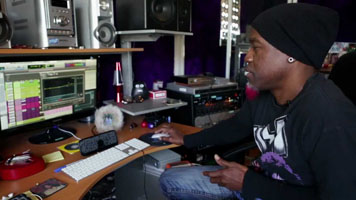
Janelle Monáe has executed a barnstorming assault on some widely-held music industry assumptions. For starters, there’s the idea that concept albums are pompous relics of the past that will inevitably be critically panned and end up as commercial failures. Then there’s the received wisdom that most of today’s R&B is commercial pap bereft of innovation and musical integrity. And thirdly there’s the presumption that today’s artists need to grow and ripen before they deliver their best work; the heady early days of rock ‘n roll, when scores of artists created masterworks while still in their early twenties, appear long gone.

In defiance of all this Monáe has released not just one concept album, but two, plus a concept EP, all based on the same overarching concept. Loosely based on Fritz Lang’s 1927 movie Metropolis, Monáe tells the story of the android Cindi Mayweather, who is trying to free the citizens of Metropolis in a dystopian and time-travelling future—the year 2719 to be exact. As if that doesn’t ambitious enough, Monae has spread out the story over seven Suites. The EP Metropolis: Suite I (The Chase), released in 2007, obviously contains Suite 1, while the full-length albums The Archandroid (2010) and the recently released The Electric Lady contain suites II and III, and IV and V respectively—suits VI and VII are still to be released. Monáe has explained that The Electric Lady is a prequel to The Archandroid—must have something to do with the time travelling.

Despite the grand and over the top concept behind The Archandroid and The Electric Lady, they have been amongst the most-lauded albums of recent years. The former received a stunning 91 out of 100 rating at Metacritic, combining 28 mainstream reviews, and received a Grammy-nomination for Best R&B Album. The “genre-defying masterpiece,” which reportedly did “what a number of artists—particularly black artists—have not been able to do in years, and that’s move pop music forward,” ended up as 2010’s second highest-rated album, after Kanye West’s My Beautiful Dark Twisted Fantasy. The Electric Lady didn’t quite scale the same critical heights, but nevertheless received a very impressive 83/100 rating (based on 34 reviews), with it being called “audacious, intrepid and brilliantly executed,” and a “dazzling, daring, psychedelic funk pop opus,” which “puts Monáe firmly in the front rank of 21st-century stars.” And all this with Monáe being, respectively, just 24 and 27 when the albums were made.

Electric Lady cover

The music on the Metropolis, The Archandroid and The Electric Lady is a kaleidoscopic, genre-defying mash-up of different music styles and influences, including spaghetti western soundtracks, big band jazz, classical music, funk, reggae, pop, latin, folk, blues, funk, soul, psychedelic, rock, hip-hop, gospel, and much more. The title and cover of Electric Lady are a tongue-in-cheek nod to all this crossing over, taking their inspiration from Jimi Hendrix’s Electric Ladyland as well as the aesthetic of the 1966, French, black and white movie Who Are You, Polly Maggoo? All the disparate musical ingredients on Monáe’s two albums are held together in a spectacular production that is roughly reminiscent of today’s R&B/pop aesthetic, yet employs an incredibly rich sonic palette consisting of hundreds of different instruments and sounds. Monáe didn’t, of course, think up and construct all this by herself. On her three releases to date she’s been assisted by a motley crew of co-writers and co-producers that includes the likes of Outkast’s Big Boi, Kevin Barnes of Indie rock group Of Montreal, and Sean Combs aka Puff Daddy, plus Chuck Lightning and brothers Roman GianArthur and Nate “Rocket” Wonder. The latter three have emerged as Monáe’s main collaborators, co-writing and co-producing most of the The Electric Lady with her.

Monáe, Wonder, GianArthur and Lightning are from Atlanta, Georgia, a city with a thriving music scene. Atlanta saw the emergence of what became known as Dirty South hiphop in the 1990s, with the likes of Jermaine Dupri, OutKast, Goodie Mob and Organized Noize, and became during the 00s one of the main hip-hop centres of the US, with artists like Cee Lo Green, Ludacris, Ciara, The Dream, T.I. and others. Rock and folk acts like Indigo Girls, The Black Crowes, Shawn Mullins, and Mastodon also emerged from the city. The Wondaland Arts Society, founded by Monáe and her collaborators, draws much of its inspiration from the Atlanta music scene. Like Monáe’s music, it goes for the oddball, over-the-top approach, with its web site stating things like, “We believe songs are spaceships. We believe music is the weapon of the future. We believe books are stars. We believe there are only three forms of music: good music, bad music and funk.”

The Electric Lady was further steered to success by the contributions of another Atlanta resident, Neal H Pogue, who mixed almost the entire album. Pogue is originally from New Jersey, but moved to California in 1984 to pursue a career as a drummer in a band. Instead he ended up learning his craft as an engineer and mixer, with one of his most important teachers being mixer Taavi Mote. Pogue moved Atlanta in 1990, at a time when the creative scene exploded there, and was furthered by LaFace Records, which was run by LA Reid and Babyface Edmonds. Pogue ended up working with the likes of Outkast, Bobby Brown, TLC, Goodie Mob, Toni Braxton, and many others. In 2000, at a time when LA Reid moved to LA and Atlanta went from being a varied R&B city to a full blown hiphop place, Pogue returned to LA, and during the next 12 years he mixed a great variety of artists there, including Franz Ferdinand, N.E.R.D., Nicki Minaj, Pink, Eminem, Lil Wayne, Norah Jones, and Stevie Wonder. One notable achievement was Pogue convincing Outkast’s Andre 3000 that his rough demo for “Hey Ya!” had all the ingredients for a major hit, and then going on to mix the song. Pogue’s instincts proved astute: released in 2003, “Hey Ya!” went on to become the 20th highest-selling song of the 00s in the US.

Pogue spotting the hit-potential of “Hey Ya!” was an illustration of his production talents, and the mixer has recently spread out more into production. He moved back to Atlanta on June 29th of this year, because “it’s a very creative city and I always felt more creative here on the production side.” Pogue started his own production company in Atlanta, called Fulton Yard Unlimited, and A&R’d, engineered, mixed and produced with production partner Walt B, three tracks on Earth, Wind & Fire’s recent album Now, Then & Forever. Pogue also did additional production on 3 other tracks on the album. Like when he lived in North Hollywood, Pogue works in Atlanta from his own studio, an in-the-box place with Pro Tools HD (“I just switched to 10. I was on 8 for a long time. If it ain’t broke, I’m not interested in moving up”), a Kawai MX8SR 8-fader keyboard mixer and his favourite Halfer TRM8 Trans*Nova and Anthony Gallo A’Diva SE monitors. His studio, in Hollywood and now in Atlanta, is called TheHotPurplePetting Zoo. “I have purple fur on the walls and when people come in they start petting the walls. And with all the equipment in here it gets kind of warm,” explains Pogue.

Neal Pogue and Janelle Monae

Neal Pogue and Janelle Monae

Given Pogue’s eclectic credits and his roots in Atlanta R&B and hiphop, he was the perfect candidate to mix The Electric Lady. Oddly enough, his location provided an obstacle in the early stages of the project. “I was first approached by one of the A&R guys in late March of this year,” recalls Pogue, “when I happened to be in Atlanta visiting family. He wanted to fly me out to Atlanta, but because I was already there, I could begin mixing Q.U.E.E.N on an SSL J-series desk at Patchwerk Recording Studios in Atlanta on April 5. I then took the mix back home with me to my studio LA, where I did further tweaks and finished it on April 13. After this I mixed the songs ‘Electric Lady’ and ‘Dance Apocalyptic’ at my studio, but we decided that we preferred to mix the rest of the album in analogue, because we really wanted it to sound like the 1970s. Stevie Wonder’s albums from that era were a major influence with regards to the synths, whereas the guitars were more influenced by Prince in the 1980s. So I suggested that I continue to mix the album I moved to Atlanta. I started mixing the rest of the album on July 7, also continued with ‘Electric Lady,’ on a G+-series SSL at Silent Sound in Atlanta, and completed the project in the beginning of August. I mixed one song, ‘Dorothy Dandrige Eyes’ at ZAC Studios, also on a G-series, and also in Atlanta. In each case I finished the mixes at my own studio.”

Prince is not only an influence on The Electric Lady, but appears in person, singing and playing guitar on the song ‘Givin Em What They Love.’’ He’s one of several featured guest artists on the album, others being Erykah Badu, Solange, Miguel, and jazz bassist and singer Esparanza Spalding. This eclectic collection of names underscores the multi-faceted nature of the album, as does the name-checking of Ennio Morricone, Duke Ellington, Michael Jackson and Stevie Wonder in the song inspiration annotations in the CD-booklet. In the context of the 1970s and 1980s sonic references that were discussed by Pogue and the Wondaland camp, the mixer elaborates that he grew up with the sound of 1970s albums, which are “embedded in my mind. It was a natural thing for me, so I automatically knew what they needed.” From this the rationale for running most mixes through an analogue desk seems clear. But what then, of the fact that Pogue’s own studio is entirely in the box, in true 21st century fashion? The explanation lies in the contradictory movements that typify today’s music industry, with steps forward in technology and backwards in budgets.

“I’ve been an SSL-guy for 25 years,” elaborates Pogue, “and I still love to touch a board and to use the SSL EQ, compression and faders. When I was in LA I used to go to a commercial studio called The Mix Room and mixed on their J-series SSL. To me that was the best-sounding room in the city. I held out as long as I could with mixing on the desk, but began mixing in the box in 2009, largely because budgets were getting smaller, and clients were offering all-in deals, meaning they didn’t want to pay for the studio on top anymore. Also, there’s the convenience of being able to do recalls at the press of a button. It takes me a second to bring up a mix and make whatever change is wanted. This means I can offer clients unlimited recalls and don’t have to charge them for it. Finally, the sonics of working in the box have become much much better, though I still think the board sounds superior. But people have come to love the digital crunch that is part of the way people approach working in the box. They love this digital distortion-to-the-point-that-it-is-shredding and the sound of the L2, and many kids today don’t even know what that warm sound is that comes with analogue and mixing on a desk. If you’d play them a vinyl record, they’d think it sounds dark, because their ears aren’t used to it. But many hiphop guys that sample old records understand that warm sound.”

Neal Pogue at TheHotPurplePetting Zoom studio

Neal Pogue at TheHotPurplePetting Zoom studio

Pogue’s unique solution to the conflicts between today’s budgetary constraints and unlimited instant recall demands, and the sonic depth, warmth and punch that he gets from mixing on an SSL is to begin his mix in a commercial studio on an SSL, print all the tracks back individually into the session as stems, and then bring the session back to his own studio for more tinkering and fine-tuning. He only does on the SSL what’s necessary for getting the analogue qualities into the mix, and after that he can take as long as needed for in-the-box tweaking in his own room, without a clicking studio clock. It’s an approach that served him well with his mixes of The Electric Lady. As a result, Pogue’s final mix session for the first single of the album, Q.U.E.E.N., contains almost 70 stereo stem tracks, starting with the final 2-mix at the top, and then all individual tracks for drums, bass, guitars, keyboards, horns, strings, lead vocals and backing vocals.

“The main reason for doing it like this is budgetary,” affirms Pogue. “I don’t do any volume rides on the SSL, the point of using it is for the summing, the SSL EQ and compression, and being able to patch in some pieces of outboard. Nowadays mixing is often a race against time, and in that context plugins are definitely convenient. Back in the day I’d have two days per mix, but now it usually is just one day, so you just have to go for it and get things done quickly. Because I’ve worked for so many years in analogue, I also approach mixing in the box as if I am working in analogue. I often use API EQs and other plugins that I’m used to touching with my hands when working in analogue. I’d say that with my current approach 70% of my effects come from plugins and 30% from outboard. But it’s always great to be able to reach for outboard gear when I’m in a studio.”

By contrast, mixing The Electric Lady didn’t conform to the modern budget-conscious and rushed way of working says Pogue. “I was given a lot of time, like two or three days per song. Nate [Wonder], the producer, had a sound in his head, and it took time to get that right. Nate is a perfectionist and often he wanted to sit with the mix for a couple of days before making final decisions. He’s also a guitar player, and given that the album is guitar-heavy, he was very particular about that too. We took an old-school approach and tried to make the mixes sound fun and different, and stay away from the overly bright and compressed approaches of many of today’s mixes. We wanted to push the envelope and not be bound by 21st century mixing standards.”

“As I said, the sound harked back to seventies Stevie Wonder and eighties Prince records, but also to the way the guitars sound on Red Hot Chili Peppers albums. They wanted the record to be approached in a funk, punk, and blues way. That aspect was fairly straightforward for me; because of my background I automatically and instantly knew what they needed. The main challenge on this album was the dynamics Nate and Roman were after. They wanted the songs to move and breathe, and with all the elements talking to each other. Janelle might say a line, and immediately afterwards a keyboard will come up and will quickly go down again. Particularly with Q.U.E.E.N. Wonder was very particular about how even the slightest move of a synth during her vocals would make the track more exciting. The music has to sing and move right along with her. She and the music had to be one.”

NealHPogue

Neal Pogue at TheHotPurplePetting Zoom studio

Going into the specifics of his mix approach in general and Q.U.E.E.N. in particular, Pogue explains that he uses the rough mix as his starting point, and then expands from there. “I first listen to the rough, and try to find out what the clients loves about it. Sometimes people will have lived with it for months, and I’ve ran into incidents where I’ve just started mixing, and after I’m done they say, ‘you know what, let’s listen to the rough again,’ and you have to go back over all the work you’ve just done. Once you know what they like about their rough, you don’t waste your time on changing that. You keep what they love, and then you take it further.”

“One important thing I do is organize the session in my preferred way. I learned from Taavi Mote to colour code everything. So the drums are in black, the bass is blue, the guitars are orange, the keyboards green, organs will be off-green, the horns are brown, the strings light blue, female lead vocals pink and male lead vocals red, and the backing vocals are purple. The sessions are also always in the same order, with the drums at the top, then bass, guitars, keys, brass, strings, lead vocals, and the backing vocals at the bottom. I use the same colours on the channel strip on the desk, and this allows me to always know immediately where everything is. My board layout is a bit unusual in that I have the vocals on channel 25 and upwards, and the drums on channel 24 going to the left. So the kick comes up under channel 24, the snare channel 23, and so on. Channels 17-24 are my drums and to the left of that are my bass, guitars and keyboards, and perhaps horns and strings on the far left. If I have something left over, it will be to the right of the vocals and the backing vocals. I have the drums next to the vocals because I start my mixes with the drums and this means I’m right in between the speakers for that.”

“After having laid out the session and the board the way I want it, and knowing what the client wants and where I’m going, I normally start to work on the drums. I’ll get the sonics right using EQ and compression and whatever else it needs, and I’ll then bring in the bass, and make sure it works well with the kick. That may need some EQ-ing. I’ll then add in the percussion, and the guitars, and the keyboards, and I keep working my way down the session until the music feels really great. That’s probably a good six or seven hours of work. While working on the music, I’ll consciously leave room for the vocals, and I’ll sometimes put them in just to see how they feel, and then I mute them again, so I can continue working on the music. Over the years I’ve learned which frequencies to cut and to boost to make sure the vocals cut through.”

Q.U.E.E.N. is a funk-pop-rock song reminiscent of Prince’s music from the 1980s, with echoes of Chic and Parliament/Funkadelic as well. It’s driven by a funky rhythm guitar and heavy bass, and by synthesizers popping up all over the place, which are augmented by massive backing vocals that often are made to sound like synths. One of the most striking aspects of the song is that it continually changes, with new ingredients coming in all the time—no hitting the ‘next’ button after the first verse and chorus in this case—and that the snare only occasionally plays on 2 and 4, and is instead mostly used for accents. 2 and 4 accents are for the most part done by finger snaps and hand claps.

“To me the way the snare is used in this track is a breath of fresh air,” comments Pogue. “It was part of the Red Hot Chili Peppers influence, and it gave me no difficulties at all in terms of getting the groove right. Because Q.U.E.E.N. was the first track that I mixed for the album, it was very much the blueprint of the record, for how instruments would sit in the tracks and how they wanted the album to feel. I still call myself a student, and from mixing this record I learned not to be afraid to do radical things EQ-wise, particularly adding high mids. Today guitars are rarely pushed to the limit, but on this record we did push them, to make them bite and stand out a bit more. With regards to the dynamics, on the screen shot you can see how I was riding the volume on the Moogs and Junos in particular.”

“The top drum track is an 808 kick, and after that there’s the ‘big kick,’ and then two snare tracks, ‘Fat’ and ‘Knock,’—the latter supports the former—and then a hi-hat track, which was very minimal, and natural finger snaps recorded with a binaural head, claps, three tambourine tracks, bongos and congas, three shakers and more live percussion. I treated the drum and percussion tracks with SSL EQ and compression where necessary, and the only outboard I used for this entire mix was the DBX160XT compressor and a Tube-Tech EQ on the kick, and that was it. Later, when I brought the mix back to my studio, I added an API plugin EQ on the snare ‘Knock’ track, to add some high mids and make it crack more, plus I put a Digidesign EQ on the finger snaps, to make them shine a little more. I did not add any other plugins, because I was satisfied with the way the drums sounded.”

“There are three bass tracks, that each appear in different sections of the song. I just used SSL EQ and compression on the bass tracks, and when I came home I added Waves CLA compression and API EQ plugins to the end section bass track. The guitars were again just desk EQ and compression, and volume rides for the dynamics, plus an API EQ at the end, to cut out some low end. The entire track slides into a Marvin Gaye ‘What’s Going On’ feel towards the end. All the synths, horns and strings were treated only with desk EQ and compression, where necessary. Challen 30 is a piano track that plays during the rap section at the end. I didn’t use plugins at all on these tracks, because everything sounded great and I didn’t want to mess with it. Also, I wanted to keep that natural 1970s feel on the synths. The J series SSL has a warmer sound than the G-series, and that was a great match for this particular song, even though the rest of the album was done on a G.”

“Tracks 48 is Janelle’s lead vocal track, which has the RCompressor and the Digidesign EQ, and is then sent to track 49, which is an aux on which I had the Digidesign Extralong Delay, for the delay ‘throws’ at the end of words and lines. Track 50 is the lead vocal ad lib track, and this is sent to track 51, which had the Waves SupertTap delay for a slap effect. All vocals were treated with SSL EQ and compression. As I said, we wanted to push the envelope with this record, and just like with the guitars we also sometimes made Janelle’s vocals sound a little harsher than usual, to create more emotion and make them cut through. EQ is so cool, you EQ something one way, and you add one kind of emotion, and you EQ it another, and you add a different emotion. Emphasising the highs and high mids can add a little bit more excitement to your record.”

“Underneath the lead vocals are the backing vocals, which were sung by Janelle, Erykah Badu and Nate. Things can be so sterile nowadays, with the lead vocalist doing everything. I think it’s much more organic to do have different vocalists sing different layers of backing vocals. I just had board EQ and compression on them, and also the Avid Joe Meek compression plugin, as well as more Digidesign EQs. Track 62 is Janelle’s rap at the end of the song. That rap was difficult to EQ, because they wanted it to sound a certain way, different to the lead vocal. I used board EQ and also an API EQ plugin. The reverb and delay on the rap had already been done before I got involved, and was recorded back into the session on tracks 63 and 64. Underneath the rap are yet more backing vocals, including by Erykah.”

“I mixed back into the session, which was at 24/44.1. I think going above 48K is pointless, the naked ear can’t tell the difference. I like to send the final mix through the SSL stereo bus and then EQ with either two API GML8200, but I don’t generally use compression. I don’t like pushing my mixes to make them sound loud, unless I know we’re going for a particular sound that is trying to compete with what’s out there. Nate didn’t want a particularly loud record, mostly he wanted to make sure that there the nostalgic element in the song shone through. For me that was very cool. Overall the idea was to have a natural sound, and that suited me, because it meant that I could focus on volume and panning in the mix, plus the occasional bit of EQ and compression. Many people reach for tons of plugins as if on automatic pilot, but using too many EQs destroys that natural sound. I prefer to keep it natural, and simple.”

With The Electric Lady filled to the brim with tons of different sounds and disparate music styles, Pogue’s “keep it simple” approach was a perfect fit, and helped create a focused and coherent end result that achieved far greater commercial success than its highly-praised but commercially disappointing predecessor.

Q.U.E.E.N. Edit window 1-thumb

Q.U.E.E.N. Edit window 1

Q.U.E.E.N. Edit window 2 -thumb

Q.U.E.E.N. Edit window 2

Q.U.E.E.N. Edit window 3 thumb

Q.U.E.E.N. Edit window 3

Q.U.E.E.N. Edit window 4 -thumb

Q.U.E.E.N. Edit window 4

Q.U.E.E.N. Edit window 5 -thumb

Q.U.E.E.N. Edit window 5

Q.U.E.E.N. Edit window 6 - thumb

Q.U.E.E.N. Edit window 6

Q.U.E.E.N. selected plugins -thumb

Selected Plugins

Chris Godbey: recording and mixing Justin Timberlake’s The 20/20 Experience

Chris Godbey Inside Track Sound on SoundMy Inside Track article in the January 2014 issue of Sound On Sound magazine features engineer and mixer Chris Godbey giving details of the recording and mix of Justin Timberlake’s The 20/20 Experience, Vol 1,  2013’s best-selling album. The article is also published in the main German and Japanese music technology magazines, by a curious coincidence both called Sound & Recording.

Below an additional photo of Chris Godbey, as well as full-size screen shots of the sessions for the two hits from the album, “Mirrors” and “Suit & Tie,” which the magazines didn’t have space to publish. You can also download all the screen shots as a zip file, so you can inspect them in detail at your convenience.

Chris Godbey in New York

Chris Godbey in New York

Download all screen shots in one zip file

Download all screen shots in one zip file

Mirrors pre-stem drums and music Pro Tools session

Mirrors pre-stem Pro Tools session – drums and music section of session

Mirrors pre-stem music session

Mirrors pre-stem session – music section

Mirrors pre-stem session vocal section

Mirrors pre-stem session – vocal section

Mirrors pre-stem session vocal section 2

Mirrors pre-stem session vocal section 2

Mirrors edit window of stem session part 1

Mirrors edit window of stem session part 1

Mirrors edit window of stem session part 2

Mirrors edit window of stem session part 2 – lead vocals

Mirrors edit window of stem session part 3 - bvs

Mirrors edit window of stem session part 3 – bvs

Mirrors outro outline

Mirrors outro pre-rerord outline

Mirrors outro session

Mirrors outro session

Mirrors lead vocals and delay throw

Mirrors lead vocals and delay throw

Mirrors background vocal chain

Mirrors background vocal chain

Suit & Tie stem session

Suit & Tie stem session

Suit & Tie delays

Suit & Tie delays

Suit & Tie snare chain

Suit & Tie snare chain

How Flood and PJ Harvey shook England

PH Harvey in Dorset

IN AN EXCLUSIVE INTERVIEW, PRODUCER FLOOD OPENS UP ABOUT THE MAKING OF PJ HARVEY’S EPOCH-MAKING LET ENGLAND SHAKE

From the archives, May 2011.

It takes quite a bit of time to load articles in the format of this site, so articles older than five years are loaded as image scans from the published version, in this case from the Australian magazine Audio Technology.

Part one

Part one of article

Part two of article, showing John Parish and PJ Harvey at the Dorset church

Part two, showing John Parish and PJ Harvey at the Dorset church

Part 3 of article

Part three

Part four of article

Part four

Part five of article

Part five

Part six of article

Part six